


A Food Lover's Map of Hoi An: 30 Dishes You'll Remember Long After You Leave
📋 Table of Contents
[!NOTE] Pricing Note for International Tourists The prices listed are inclusive of a 20% tax and service fee applied to foreign tourists. Estimated USD rates are based on current exchange rates and may slightly vary.
Hoi An — Where Culture and Cuisine Blend Into One
Some cities people remember for their architecture. Some cities people remember for their people. But Hoi An — people remember it for taste. The aroma of cao lau broth with fragrant lard oil. The scent of crispy Phuong banh mi in the morning. The flavor of Ba Buoi’s chicken rice — so rich that eaters stop, close their eyes for a second, then nod in agreement: I’ve never eaten anything this delicious anywhere else.
I — Tran Bich Ngoc — have been a food guide in Hoi An for 8 years. Those eight years weren’t spent in an office. They were 8 years of eating breakfast on a different street each day, 8 years of listening to shop owners tell stories about preserving their craft, 8 years of leading thousands of domestic and international tourists to discover the most delicious hidden corners of the Old Town.
This article is my personal culinary map — not advertising, not a Google Maps compilation. These are 30 dishes I’m willing to stake my professional reputation on to introduce to you.
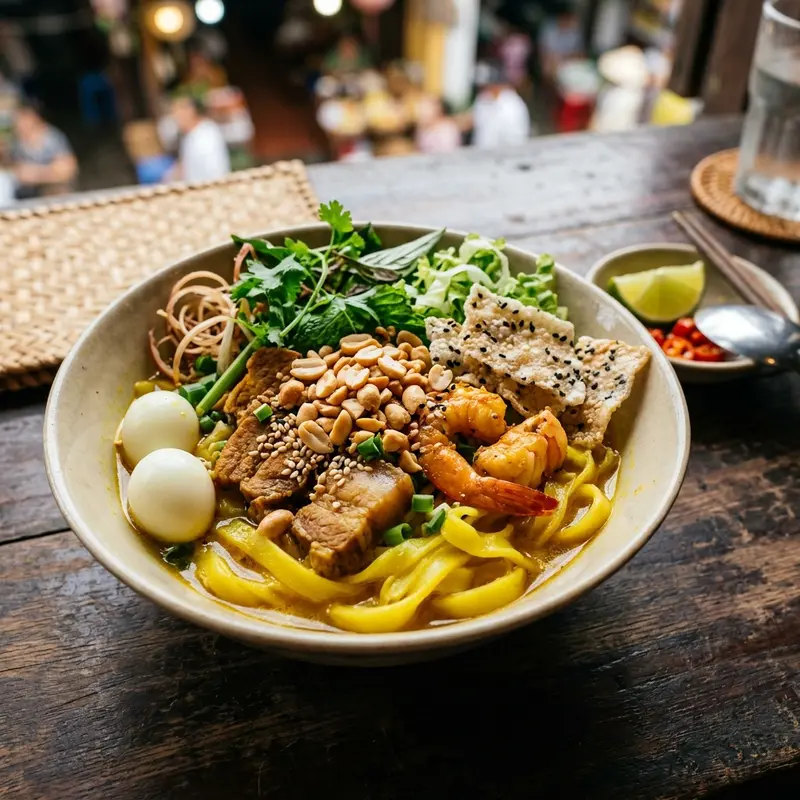
Cao lau — the soul of Hoi An cuisine. Only delicious when made with water from the ancient Ba Le well.
What Makes Hoi An Cuisine So Special?
Cultural Fusion in Every Bowl
Hoi An was the busiest international port in Southeast Asia from the 16th to 18th centuries. Japanese, Chinese, Cham, and Vietnamese people — they lived together, traded, married, and most importantly: cooked together. The result is a wonderfully hybrid cuisine: each dish carries multiple layers of history, each ingredient comes from a different civilization.
Cao lau resembles Japanese udon in form, shows Chinese noodle-making techniques, yet its flavor is purely Vietnamese. Banh bao banh vac (White Rose) looks like Cantonese dim sum but the shrimp filling and dipping sauce are completely different. Hoi An chicken rice uses the same chicken-broth-cooked rice method as Hainanese chicken rice, but the seasonings and serving style are distinctly Quang Nam.
Irreplaceable Local Ingredients
You can’t make delicious cao lau without water from the ancient Ba Le well — the pH and mineral content create that distinctive deep yellow color and the perfect chewiness of the noodles. You can’t make beautiful white roses without fresh mud crabs caught each morning from Cua Dai. You can’t make fragrant chicken rice without free-range Quang Nam jungle fowl with small bones and firm meat.
This is why Hoi An cuisine cannot be replicated. People can learn recipes, hire chefs, open Hoi An restaurants in Hanoi or Ho Chi Minh City — but it will never taste as good as eating it right here.
Street Food Culture
Hoi An has no famous fine-dining restaurants — its reputation rests on street stalls and small shops that have operated for 3-4 generations. The secret of these places isn’t the space or service — it’s the closely-guarded family recipes. Ba Be has sold cao lau for 45 years; her daughter and granddaughter are now carrying on. Ba Mua sells Mi Quang, cooking the broth starting at 3 AM every day. Ba Buoi sells chicken rice, with each grain and each slice of chicken controlled by her own hands.
PART 1: BREAKFAST — THE MOST IMPORTANT MEAL OF THE DAY
1. Cao Lau — The Soul of Hoi An Cuisine
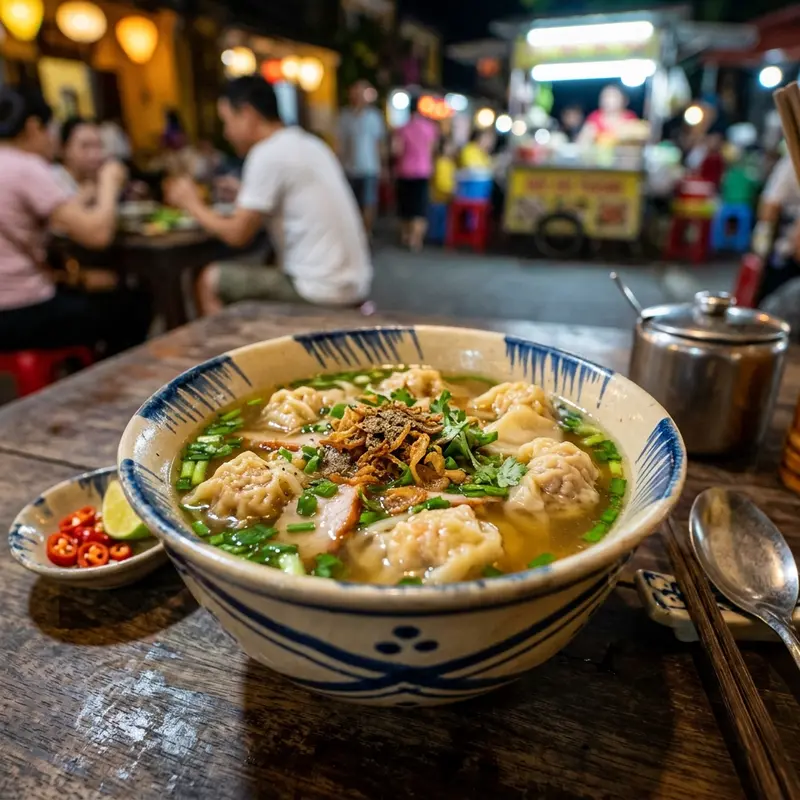
Price: 30,000 – 45,000 VND/bowl (~$1.20-$1.80)
Hours: 6:00 AM – 11:00 AM (sold out, then closed)
Recommended locations:
- Ba Be’s Cao Lau — 26/2 Thai Phien (inside Hoi An Market, stall #35)
- Cao Lau Trung Bac — 87 Tran Phu
If Hoi An has a signature dish, it’s cao lau — not because it’s the most common, but because it cannot exist anywhere else. The cao lau noodles are soaked and boiled in water from the ancient Ba Le well, mixed with ash from firewood collected from Cu Lao Cham island. This process creates the distinctive deep yellow color and chewiness no other noodle can match.
A bowl of cao lau contains: thick yellow noodles, thin-sliced pork, crispy lard crackling, fresh herbs from Tra Que, and a spoonful of rich broth. When eating cao lau, you don’t stir much broth like pho — you mix gently, letting the broth coat each noodle evenly, so each strand absorbs the full flavor.
My tip: Arrive before 7:30 AM. Ba Be usually sells out before 9 AM on weekends. Don’t ask for extra broth — cao lau isn’t eaten like pho.
2. Mi Quang — Don’t Confuse It With Da Nang Mi Quang
Price: 25,000 – 40,000 VND/bowl (~$1-$1.60)
Hours: 6:30 AM – 11:30 AM
Recommended locations:
- Ba Mua’s Mi Quang — 22 Tran Phu
- Mi Quang 1A — 1A Hung Vuong
Hoi An Mi Quang differs from Da Nang Mi Quang: less broth, richer broth flavor, and usually topped with crushed grilled rice paper. Wide yellow noodles colored with turmeric, served with shrimp and pork, quail egg, roasted peanuts, and abundant fresh herbs.
Ba Mua cooks Mi Quang in the “original Hoi An style” — more fresh shrimp than pork in the broth, sweet and light rather than rich, leaving you satisfied but not heavy.
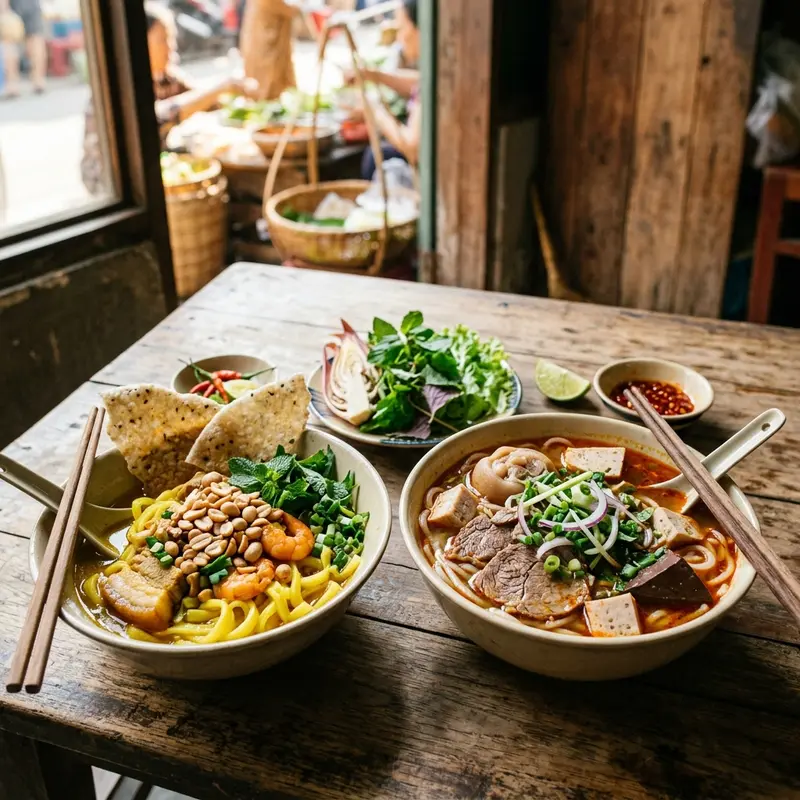 Mi Quang for breakfast — less broth, rich flavor, served with crispy grilled rice paper.
3. Phuong Banh Mi — Why Did Obama Stand in Line Here?
Price: 30,000 – 55,000 VND/sandwich (~$1.20-$2.20)
Hours: 6:30 AM – 8:00 PM (closed 12:00 PM – 2:00 PM)
Location: 2B Phan Chau Trinh, Hoi An
In 2016, former President Barack Obama stopped by Hoi An and personally lined up to buy banh mi from Phuong. That story isn’t just marketing — it’s been verified by many witnesses. But what made Phuong famous even before Obama’s visit?
Phuong’s banh mi is shorter than Saigon banh mi, with crispier crust and softer interior — these are typical Hoi An banh mi characteristics. The filling is made fresh each morning: rich pork pate, sliced Vietnamese sausage, pork loaf, salty pickled mustard, cilantro, fresh chili, and Phuong’s secret chili sauce.
The key is balance: not too salty, not too sweet, not too sour — everything harmonizes in one small sandwich. Anthony Bourdain called this “the best banh mi in the world.” I won’t go that far, but I can say: once you eat it, it’s hard to forget.
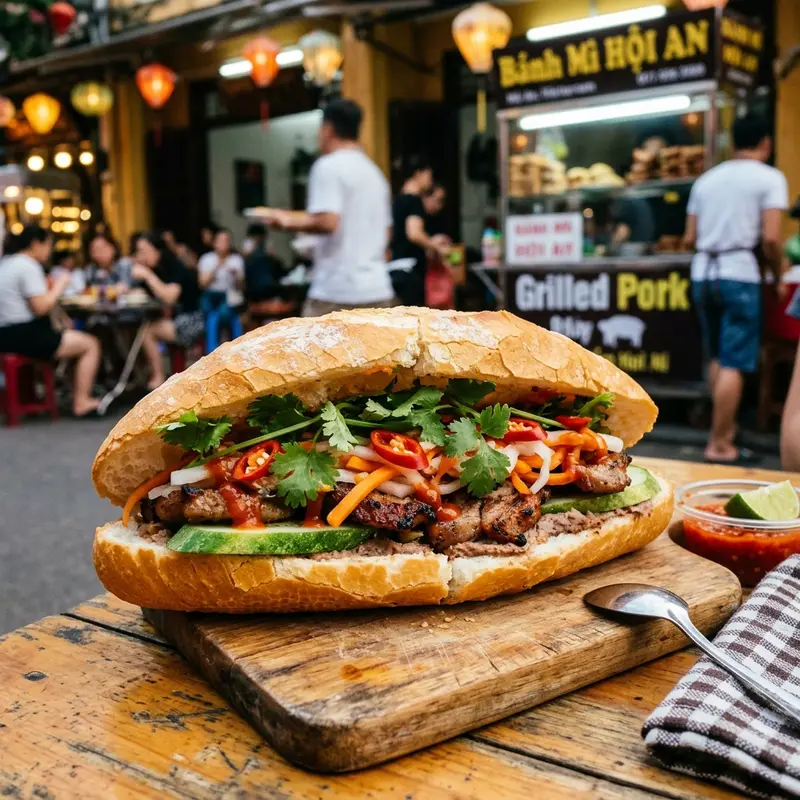 Phuong Banh Mi — the legendary sandwich that made former President Obama stand in line.
Tip: Arrive before 8 AM to avoid long lines. Order extra pate — that’s the best part.
4. Madam Khanh Banh Mi — A Less-Crowded Alternative
Price: 25,000 – 45,000 VND/sandwich (~$1-$1.80)
Hours: 7:00 AM – 6:00 PM
Location: 115 Tran Cao Van, Hoi An
If Phuong is sold out or the line is too long, Madam Khanh’s is an equally excellent choice. Madam Khanh — nicknamed the “Banh Mi Queen” — has been selling banh mi since 1989. Her sandwiches feature fresh fried eggs and slightly more generous fillings, with more reasonable prices.
5. Banh Bao, Banh Vac (White Rose Dumplings)
Price: 55,000 – 75,000 VND/plate (~$2.20-$3)
Hours: 8:00 AM – 8:30 PM
Location: White Rose Restaurant — 533 Hai Ba Trung, Hoi An
White Rose dumplings are among the most exclusive Hoi An dishes — the recipe is guarded by one family and served at only one restaurant. These translucent white dumplings with fresh Cua Dai crab filling, delicately steamed, arranged on a plate to resemble white roses — that’s how the name “White Rose” came about.
Served with red chili sauce and fried shallots. The dough is tender and chewy, the crab filling naturally sweet. Eating 3-4 dumplings satisfies without being too heavy.
PART 2: LUNCH — FLAVORS PRESERVED THROUGH DECADES
6. Ba Buoi’s Chicken Rice — A Legend of the Old Town
Price: 45,000 – 65,000 VND/serving (~$1.80-$2.60)
Hours: 10:00 AM – 2:00 PM (sells out, closes earlier)
Location: 22 Phan Chau Trinh, Hoi An
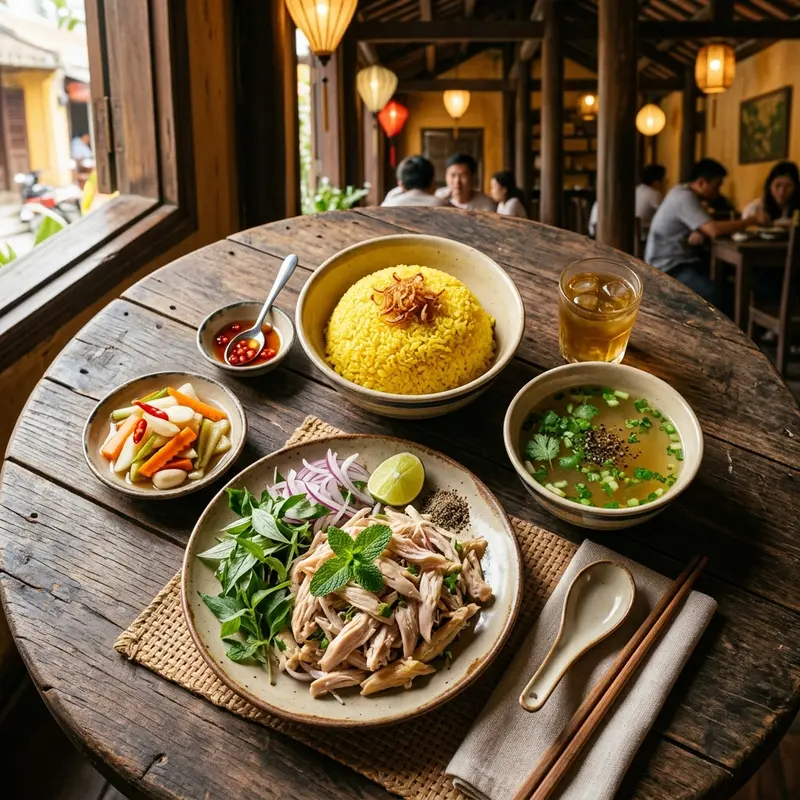 Ba Buoi’s Chicken Rice — each grain of rice is golden, each strand of chicken is tender and flavorful.
Hoi An chicken rice differs from Hainanese chicken rice in its pure Vietnamese simplicity. The rice is cooked in chicken broth, with chicken fat, turmeric oil, and fried shallot oil — fluffy yellow rice, fragrant with every grain. The chicken is shredded and mixed with thin-sliced onion, cilantro, lime, chili, and pure fish sauce.
Ba Buoi has sold chicken rice for over 40 years. The secret is using small jungle fowl — a small breed with tiny bones, firm meat, crispy skin, completely different from factory-raised chicken. Each day she cooks only a fixed number of chickens; when sold out, she closes. Arriving late means no food.
Important: Order extra chicken offal if available. Boiled liver, gizzard, and heart chicken with ginger fish sauce are equally excellent.
7. Ba Be’s Chicken Rice — More Accessible Version
Price: 40,000 – 55,000 VND/serving (~$1.60-$2.20)
Hours: 9:30 AM – 2:30 PM
Location: Hoi An Market, Tran Phu
Ba Be is famous for both chicken rice and cao lau. Her chicken rice attracts more customers because it’s in the market with more space and slightly lower prices, but still excellent quality.
8. Pho Xi Trang (White Cao Lau)
Price: 25,000 – 35,000 VND/bowl (~$1-$1.40)
Hours: 6:00 AM – 11:00 AM
Location: Central market area, Tran Phu alleys
Few people know cao lau also has a “white” version — noodles without using well ash, so they’re whiter, softer, and less intensely flavored. This is usually chosen by elderly locals who prefer lighter dishes.
9. Banh Dap
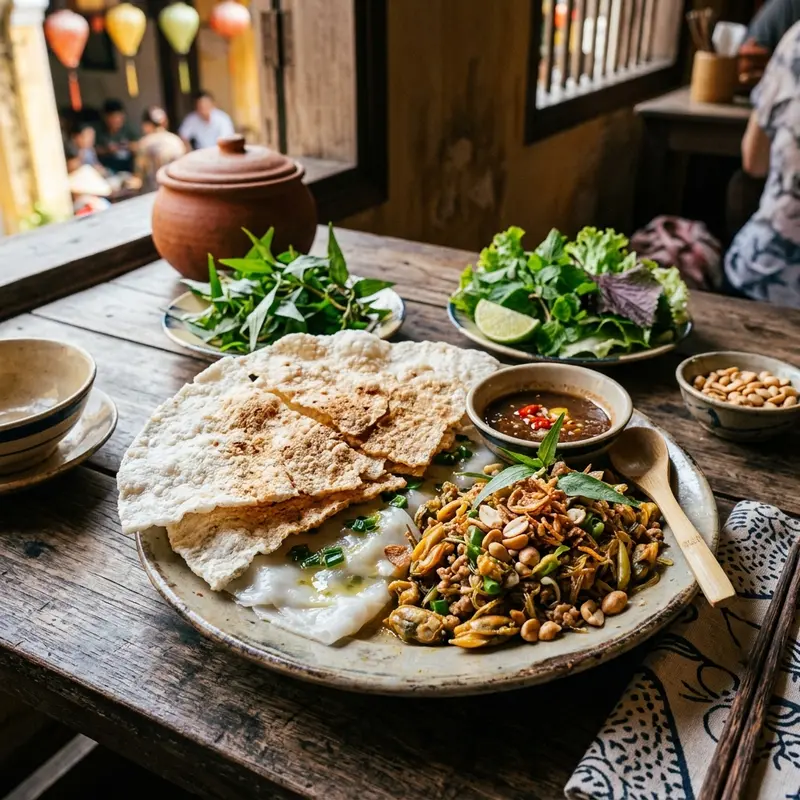 Banh Dap — the crispy “tap” sound is a signal that breakfast is being enjoyed correctly.
Price: 20,000 – 35,000 VND/serving (~$0.80-$1.40)
Hours: 10:00 AM – 8:00 PM
Location: Multiple shops on Bach Dang Street along Thu Bon River
Banh dap combines crispy grilled rice paper and soft rice paper, eaten with Hoi An fish sauce. It’s called “banh dap” because diners tap the two rice papers together to make them stick. Strange but fun — and when eaten with Hoi An’s distinctive fish sauce, nothing compares.
10. Hoahnth Thanh — Authentic Chinese Origin
Price: 35,000 – 50,000 VND/bowl (~$1.40-$2)
Hours: 10:30 AM – 9:00 PM
Location: Hoi Phuong Street (multiple shops)
Hoi An wontons are smaller than Ho Chi Minh City wontons, with tender shrimp and pork filling. Served in clear broth or fried until crispy. Hoi An’s ethnic Chinese brought this dish from Guangdong, and through centuries it’s become completely localized.
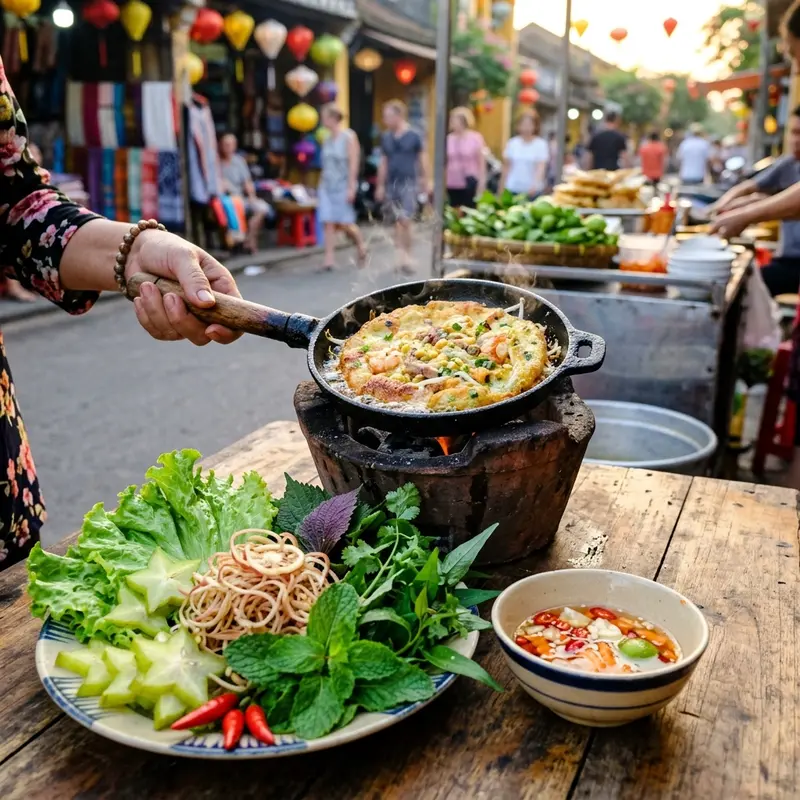 Mini Banh Xeo of Hoi An — small but perfectly crispy, wrapped in fresh herbs and eaten.
PART 3: AFTERNOON & SNACKS — A PARADISE OF STREET FOOD
11. Mini Banh Xeo (Small Crepes)
Price: 25,000 – 45,000 VND/plate (~$1-$1.80)
Hours: 10:00 AM – 9:00 PM
Location:
- Ba Duong’s Banh Xeo — 19 Phan Chau Trinh
- Anh Hong — 387 Nguyen Duy Hieu
Hoi An banh xeo is completely different from Southern Vietnamese banh xeo. Tiny as a palm, crispy coating made from turmeric-infused rice flour, filled with Cua Dai mud crab and bean sprouts. You don’t eat with chopsticks — you wrap the crepe in fresh cabbage or herb stems, dip in the special fish sauce.
This is one of the most fun eating experiences in Hoi An — eating, wrapping, dipping, and chatting at the same time, perfect for relaxing in the late afternoon.
12. Hoi An Pudding — A Sweet Paradise
Price: 15,000 – 25,000 VND/cup (~$0.60-$1)
Hours: 2:00 PM – 10:00 PM
Location:
- Che Hem — Tran Phu alley near Phuc Kien Assembly Hall
- Ba Tuyet’s Pudding — 16 Phan Boi Chau
Hoi An pudding is special for its variety and use of local ingredients. Must-try pudding flavors:
- Colocasia pudding — white taro cooked in rock sugar, with ginger
- Sticky corn pudding — Hoi An sticky corn cooked in coconut cream
- Roasted pork pudding (actually taro pudding with coconut, no pork)
- Mixed jackfruit pudding — young jackfruit with shredded coconut and toasted sesame
- Floating rice cake pudding — sticky rice cake balls with mung bean filling
13. Pork Banh Trang Rolls
Price: 40,000 – 60,000 VND/serving (~$1.60-$2.40)
Hours: 11:00 AM – 8:00 PM
Location: Multiple shops on Bach Dang and Nguyen Phuc Chu Streets
Boiled pork sliced thin, soft rice paper, fresh herbs, shredded banana flower, sour starfruit — rolled together and dipped in rich fish sauce. This is eating the true Quang Nam way that many tourists miss because it doesn’t look as appealing as other dishes.
14. Banh Can
Price: 20,000 – 35,000 VND/plate (~$0.80-$1.40)
Hours: 2:00 PM – 9:00 PM
Location: Hoi An night market and Bach Dang Street
Banh can is poured into small cast-iron molds, filled with shrimp or quail egg, crispy outside, soft inside. Eaten with house-made dipping sauce — each shop has its own secret fish sauce recipe.
15. Clam Banh Trang
Price: 30,000 – 45,000 VND/plate (~$1.20-$1.80)
Hours: 3:00 PM – 10:00 PM
Location: Along Thu Bon River
Thu Bon river clams stir-fried with lemongrass and chili, scooped onto crispy grilled rice paper — one of the must-try evening snacks beside the river. The clams are small, naturally sweet, not fishy, with characteristic lemongrass and chili aroma.
16. Snail
Price: 35,000 – 55,000 VND/plate (~$1.40-$2.20)
Hours: 5:00 PM – 11:00 PM
Location: Nguyen Thai Hoc Street and night market area
Lemongrass-stir-fried snails, pepper-cooked snails, meat-stuffed snails — Hoi An’s evening snail vendors are where locals and tourists alike sit under warm lamplight, slurping snails while watching the Old Town light up at night.
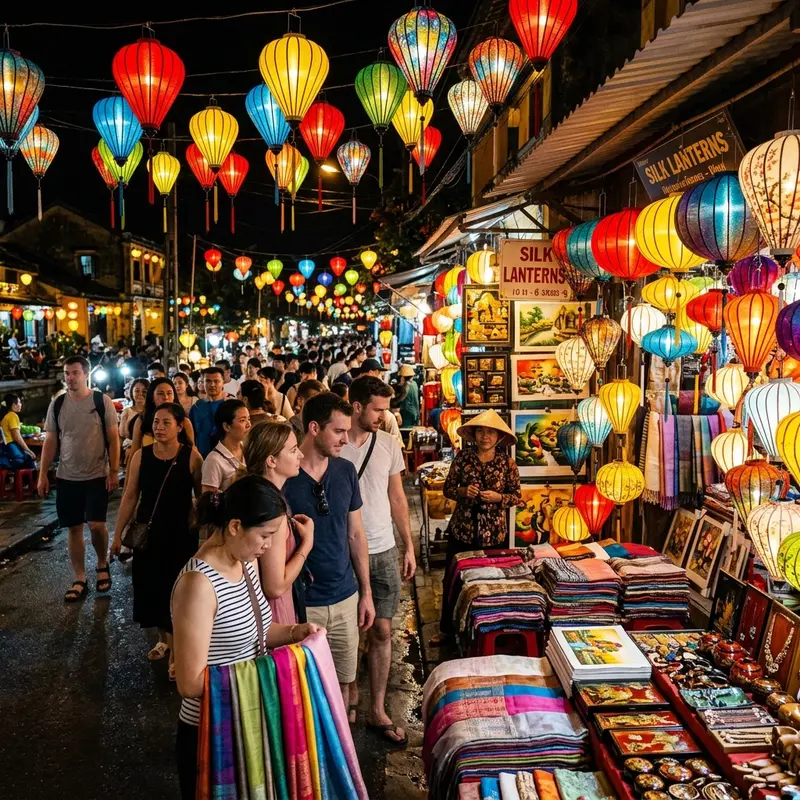 Hoi An Night Market — vibrant food space with glowing lanterns, where all specialties gather.
PART 4: DINNER — AUTHENTIC OLD TOWN DINING
17. Hoi An Pot Rice (Clay Pot Rice)
Price: 80,000 – 150,000 VND/person (~$3.20-$6)
Hours: 5:00 PM – 10:00 PM
Location: Mango Mango Restaurant — 45 Nguyen Phuc Chu
Clay pot rice cooked in earthenware, scooped out still steaming, served with 4-5 side dishes: turmeric-braised fish, black pepper pork stew, stir-fried morning glory, shrimp and vegetable soup. Not an exotic specialty — this is authentic Hoi An family-style home cooking served to guests.
18. Bun Bo Hue (Hoi An Version)
Price: 30,000 – 50,000 VND/bowl (~$1.20-$2)
Hours: 6:00 AM – 11:00 AM and 5:00 PM – 9:00 PM
Location: Ba Trieu Alley
Hoi An’s bun bo isn’t as fiery as Hue’s original version — the broth emphasizes lemongrass more, uses less shrimp paste. It appeals more to Southern palates and international guests compared to authentic Hue bun bo.
19. Grilled Squid with Chili Paste
Price: 80,000 – 150,000 VND/plate (~$3.20-$6)
Hours: 5:00 PM – 11:00 PM
Location: Along Bach Dang Street beside Thu Bon River
Fresh squid from Cua Dai bought in the morning, charcoal-grilled with spicy paste in the evening. Hoi An squid is sweet, never tough, eaten with fresh herbs and lime chili sauce.
20. Hoi An Fish Lau (Hot Pot)
Price: 120,000 – 200,000 VND/pot (~$4.80-$8, serves 2)
Hours: 5:00 PM – 10:00 PM
Location: Restaurants along Thu Bon River
Fresh mackerel sliced thin, hot pot with tamarind-citrus broth or tomato broth, served with fresh rice noodles and abundant vegetables. This is Hoi An’s most “natural” seafood dish — no complex sauce, just fresh fish and correct broth flavor.
PART 5: BEVERAGES & COFFEE
21. Weasel Coffee (Civet Coffee)
Price: 150,000 – 300,000 VND/cup (~$6-$12)
Hours: 7:00 AM – 8:00 PM
Location: Multiple cafes along Thu Bon River
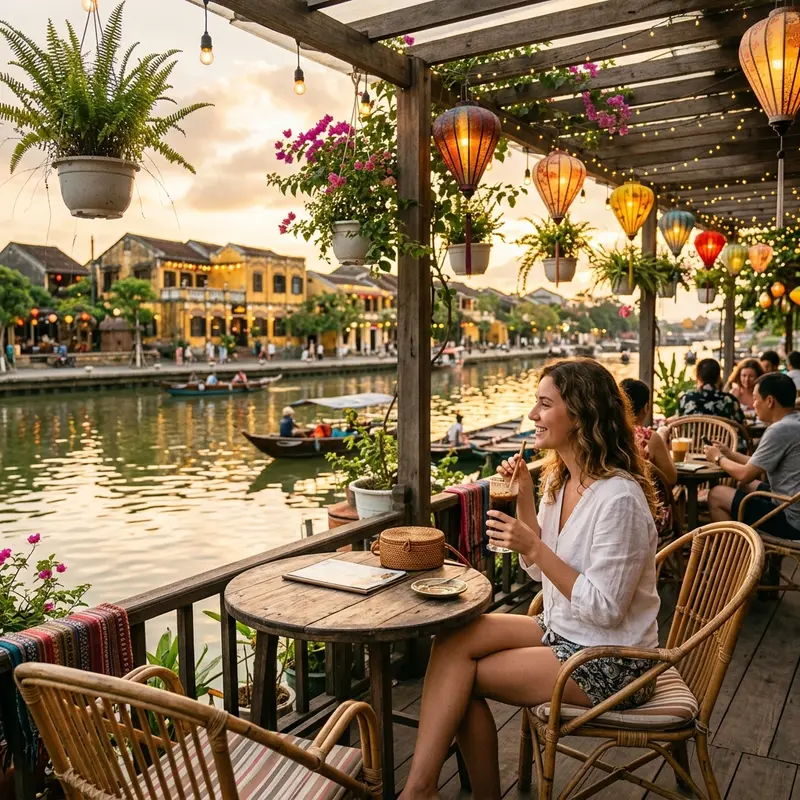 Coffee beside Thu Bon River — the most expensive cup but the view is free.
Weasel coffee (Kopi Luwak) is coffee made from beans that have passed through a civet’s digestive system. Hoi An has many shops serving authentic weasel coffee from 150,000 VND — pricier than regular coffee but with more complex, multi-layered flavor, less bitterness.
Warning: Many places sell “fake weasel coffee” — artificially flavored. Ask about the source and request certification before paying.
22. Hoi An Salt Coffee
Price: 25,000 – 45,000 VND/cup (~$1-$1.80)
Hours: 7:00 AM – 9:00 PM
Location: Multiple shops on Tran Phu and Bach Dang Streets
Salt coffee is a local Central Vietnam innovation: salty-sweet cream topping over strong black coffee. Sounds strange, but once you try it you understand why this drink is “addictive.” The contrast of salty-bitter-sweet creates an unforgettable taste experience.
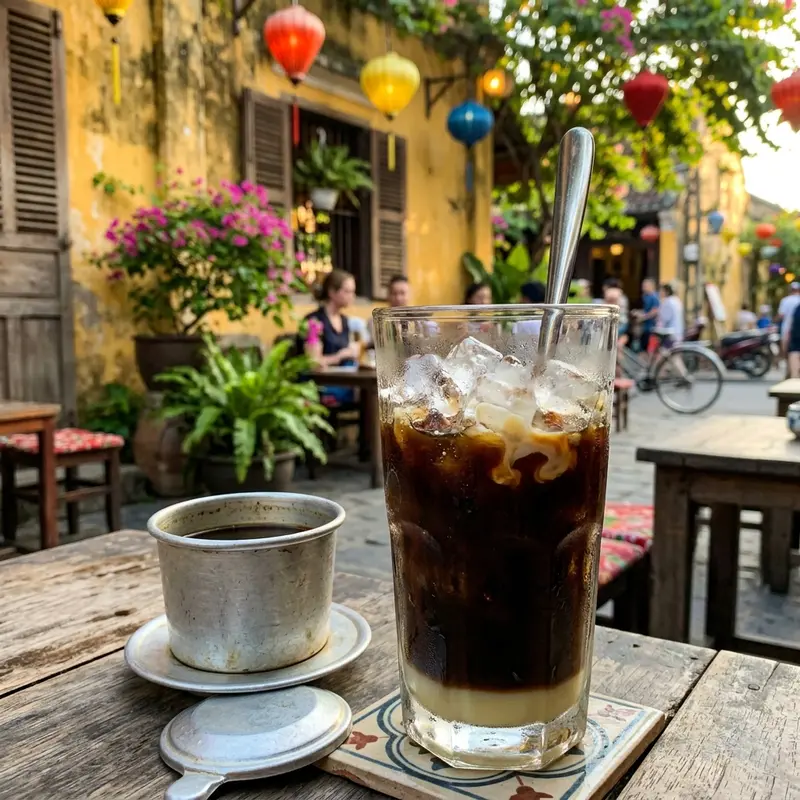 Iced Milk Coffee — from the first drop falling through the phin to the last sip, a morning ritual never gets old.
23. Sugarcane Juice with Herbal Mix — #1 Heat-Relief Drink
Price: 15,000 – 25,000 VND/cup (~$0.60-$1)
Hours: 8:00 AM – 8:00 PM
Location: Throughout the streets, especially Old Town
Fresh-pressed sugarcane mixed with herbal drink, finely shaved ice — drinking one cup at noon in scorching Hoi An is incomparable. Cheap, refreshing, no alcohol.
24. Traditional Green Tea with Jasmine
Price: 20,000 – 35,000 VND/cup (~$0.80-$1.40)
Hours: 9:00 AM – 10:00 PM
Location: Old Town and An Hoi area
Iced green tea, mixed with jasmine or lotus fragrance, enjoyed in an antique-style space — true Hoi An tea experience. Many Old Town cafes serve traditional tea sets where you can spend the whole afternoon.
25. Frog Smoothie / Mango with Salt and Chili
Price: 20,000 – 35,000 VND/cup (~$0.80-$1.40)
Hours: 10:00 AM – 8:00 PM
Location: Street vendors in Old Town
Green frog fruit, topped with salt and chili — or blended into cold smoothie. Tropical fruit combined with salt and chili is the distinctive snacking style of Central Vietnam, very different from Northern and Southern tastes.
PART 6: SOUVENIRS TO BRING HOME
26. Hoi An Printed Cake
Price: 50,000 – 120,000 VND/box (~$2-$4.80)
Where to buy: Hoi An Market and bakeries on Tran Phu
Traditional sticky rice cake, pressed with delicate flower patterns, wrapped in cellophane. This is the classic Hoi An souvenir, lasting 2-3 weeks.
27. Hoi An Ginger Preserves
Price: 30,000 – 60,000 VND/bag (~$1.20-$2.40)
Where to buy: Hoi An Market
Hoi An ginger is spicier than ginger elsewhere; the ginger preserve is therefore more intense. Two types: dried ginger preserve and wet ginger preserve. Dried preserves last longer, better for taking home.
28. Anchovy Fish Sauce
Price: 50,000 – 150,000 VND/bottle (~$2-$6)
Where to buy: Coopmart or Hoi An Market
Cua Dai anchovy fish sauce — aged 12-18 months, golden-brown clear color, distinctive aroma without fishiness. This is the secret ingredient for most Hoi An dishes.
29. Dried Colocasia Bean
Price: 40,000 – 70,000 VND/pack (~$1.60-$2.80)
Where to buy: Hoi An Market
Dried colocasia beans (a local white bean variety) to make pudding at home. Few people know about this bean, but it’s a specialty ingredient found only in Quang Nam region.
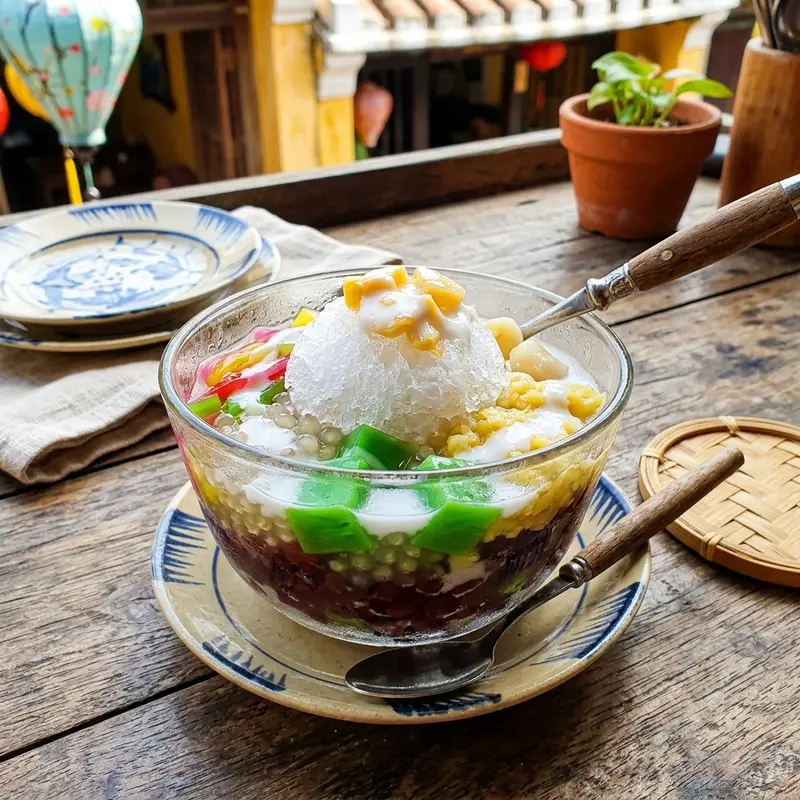 Hoi An Pudding — a sweet, refreshing cup after a day of exploring the Old Town.
30. Dried Mi Quang — Bring Hoi An Home
Price: 30,000 – 50,000 VND/pack (~$1.20-$2)
Where to buy: Hoi An Market and specialty shops on Tran Phu
Dried Mi Quang made in Hoi An, cook at home. Can’t match eating it in person, but it’s the most practical way to “bring Hoi An home.”
Money-Saving Tips When Eating in Hoi An
Hoi An is a famous tourist destination — that means prices can be “inflated” if you don’t know where to eat. These are principles I share with guests after many years guiding:
1. Avoid shops facing the Old Town (especially Tran Phu, Bach Dang): Prices here are 1.5-2 times higher than shops in back alleys. Go a bit further into small alleys where locals eat; prices are better and food is usually better too.
2. Eat breakfast at Hoi An Market: Hoi An Market’s inner area (not the outer stalls) is where locals eat breakfast daily. Cao lau, Mi Quang, banh cuon cost 20,000-30,000 VND — very budget-friendly.
3. Ask prices before ordering: With seafood, always ask the price per kg or per plate before ordering. Some seafood restaurants calculate by weight without clear disclosure.
4. Drink tap water at shops, not bottled: Sugarcane juice, herbal drink, iced tea at the shop is much cheaper than bottled water at Old Town cafes.
5. Eat early breakfast: Many of Hoi An’s best shops only sell until 11 AM. Waking up early for breakfast is the optimal way to eat great food without long waits.
Food Safety Notes When Eating Street Food
Hoi An street food is generally much safer than other major cities because of high international tourist traffic and resulting food safety pressure. Still, some tips:
Signs of a safe street stall:
- ✅ Many locals eating (not just tourists)
- ✅ Food is made and sold same-day, nothing kept overnight
- ✅ Food is covered with mesh or refrigerated
- ✅ Clean bowls and utensils without odor
- ✅ Vendors wash hands or wear gloves when preparing
When eating raw foods:
- Fresh Tra Que herbs are usually washed thoroughly multiple times before selling, relatively safe
- Salads and seafood sashimi: choose shops with good reputation, avoid roadside stalls with unclear sources
- Ice: ask if they use block ice or bag ice — bag ice from commercial production is safer than block ice
If stomach troubles occur: Pharmacies on Le Loi and Tran Phu stay open until 9-10 PM. Smecta and Oresol are two drugs to bring when on a food tour.
Suggested 3-Day Eating Itinerary in Hoi An
Day 1 — Explore the Classics
- Morning: Ba Be’s Cao Lau (in market) + salt coffee by river
- Lunch: Ba Buoi’s Chicken Rice + colocasia pudding
- Afternoon: Ba Duong’s Mini Banh Xeo + sugarcane herbal drink
- Dinner: River Clam Banh Trang + Fish Hot Pot
Day 2 — Eat Like a Local
- Morning: Ba Mua’s Mi Quang + Phuong Banh Mi
- Lunch: White Rose Dumplings + Wontons
- Afternoon: Banh Dap + Snail at night market
- Dinner: Clay Pot Rice by river + weasel coffee
Day 3 — Self-Guided Discovery
- Spend the day eating as inspired, browse Hoi An Market for specialties
- Try dishes not yet sampled in first 2 days
- Buy souvenirs: printed cake, fish sauce, ginger preserve
Conclusion
Hoi An cuisine is not just food — it’s a living museum of a city that has undergone centuries of commerce and cultural integration. Every bowl of cao lau, every banh mi sandwich, every plate of mini banh xeo carries within it a story, a memory, a generation of people preserving their craft.
Coming to Hoi An, don’t just photograph beautiful alleys and glowing lanterns. Sit down on a small chair outside a stall, order a bowl of cao lau, and let the city’s flavors tell you its story.
— Tran Bich Ngoc, Hoi An Food Guide
Helpful Related Routes & Travel Guides
To help you plan your itinerary seamlessly across Central Vietnam, here are our recommended transfer routes and travel resources:
- 🚗 Hoi An Walking Tour & Map Guide — Detailed walking routes through ancient town alleys.
- 🚗 Da Nang to Hoi An Private Transfer — Comfortable 45-minute door-to-door transfer.
- 🚗 Day Tour Car Service — Flexible charter for foodies and sightseeing enthusiasts.
Check our full pricing directory, explore vehicle choices in our modern fleet, or book easily via our contact page.
Frequently Asked Questions
Frequently asked questions about 30 Hoi An Local Delicacies
How long does it take to travel from Da Nang to Hoi An?
Should I rent a private car or take a shuttle from Da Nang to Hoi An?
Where can I park when exploring Hoi An Old Town?
What is the best way to use this guide to 30 Hoi An Local Delicacies: The Ultimate Culinary Map?
Is 30 Hoi An Local Delicacies: The Ultimate Culinary Map suitable for a first-time visitor?
Tags
The Faifo Express
This article was written by the driver and travel consultant team at Faifo Express — over 5 years of experience in travel transport across Da Nang, Hoi An, and Hue. All information is based on real experience serving 5,000+ customers every month.
Related services
Airport Transfer
Hotel pickup, all-inclusive price
View DetailsDay Tour Car Rental
Ba Na Hills, Hoi An, My Son...
View DetailsShared Car
From just 100K VND/person
View DetailsTourist Car Rental
Explore the beauty of Central Vietnam with our private tourist car service.
View Details🛣️ Popular Routes

Follow Faifo Express
Get exclusive deals, real reviews and the latest Central Vietnam travel tips.
Faifo Express
Updates, customer reviews & real trip photos.
@trm.anh.travel
Real experience videos, Da Nang – Hoi An travel tips.
@xedichvudananghoianhue
Real videos of routes, fleet and transfer services.
@xedananghoianFE
Quick news, flash deals and direct interaction.
DM us on Facebook — response within 5 minutes