


What to Eat in Hoi An: 15 Local Specialties and Where to Find Them
📋 Table of Contents
Hoi An – The City of Unforgettable Flavors
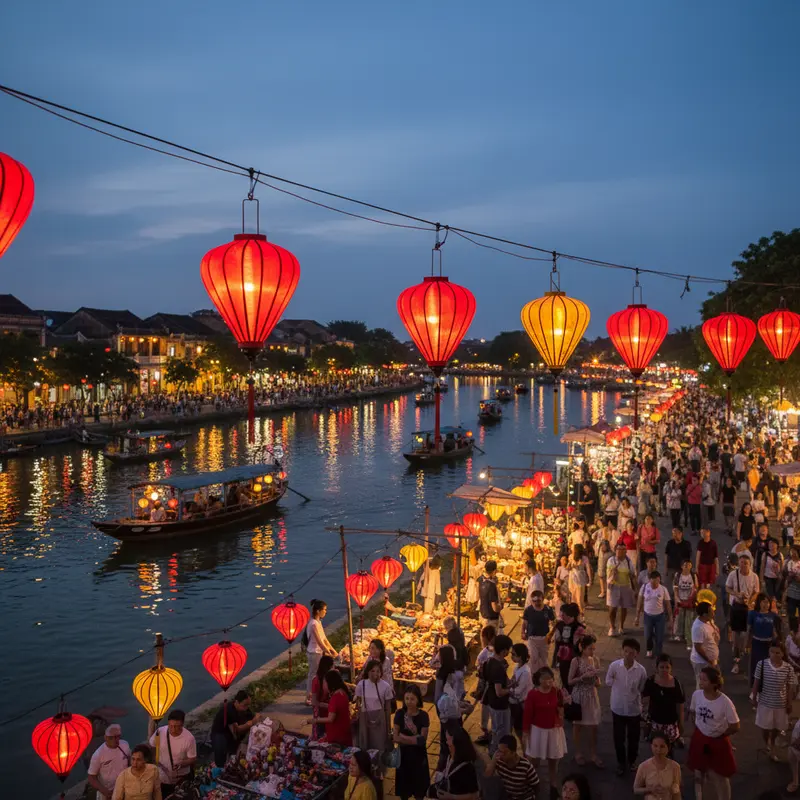
There’s a truth that anyone who has set foot in Hoi An must admit: you might forget the yellow color of the ancient houses, forget the shimmering lanterns reflecting on the Thu Bon River, but you will never forget the taste of Hoi An. The smell of charcoal smoke mixed with bone broth simmering from 5 AM, the fragrant scent of Quang noodles with roasted peanut oil, the crisp sound of freshly baked banh mi – all create a unique olfactory symphony found nowhere else in Vietnam.
As someone born and raised in Central Vietnam, I’ve traveled through dozens of cities and tried hundreds of dishes – but every time I’m asked “What to eat in Hoi An?”, I feel restless, afraid I won’t be able to tell you everything. Because Hoi An’s cuisine is not simply “specialties” – it’s an entire ecosystem of culture, history, and people compressed into every bowl, every dish, every cake.
This article is a culinary map of 15 Hoi An specialties that I’ve spent years “field researching” to compile – not a copy-paste list from the internet, but truly worthwhile addresses for your time and money, along with “insider tips” that only locals know.
Why is Hoi An’s Cuisine So Special?
Cultural Interplay Creates Unique Flavors
Hoi An was once the busiest trading port in Southeast Asia from the 16th to 17th centuries, where Japanese, Chinese, Portuguese, and Dutch merchants gathered to trade. This centuries-long cultural exchange has “programmed” an incredibly complex and refined culinary tradition. You’ll see Chinese influence in the way Cao Lau is cooked with ash water, Japanese influence in the noodle-making techniques of old Hoi An people, and the pure Vietnamese soul in the way dipping sauces are prepared and herbs are used.
Unlike Hue – where cuisine is heavily courtly, elaborate, and proud; and unlike Da Nang – where cuisine leans towards seafood and a sense of freedom. Hoi An has its own personality: refined yet humble, diverse yet consistent in quality.
Local Ingredients are the Soul
What sets Hoi An’s cuisine apart is its ingredients. Ba Le well water – an ancient well hundreds of years old in the heart of the ancient town – is believed by locals to give Quang noodles and Cao Lau their characteristic sweetness. This is not superstition: ancient well water has a different mineral content, which truly affects the flavor of food. Herbs grown in Tra Que vegetable village, less than 3km from the ancient town, are also more intensely fragrant than herbs grown elsewhere, thanks to the special alluvial soil by the river.
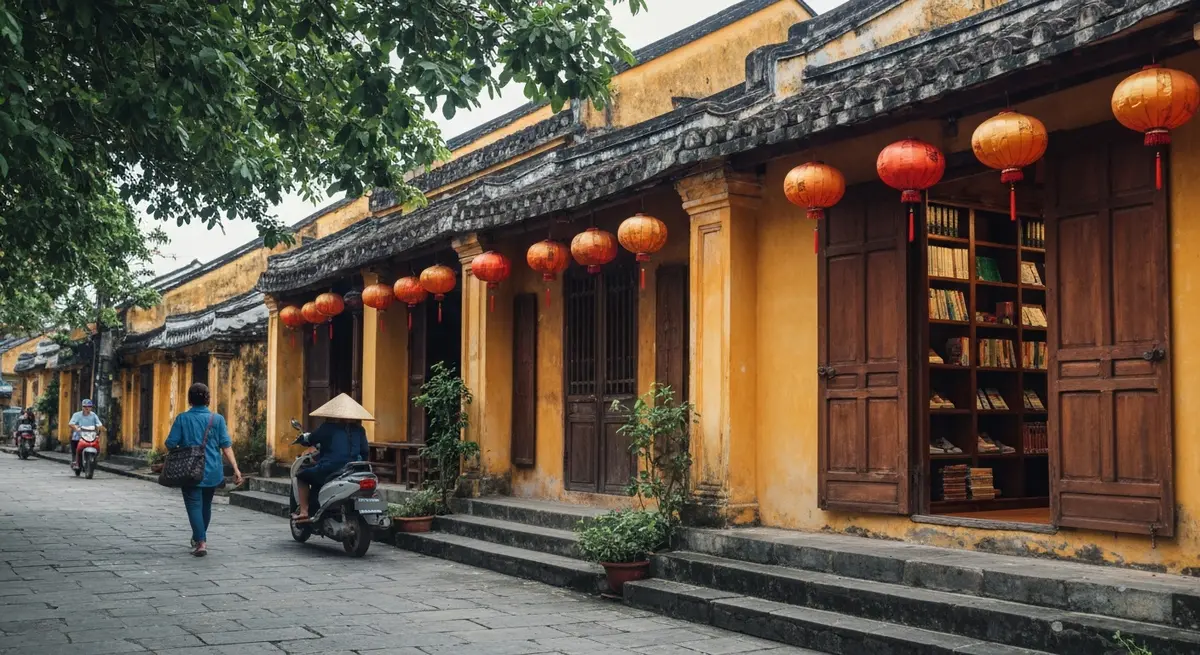
Map of 15 Must-Try Hoi An Specialties
1. Cao Lau – The Soul of the Ancient Town
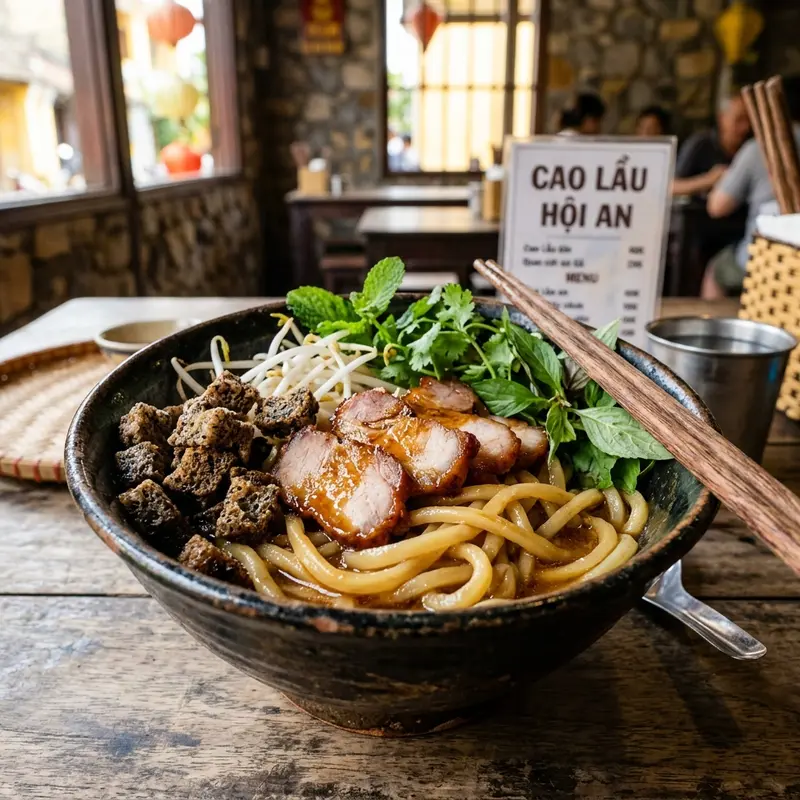
If you can only eat one dish in Hoi An, choose Cao Lau. Not because it’s the most delicious (though it is exceptionally good), but because Cao Lau is something you cannot find anywhere else in the world – no matter how hard people try, they cannot replicate its true flavor.
The Cao Lau noodles are made from rice soaked in ash water from firewood burned in Cu Lao Cham, then kneaded with water from the Ba Le well. This process creates noodles with a characteristic yellowish-brown color, chewy but not tough, with a light ash aroma. The bowl is topped with thinly sliced char siu pork, crispy fried wonton crackers, fresh herbs, and a rich sauce – not a broth.it’s not like pho or bun bo, but just a thick, rich sauce coating the noodles.
My most trusted Cao Lau addresses:
- Cao Lau Ba Be – 26 Thai Phien: A small eatery with plastic tables and chairs, open from 6 AM. This is where authentic Hoi An locals often stop before work. Price: 35,000 – 50,000 VND (≈$2)/bowl.
- Cao Lau Trung Bac – 87 Tran Phu: Located right in the ancient town, it’s suitable for tourists who want to eat and sightsee at the same time.
[!TIP] The secret to eating Cao Lau correctly: Don’t mix it immediately after it’s served. Take a moment to look at the bowl, savor each component separately – try the noodles first, then the meat, and then mix everything together. You’ll experience a distinct transformation of flavors.
2. Hoi An Mi Quang – Far Different from Da Nang Mi Quang
Many people think Mi Quang is the same everywhere. That’s completely wrong. Hoi An Mi Quang has subtle differences: less broth, richer flavor, often featuring river shrimp (small tiger prawns caught from the Thu Bon River), and especially, the grilled rice cracker served alongside must be grilled directly over charcoal embers, not in an electric oven.
A standard bowl of Hoi An Mi Quang must have: bright yellow noodles, shrimp and pork filling, quail eggs, crushed roasted peanuts, scallions, fresh herbs (basil, bean sprouts, thinly sliced green banana), and absolutely must not be missing pickled green chilies.
Must-visit addresses:
- Mi Quang Ba Mua – 22 Tran Phu: This is the oldest Mi Quang eatery in the ancient town, existing for over 40 years. The owner, now over 70 years old, still personally cooks the broth every morning.
- Mi Quang 1A – 1A Phan Chu Trinh: Most famous with tourists, fast service, always crowded.
3. Hoi An Banh Mi – A Global Culinary Phenomenon
Hoi An Banh Mi has been praised by CNN, The Guardian, and dozens of international newspapers as one of the best street foods in the world. But what few people know is that not every banh mi shop in Hoi An is equally delicious – and locals themselves make clear distinctions.
The difference in Hoi An banh mi: the bread crust is crispier, the fillings are richer (can include roasted pork, pate, Vietnamese ham, fried egg, cucumber, fresh herbs, homemade chili sauce), and most importantly – the bread must be re-toasted directly over charcoal or a gas stove, not in a microwave.
Addresses:
- Banh Mi Phuong – 2B Phan Chau Trinh: Legendary. Anthony Bourdain ate here and called it “the best banh mi in the world.” Long queues every morning, but worth the wait. Price: 30,000 – 50,000 VND (≈$2).
- Banh Mi Ba Lan – 6 Phan Chau Trinh: Less famous but preferred by locals because there are fewer tourists and service is faster.
[!WARNING] Avoid buying banh mi from unmarked street carts along tourist routes. Some places use day-old bread and the fillings are not fresh. Observe if the bread is being re-toasted before buying.
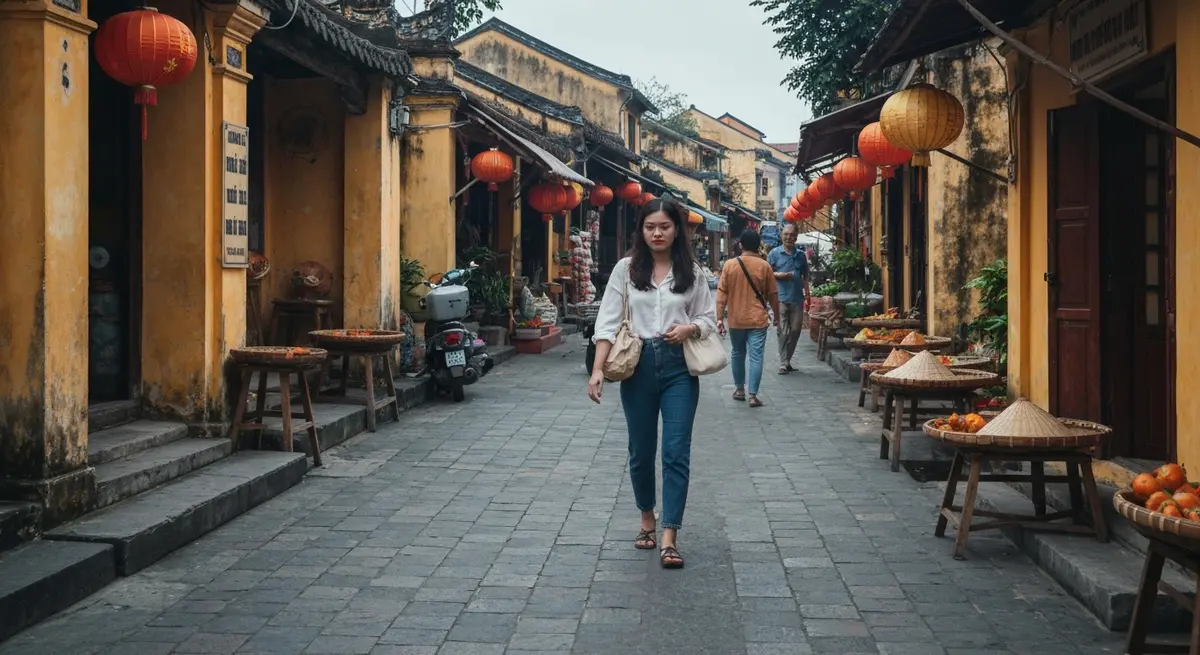
4. Hoi An Chicken Rice – Not Ordinary Chicken Rice
Hoi An chicken rice is one of those culinary mysteries that took me years to “decode.” What makes it different isn’t the chicken (though free-range local chicken is indeed tastier), but the way the rice is cooked and the dipping sauce is made.
The rice is cooked in chicken broth, with fried shallots and peanut oil – giving it a golden hue and a distinctive aroma. The chicken is hand-shredded (not cut with a knife), mixed with thinly sliced onions, Vietnamese coriander, and a little crispy fried chicken fat. The dipping sauce is a mixture of chili sauce, ginger, lime, and a secret recipe unique to each establishment.
Addresses:*
- Com Ga Ba Buoi – 22 Phan Chau Trinh: The oldest establishment, crowded from 10 AM to 2 PM. Arrive late and it’s all gone.
- Com Ga Ba Nga – 6 Nguyen Hoang: Less famous but equally high quality, more affordable (45,000 – 70,000 VND (≈$3)/serving).
[!TIP] The secret to enjoying Com Ga like a local: Order an extra plate of crispy fried chicken skin and a bowl of chicken broth. Hoi An locals never eat Com Ga without these two.
5. Hoanh Thanh – The Last Imprint of the Chinese
Hoi An’s Hoanh Thanh is unlike Chinese or Saigon-style Hoanh Thanh. Hoi An locals have two ways of eating it: fried Hoanh Thanh (crispy, filled with shrimp and pork, served with sweet tomato sauce) and soup Hoanh Thanh (thin, soft wrappers, clear broth, garnished with scallions and pepper).
Hoi An fried Hoanh Thanh is special because the wrappers are fried until puffy but not greasy, maintaining their crispiness for a long time. It’s an ideal afternoon snack while you’re wandering through the ancient town.
Address: Hoanh Tluggage Cafe – 22 Nguyen Hue (combines eating Hoanh Thanh and drinking egg coffee in a traditional old house setting).
6. Banh Bao Banh Vac – Hoi An’s “White Rose”
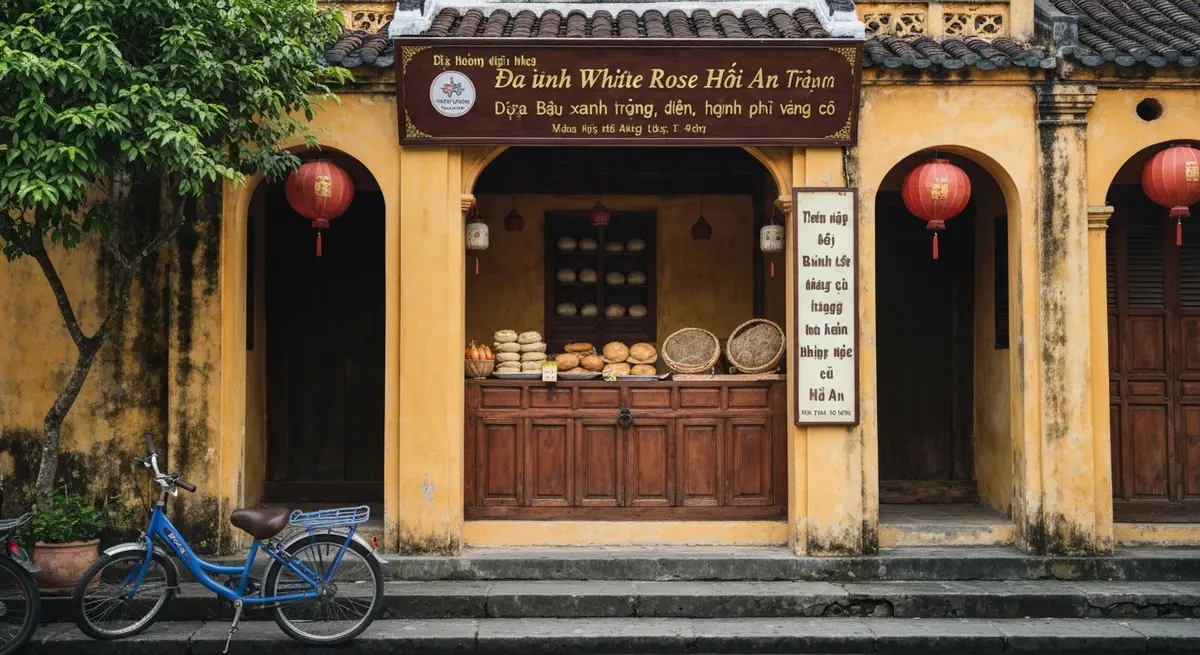
Westerners call this “White Rose” because of its shape, resembling a white rose. This is one of Hoi An’s most exclusive dishes – only one family makes the wrappers and supplies them to all the restaurants in the ancient town.
The wrappers are made from rice flour, as thin as paper, filled with minced shrimp mixed with pepper and onion, folded into a flower shape, and steamed. Served with crispy fried shallots sprinkled on top and a sweet and sour dipping sauce. Each bite melts in your mouth, leaving a delicate sweetness from the fresh shrimp.
Address: White Rose Restaurant – 533 Hai Ba Trung (this is the home of the family that makes the dumplings; eating at the source is the best).
7. Banh Dap – Addictive from the First Bite
Banh Dap is a combination of crispy grilled rice paper and soft steamed rice paper, served with Hoi An’s Mam Nem – a special fermented anchovy sauce made from anchovies aged for many years, with a distinctive strong aroma but a wonderfully sweet aftertaste. The name “Banh Dap” comes from the way you eat it: you have to gently “tap” it so the crispy rice paper sticks to the soft steamed rice paper.
This is a typical Hoi An afternoon snack, usually sold from roadside carts or at Hoi An Market.
Address: Hoi An Market (inside area, near the phu gate on Tran Quy Cap street) – price 15,000 – 20,000 VND (≈$1)/serving.
8. Mi Quang Ech – A Unique Variation
Few tourists know about this dish, but it’s what Hoi An locals often eat on weekends. Mi Quang Ech uses frog legs coated in batter and fried until crispy instead of the usual shrimp and pork – creating an interesting contrast between the soft noodles and the crispy frog.
Address: Mi Quang Ech – 6A Truong Minh Luong (only open in the morning, sells out before 10 AM).
9. Hoi An Banh Xeo – Small But Mighty
Hoi An’s Banh Xeo is completely different from Southern Banh Xeo: palm-sized, cooked in small cast-iron pans, with thin, crispy shells, filled with shrimp, pork, and bean sprouts. Served with special fresh herbs (mustard greens, fig leaves, mulberry leaves, various aromatic herbs) and a sweet and sour dipping sauce prepared in the Hoi An style.
The correct way to eat it: Use a mustard green leaf (or fig leaf) as a “wrapper,” place a piece of Banh Xeo inside, add aromatic herbs, roll it up, and dip it in the sauce. Never eat Hoi An Banh Xeo without fresh herbs – it’s a culinary crime.
Address:
- Banh Xeo Ba Duong – 93 Tran Phu: Legendary, always crowded.
- Banh Xeo Khong Ten – Hoi An Market, 2nd-floor food court: Cheaper, just as delicious, fewer tourists.
[!NOTE] Hoi An Banh Xeo is usually best enjoyed fresh off the pan. Don’t buy it to take away, as the crispy shell will lose its crunch within 5 minutes.
10. Hoi An Che – Sweet End to the Day
Hoi An boasts a “che kingdom” that few have fully explored. Che bap (corn sweet soup) cooked with coconut milk is the number one specialty – the delicate sweetness of young corn blends with the rich aroma of coconut, delicious hot or cold. Other options include che dau van, che troi nuoc with mung bean filling, and especially che hat sen long nhan (lotus seed and longan sweet soup) – a premium dessert often featured at Hoi An weddings.
Address: Che Hem – 46 Tran Hung Dao (located in a small alley, no sign, only locals know). Price: 15,000 – 30,000 VND (≈$1)/cup.
11. Hoi An Com Hen – Different from Hue Com Hen
Hoi An’s Com Hen is less famous than its Hue counterpart but has its own unique charms: the clams are stir-fried with lemongrass and chili before being served over rice, the clam broth is richer and used as a soup to pour over. This is a typical breakfast for Hoi An laborers.
Address: Com Hen Ba Huong – Hoi An Market, open from 6 AM to 9 AM.
12. Hoi An Jumping Shrimp – Fresher Than Fresh
Tiger prawns, lobsters, mantis shrimp – all are caught from the waters of Cu Lao Cham and the Thu Bon River, served to your table still alive and kicking. Hoi An locals eat jumping shrimp in the simplest way: steamed with beer and lemongrass, dipped in salt and lime. No complex seasonings are needed because the fresh shrimp are delicious enough on their own.
Address: Restaurants along the Thu Bon River (Bach Dang street) – many options, prices range from 200,000 – 600,000 VND (≈$24)/kg depending on the type of shrimp.
[!WARNING] Some restaurants along Bach Dang River have been known to overcharge tourists by not listing prices or adding hidden service fees. Always ask for the price before ordering and request a menu with clear pricing.
13. Banh It La Gai – The Best Souvenir
Banh It La Gai is a traditional cake made from glutinous rice flour mixed with pounded ramie leaves (giving it its characteristic dark green color), filled with mung beans or coconut. The cakes are wrapped in banana leaves and steamed – the chewy texture of the rice, the slight bitterness of the ramie leaves, and the sweet, nutty filling create a perfect combination.
This is the ideal souvenir to bring home from Hoi An – the cakes can be kept at room temperature for 2-3 days, or refrigerated for up to a week.
Address: Banh It La Gai Craft Village – Duy Trinh commune, Duy Xuyen district (20km from Hoi An) or buy at Hoi An Market.
14. Vegetarian Cao Lau – A Delicious Surprise
Few people know that Hoi An has a vegetarian version of Cao Lau for vegetarians or for the full moon and the first day of the lunar month. The char siu pork is replaced with golden fried tofu and shiitake mushrooms, but the noodles and crispy crackers remain the same. The flavor is lighter but still distinctly Cao Lau.
Address: Quan Chay Hoa Sen – 76 Tran Phu (open all day, price 40,000 VND (≈$2)/bowl).
15. Avocado Smoothie and Hoi An Sugarcane Juice – The Perfect Ending
After a day of wandering and eating, nothing is better than a thick avocado smoothie or freshly squeezed sugarcane juice with lime. Hoi An has roadside stalls selling smoothies and sugarcane juice at very reasonable prices (15,000 – 30,000 VND (≈$1)/cup), with fresh ingredients and no artificial sweeteners.
Guide to Traveling to Hoi An for the Best Culinary Experience
From Da Nang to Hoi An – Don’t Let Travel Ruin Your Food Trip
Hoi An is about 30km from the center of Da Nang, taking about 45-60 minutes of travel. This is not an excessively long distance, but if you don’t prepare thoroughly, you might encounter quite a few troubles.
Many tourists opt for Grab or traditional taxis, but these are not the optimal choices: Grab can sometimes be difficult to hail during peak hours, traditional taxis might “run the meter” via a longer route, and more importantly – you won’t have anyone to guide you on where to eat.
Helpful Related Routes & Travel Guides
To help you plan your itinerary seamlessly across Central Vietnam, here are our recommended transfer routes and travel resources:
- 🚗 30 Best Hoi An Dishes & Culinary Guide — Top traditional street food recommendations.
- 🚗 Da Nang to Hoi An Private Transfer — Convenient private car connecting city and heritage town.
- 🚗 Hourly Car Rental with Driver — Explore famous dining spots at your own pace.
Check our full pricing directory, explore vehicle choices in our modern fleet, or book easily via our contact page.
Frequently Asked Questions
Frequently asked questions about What to Eat in Hoi An? Map of 15 Must-Try Specialties
What is the best way to use this guide to What to Eat in Hoi An? Map of 15 Must-Try Specialties?
Is What to Eat in Hoi An? Map of 15 Must-Try Specialties suitable for a first-time visitor?
Can I combine What to Eat in Hoi An? Map of 15 Must-Try Specialties with other nearby plans?
What should I confirm before making plans for What to Eat in Hoi An? Map of 15 Must-Try Specialties?
How can I avoid last-minute problems with What to Eat in Hoi An? Map of 15 Must-Try Specialties?
Tags
The Faifo Express
This article was written by the driver and travel consultant team at Faifo Express — over 5 years of experience in travel transport across Da Nang, Hoi An, and Hue. All information is based on real experience serving 5,000+ customers every month.
Related services
Airport Transfer
Hotel pickup, all-inclusive price
View DetailsDay Tour Car Rental
Ba Na Hills, Hoi An, My Son...
View DetailsShared Car
From just 100K VND/person
View DetailsTourist Car Rental
Explore the beauty of Central Vietnam with our private tourist car service.
View Details🛣️ Popular Routes
Follow Faifo Express
Get exclusive deals, real reviews and the latest Central Vietnam travel tips.
Faifo Express
Updates, customer reviews & real trip photos.
@trm.anh.travel
Real experience videos, Da Nang – Hoi An travel tips.
@xedichvudananghoianhue
Real videos of routes, fleet and transfer services.
@xedananghoianFE
Quick news, flash deals and direct interaction.
DM us on Facebook — response within 5 minutes