


Eating Your Way Through Hue: 20 Imperial and Street-Food Dishes to Seek Out
📋 Table of Contents
[!NOTE] Pricing Note for International Tourists The prices listed are inclusive of a 20% tax and service fee applied to foreign tourists. Estimated USD rates are based on current exchange rates and may slightly vary.
Hue – The Land Your Mouth Will Never Want to Leave
There’s a common joke among Hue locals: “Hue people don’t eat to live, Hue people live to eat – and eat with gusto.” It might sound like a joke, but once you set foot in the ancient capital, you’ll immediately understand why that saying resonates so deeply. Hue cuisine is not simply about filling your stomach. It’s an entire philosophy of life, a cultural heritage refined over hundreds of years under the Nguyen lords and kings – a place where even a bowl of vermicelli must be seasoned perfectly, presented correctly, and eaten at the right time to fully appreciate its deliciousness.
I’m writing this article not from the perspective of a tourist who just passes through. I’ve been to Hue enough times to know which eateries open at 5 AM, which alley has an elderly woman selling banh beo with lines stretching from early morning, and which “tourist-oriented shop$1” to steer clear of. This is a practical Hue culinary map – for those who want to eat their way through Hue in the truest sense of the word.
Why is Hue Cuisine So Distinctive?
Royal Origins – The Secret to Refinement
Few places in Vietnam have a culinary tradition as deeply marked by history as Hue. From the 17th century to the early 20th century, Hue was the capital of the entire S-shaped country. The royal kitchens didn’t just serve food – they were an art of performance before the emperor. Hue housewives learned to cook from palace maids and retired royal chefs, and gradually, the essence of royal cuisine permeated every humble kitchen.
The result? A culinary tradition where each dish has its own story, its own cooking technique, and most importantly, its own unique flavor that is unmistakable: intensely spicy, rich, vibrantly colored, and always presented with such meticulous care that it’s almost an art form.
The Hue Palate – Spicy, Savory, and Refined
Hue people eat spicy. Not Sichuan spicy or Thai spicy – but a deep, penetrating spiciness that makes you sweat as you slurp, yet you can’t stop. Hue chilies are small but fierce, and Hue people use chilies like Southerners use sugar – generously and naturally.
Alongside spiciness, Hue cuisine is characterized by its savory, rich flavors from fermented shrimp paste (mam ruoc) and fermented shrimp paste (mam tom chua) – ingredients that outsiders might be hesitant about but are the “soul” of dozens of Hue dishes.
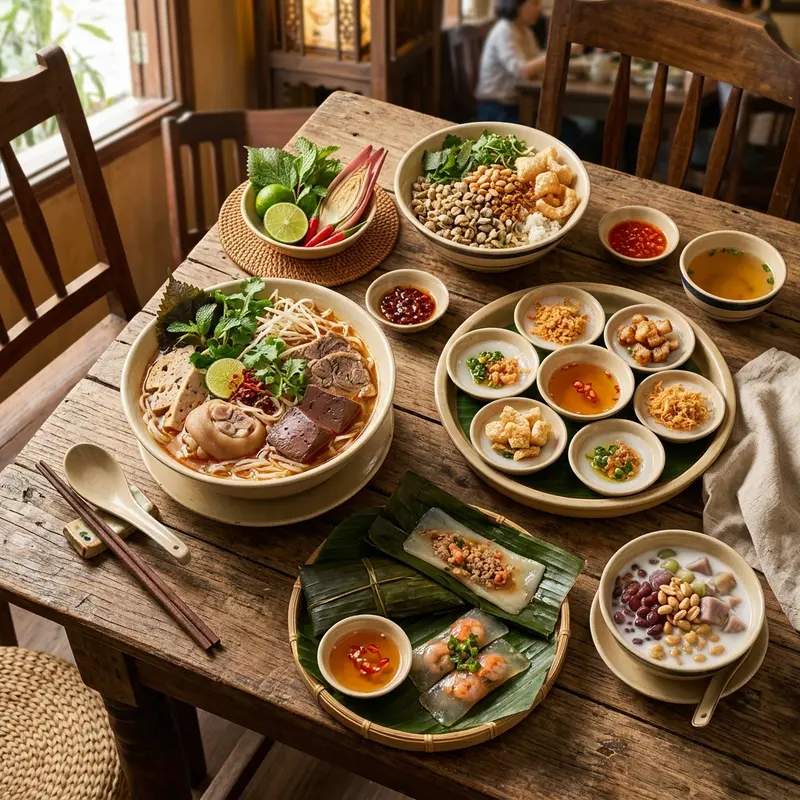
Top 20 Must-Try Hue Specialties
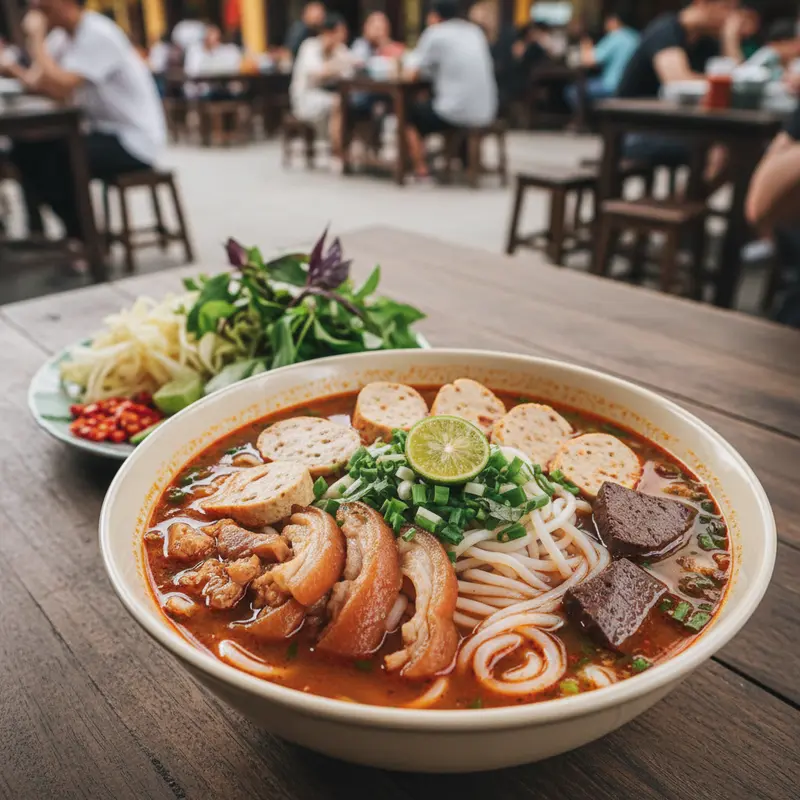
1. Bun Bo Hue – The King of All Vermicelli Bowls
If you could only eat one dish in Hue, choose Bun Bo. This isn’t advice – it’s an order from someone who has eaten Bun Bo at over 20 different places across the city.
A proper bowl of Bun Bo Hue must have: a broth deep red from lemongrass and chili, sweet from bones simmered for at least 6 hours, and fragrant from Hue fermented shrimp paste. The vermicelli noodles are round, thicker than regular vermicelli, chewy but not tough. Toppings include thinly sliced beef, pork hock, Hue sausage, and the essential pork blood cut into neat squares.
Recommended Eateries: Bun Bo O Xuan (Nguyen Du Street), Bun Bo Mu Ru (small alley near An Cuu Market) – these places open at 5:30 AM and often sell out before 9 AM.
[!TIP] To truly enjoy Bun Bo Hue, eat it early in the morning. The broth in the morning is sweeter and clearer because the bones have just finished simmering and haven’t become cloudy. By noon or afternoon, the broth has been simmering for hours, and the flavor will be significantly different.
2. Banh Beo – Small Yet Mighty
Don’t let the name “Banh Beo” fool you. This delicate, pretty-looking dishIt’s so addictive that many tourists have to return for a second meal on the same day.
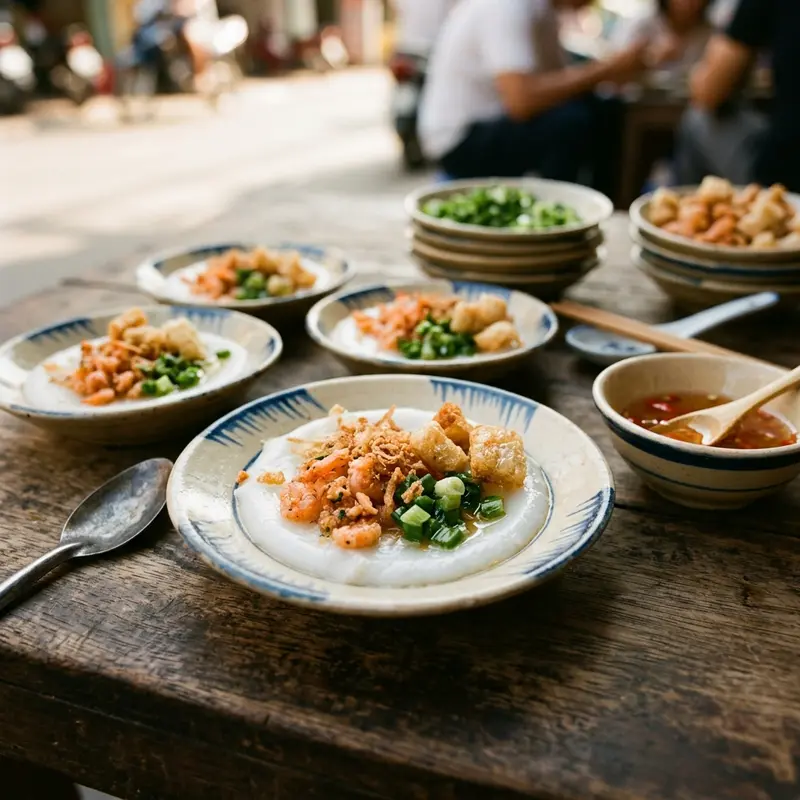
Hue steamed rice cakes are small rice flour cakes steamed in porcelain bowls, with a smooth white surface and a vibrant orange-red topping of finely ground dried shrimp. They are drizzled with a fragrant sweet and sour fish sauce and scallion oil. It’s absolutely perfect when eaten with banh nam and banh ram it (crispy fried banh it).
Insider Address: Ba Can’s steamed rice cakes on Nguyen Binh Khiem street – a small eatery with simple tables and chairs, but it’s a place where Hue locals have been bringing their families for generations.
3. Com Hen – The Breakfast of True Hue Locals
Com hen is something you must try at least once to understand how Hue people live. This is the breakfast of Hue laborers – cheap, fast, but incredibly complex in flavor.
A bowl of com hen includes: cold rice (important – it must be cold rice), stir-fried clams, finely chopped fresh vegetables, crispy fried pork rinds, roasted peanuts, minced fresh chili, diluted shrimp paste, and hot clam broth poured over. Mix it all together and eat immediately – the sour, spicy, salty, sweet, and fatty flavors blend together in one spoonful.
Location: Con Hen (a small islet in the middle of the Huong River) is where this dish was born. Cross Phu Loi bridge or take a boat, and you’ll find dozens of com hen eateries side-by-side, opening from 5 AM.
[!NOTE] Hue com hen is very spicy. If you can’t handle spicy food, ask for “less chili” – but honestly, eating it with less chili means losing half of the dish’s soul.
4. Banh Canh Cua – A Velvety Thick Broth
Hue banh canh differs from Southern banh canh in that the noodles are thicker, the broth is thicker, and it’s seasoned with shrimp paste instead of just salt and sugar. The crab version is the pinnacle – the broth is made from ground freshwater crabs, strained, and boiled until the crab roe floats on top, a golden yellow.
Eating a bowl of Hue crab banh canh on a cold morning, you’ll understand why Hue people don’t need coffee to wake up.
5. Banh Nam – Thin as Silk, Fragrant as Perfume
Banh nam is one of the most delicate dishes in Hue cuisine. Diluted rice flour is poured onto a banana leaf, topped with a mixture of shrimp and meat, then the leaf is folded and steamed. When opened, the cake is incredibly thin, translucent, allowing you to see through the delicate layer of flour.
Banh nam must be eaten hot, dipped in a perfectly proportioned fish sauce. The sensation of the cake melting in your mouth, with the fragrant and savory shrimp and meat filling – this is something no fancy restaurant can replicate.
6. Bun Thit Nuong – Simple Yet Addictive
What makes Hue bun thit nuong different? Pork is marinated with lemongrass, chili, and shrimp paste, then grilled over charcoal – the aroma travels for tens of meters. It’s served with fresh vermicelli, raw vegetables, roasted peanuts, and a sweet and sour fish sauce. It’s surprisingly simple, yet it’s the dish that tourists often “crave” the most after leaving Hue.
7. Mi Quang Hue – The Imperial Capital Version with Broth
Few people know that Hue has its own version of mi quang – Hue mi quang has broth (unlike Da Nang’s mi quang which has little broth). The noodles are bright yellow, the broth is rich from pork bones and shrimp, with additions of pork, shrimp, and quail eggs. This is a “local” dish that few eateries serve to tourists – you have to venture into residential areas to find it.
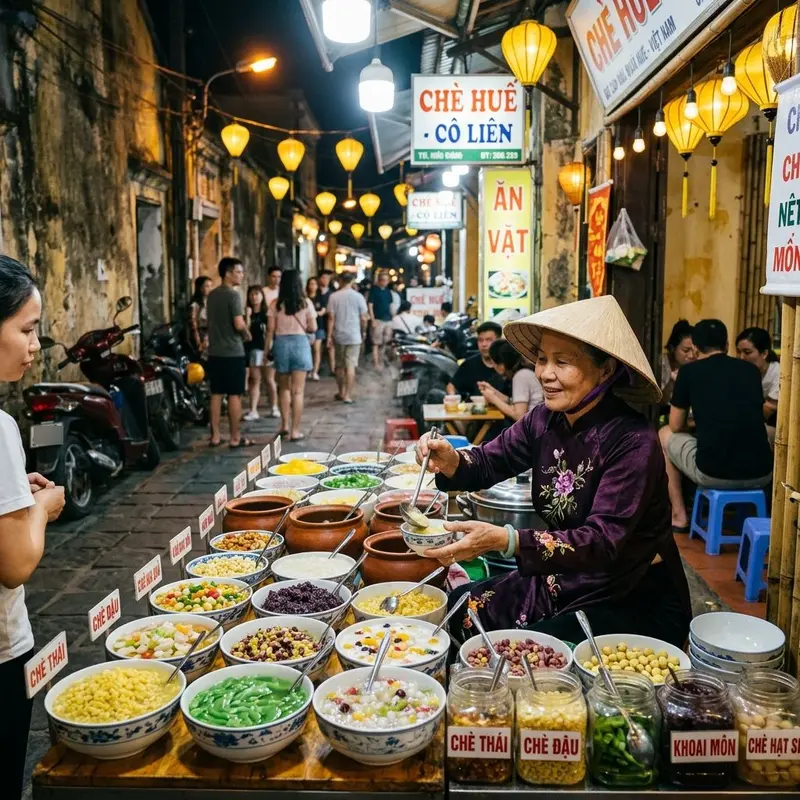
8. Che Hue – An Entire World in a Small Bowl
Mentioning Hue che is like mentioning an entire separate culinary universe. Hue people have over 30 types of che, each with its own unique flavor and story.Personal stories:
- Che dau van – subtly sweet, made from white hyacinth beans
- Che bap – naturally sweet from young corn, no added sugar needed
- Che hat sen – elegant, often featured in ancient royal weddings
- Che ke – nutty and unique flavor
- Che thung – a mixture of various beans, tubers, and lotus seeds
Address: Hue Dessert Street on Hung Vuong Street – this is where most dessert shops are concentrated, open from afternoon until late night.
[!TIP] Don’t order “a bowl of mixed dessert” – Hue people will look at you with pity. Choose specific types of desserts, try them one by one to appreciate the subtle differences between them.
9. Nem Lui – Hue’s Grilled Skewers
Nem lui is finely ground pork mixed with lemongrass and spices, rolled around bamboo skewers, and grilled over charcoal. Served with rice paper, fresh herbs, green bananas, starfruit, and a special Hue dipping sauce. Roll them all into a small wrap – each bite is a symphony of delicious flavors.
10. Banh Khoai – Crispy Yellow, Rich and Creamy
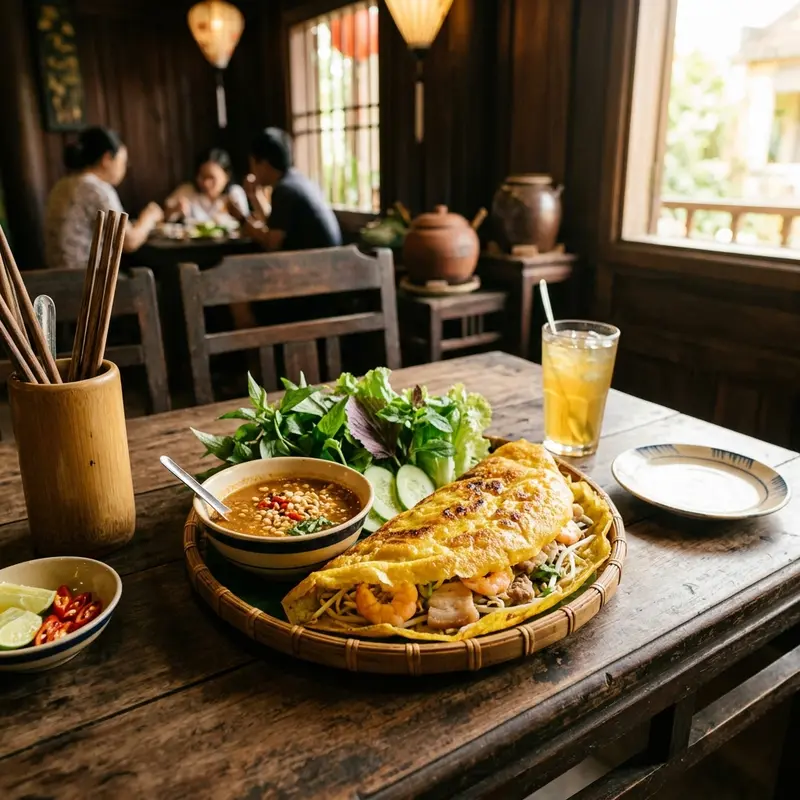
Hue’s Banh Khoai looks similar to Southern Banh Xeo but is smaller, thicker, and crispier. The cake’s crust is a vibrant yellow from turmeric, filled with shrimp, pork, bean sprouts, and eggs. The biggest difference: Hue’s Banh Khoai dipping sauce is liver pate sauce – a thick, rich sauce made from pork liver and peanuts.
Most famous shop: Banh Khoai Hang Me on Truong Dinh Street – this shop has been operating for over 40 years, and their liver pate sauce recipe is a family secret that no one can replicate.
11. Com Am Phu – Strange Name, Excellent Flavor
Com am phu has a somewhat eerie name but is actually one of Hue’s most refined dishes. It’s a plate of white rice served with various toppings: grilled pork, dried shrimp, shredded omelet, Vietnamese pork sausage, pickled mustard greens, and especially the characteristic Hue lemongrass shrimp paste. All are beautifully arranged on a plate, served with a sweet and sour fish sauce.
12. Tom Chua – A Specialty to Bring Home as a Gift
Hue’s Tom Chua is something you’ll want to buy by the box to take home. Fresh shrimp are marinated with roasted rice powder, garlic, chili, galangal, and naturally fermented for a few days. The result is bright red, sweet and sour, and spicy shrimp – best enjoyed with boiled pork belly, green bananas, starfruit, and rice paper.
[!WARNING] When buying Hue’s Tom Chua to take home, purchase from reputable establishments like Dong Ba Market or specialty stores with inspection seals. Avoid buying from street vendors as food safety and storage quality are not guaranteed.
13. Bun Hen – The Delicate Younger Sister of Com Hen
If Com Hen is the robust older brother, then Bun Hen is the delicate, lighter younger sister, but no less appealing. Instead of cold rice, fresh vermicelli is used, retaining the stir-fried clams and characteristic toppings. The clam broth poured in creates a gentler, sweeter flavor than Com Hen.
14. Banh Uot Thit Nuong – The Perfect Combo
Banh uot (wet rice paper rolls) with grilled pork is the most popular snack in Hue in the afternoon and evening. Thin, soft banh uot, fragrant charcoal-grilled pork, rolled with herbs and dipped in seasoned fish sauce – it’s so simple it can’t go wrong.
15. Chao Vit – Warming Up on Cold Mornings
Hue has a characteristic rainy and cold climate, and duck congee is what Hue people use to combat chilly mornings. The duck is cooked until tender, the congee is thick and smooth, sprinkled with scallions, pepper, and shredded ginger. Served with sour pickled mustard greens – a perfect combination that cannot be explained in words.
16. Banh Tet Hue – Different Filling## Arriving in Hue
Hue’s banh tet is smaller than its Southern counterpart, typically filled with mung beans and pork fat instead of large pieces of meat. A special characteristic is that the outer glutinous rice layer is often mixed with gac (for red color) or la cam (for purple color), creating the distinct, beautiful hues of Hue’s imperial cuisine.
17. Cha Ram Tom Dat – Crispy and Fragrant
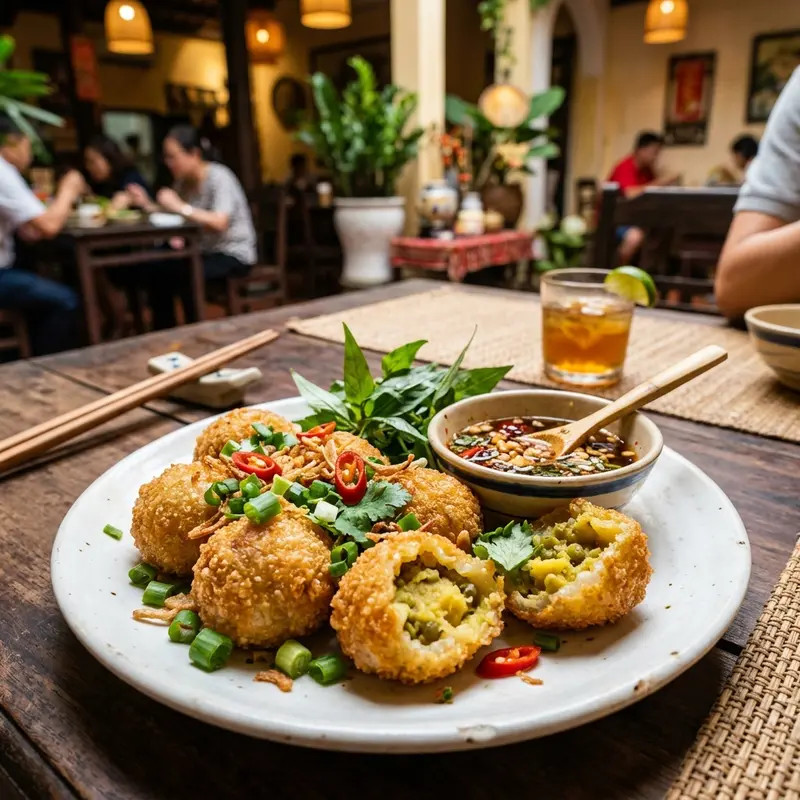
Cha ram tom dat are small fried cakes wrapped in fresh river shrimp, deep-fried until golden and crispy. Taking a bite: the crispy shell, the savory mung bean filling, and the sweet, fragrant shrimp. This is a snack that Hue ladies often made for ancestral anniversaries, but it’s now widely available in eateries.
18. Bun Gio Heo Hue – A “Giant” Bowl of Noodles
Unlike bun bo, Hue’s bun gio heo focuses on tender braised pork trotters, with translucent skin and melt-in-your-mouth meat. The broth is lighter, less spicy than bun bo, but has a deep sweetness from the bones. This is an ideal choice for those who can’t tolerate spicy food but still want to experience Hue noodles.
19. Banh Muot – Early Morning in the Ancient Capital
Banh muot are Hue’s version of steamed rice rolls with meat filling, but they differ in that the banh layer is thinner, smoother, and usually rolled into small portions. Served with Hue’s cha lua (pork sausage) and dipped in a special fish sauce – a typical, simple yet complete breakfast for Hue people.
20. Mam Tom Chua – The Soul of Hue Cuisine
Not a standalone dish, but mam tom chua is the soul of Hue cuisine. Without mam tom chua, there is no authentic bun bo Hue. Without mam tom chua, com hen loses half its flavor. This is a condiment that Hue people use like Northerners use shrimp paste – common, familiar, and indispensable.
How to Get to Hue and Explore its Cuisine Most Conveniently
If you’re staying in Hoi An and want to explore Hue cuisine at your own pace, a car rental from Hoi An to Hue with a local driver will save you travel time and let you focus on savoring every specialty dish.
From Da Nang to Hue – Which Mode of Transport to Choose?
Hue is about 100km from Da Nang via National Highway 1A, passing through the majestic Hai Van Pass. This is also one of the most beautiful routes in Vietnam – but if you drive a motorbike or take a regular taxi, you’ll miss out on many interesting stops along the way.
Practical advice from someone who has traveled this route dozens of times: book a full-service transfer with Faifo Express. The reasons are not just convenience – it’s about safety and experience:
- Drivers from Faifo Express are locals, knowledgeable about every curve on Hai Van Pass, know which stops are worth photographing, and which eateries are delicious along the way.
- New vehicles with good air conditioning, so you don’t have to worry about motion sickness or fatigue after a long journey.
- All-inclusive price, no “meter running” or unexpected costs mid-trip.
- You can stop by Da Nang Airport Transfer first and then head straight to Hue without changing vehicles.
[!TIP] If you are planning to combine Hue and Hoi An in one trip, Faifo Express’s Da Nang to Hoi An shuttle bus service can help you arrange a flexible itinerary, without being dependent on bus schedules or having to hail taxis mid-route.
Getting Around Hue City
Hue is a small city and quite easy to navigate. Most of the delicious eateries are concentrated in the following areas:
- Dong Ba Market area – a center for rustic cuisine.
- Hung Vuong and Nguyen Hue streets – known for sweet soups and eateries.
- Hen Islet – a must-visit spot for com hen and bun hen.
- Kim Long area – home to many eateries in the Hue garden house style.
Renting a bicycle or motorbike within the city is the best option for getting around.among dining spots.

Realistic Food Expenses in Hue
Reference Prices for Specialty Dishes
|
Frequently Asked Questions
Frequently asked questions about Eat Your Way Through Hue
What is the best way to use this guide to Eat Your Way Through Hue: Top 20 Must-Try Specialties?
Is Eat Your Way Through Hue: Top 20 Must-Try Specialties suitable for a first-time visitor?
Can I combine Eat Your Way Through Hue: Top 20 Must-Try Specialties with other nearby plans?
What should I confirm before making plans for Eat Your Way Through Hue: Top 20 Must-Try Specialties?
How can I avoid last-minute problems with Eat Your Way Through Hue: Top 20 Must-Try Specialties?
Tags
The Faifo Express
This article was written by the driver and travel consultant team at Faifo Express — over 5 years of experience in travel transport across Da Nang, Hoi An, and Hue. All information is based on real experience serving 5,000+ customers every month.
Related services
Airport Transfer
Hotel pickup, all-inclusive price
View DetailsDay Tour Car Rental
Ba Na Hills, Hoi An, My Son...
View DetailsShared Car
From just 100K VND/person
View DetailsTourist Car Rental
Explore the beauty of Central Vietnam with our private tourist car service.
View Details🛣️ Popular Routes

Follow Faifo Express
Get exclusive deals, real reviews and the latest Central Vietnam travel tips.
Faifo Express
Updates, customer reviews & real trip photos.
@trm.anh.travel
Real experience videos, Da Nang – Hoi An travel tips.
@xedichvudananghoianhue
Real videos of routes, fleet and transfer services.
@xedananghoianFE
Quick news, flash deals and direct interaction.
DM us on Facebook — response within 5 minutes