


Hue on Your Own: Tracing the Old Capital's Citadel, Tombs and River
📋 Table of Contents
[!NOTE] Pricing Note for International Tourists The prices listed are inclusive of a 20% tax and service fee applied to foreign tourists. Estimated USD rates are based on current exchange rates and may slightly vary.
Hue Self-Guided Travel 2026: A Journey to Touch the Imperial Capital in the Heart of the Central Region
“The beauty of Hue cannot be found anywhere else, a gentleness mixed with thoughtfulness…”
That line of poetry will no longer just be words when you stand in front of Ngo Mon Gate in the early morning — the deep red city gate, the sweeping royal tiled roof, and a strange feeling that history is not far away but standing right in front of you.
But before reaching Ngo Mon, there is another journey — the journey over Hai Van Pass — which many people skip because they are in a hurry. That is a mistake.
Hue is not just a destination. Hue is the entire road leading there.
Hai Van Pass — A Journey More Valuable Than the Destination
From Da Nang to Hue is ~100km. Most people squeeze into a passenger bus or a train and sleep through it — they miss the most beautiful part of the whole trip.
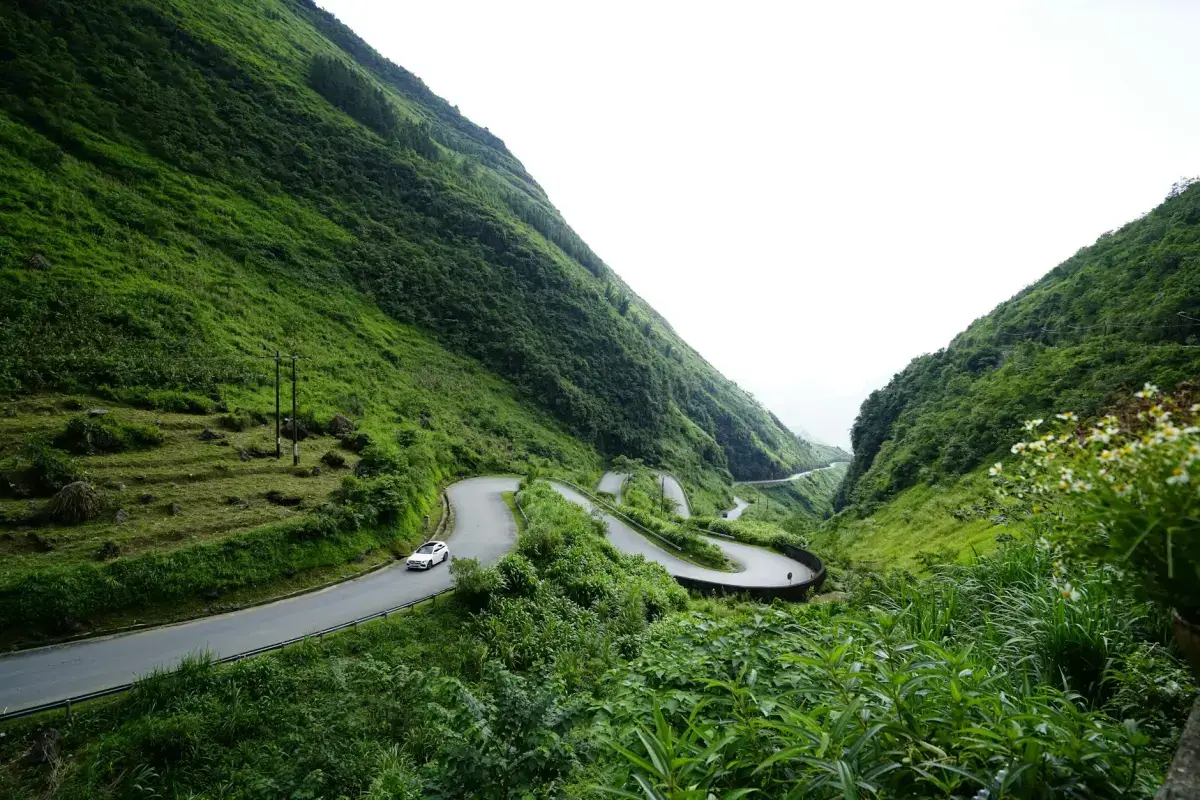
Hai Van Pass — “the most marvelous wonder” — is one of the most beautiful coastal roads in the world. National Geographic magazine once ranked it among the most beautiful mountain passes in Asia. The car crawls up every curve, and every straight stretch opens up a different view: sometimes the deep blue Da Nang Bay on the right; sometimes the steep forested mountain slope on the left like a wall; sometimes the top of the pass with an old French fortress standing lonely in the mist.
Must-stop points along the way:
- Top of Hai Van Pass (496m): Stop for 15-20 minutes, climb up the old Doc Chua Peak for a panoramic view of Da Nang Bay and the East Sea. The feeling of standing between the clouds and the sea cannot be recreated by any tourist attraction.
- Lap An Lagoon: A huge, peaceful saltwater lagoon at the foot of the pass, surrounded by mountains. The water is as calm as a mirror reflecting the clouds and the sky.
- Lang Co Bay: A crescent-shaped beach more than 10km long with fine white sand and crystal clear water — few people know that this is one of the most beautiful bays in Vietnam, and it has almost not been massively exploited yet.
💡 When you rent a car to Hue from Da Nang with Faifo Express, the driver will proactively stop for you to take pictures at the top of the pass and Lang Co — something passenger buses or trains never do. This is why many customers choose private car services for the Da Nang - Hue route instead of public transport.
The Ideal Time to Visit Hue
| Time | Characteristics | Recommendation |
|---|---|---|
| February – April | Mild sunshine, little rain, flower season | ✅ The most beautiful — red azaleas blooming on the mountain |
| May – July | Harsh sun, lotuses blooming in tomb lakes | ✅ Uniquely beautiful — awesome lotus photos |
| August – September | Sunshine mixed with rain | ⚠️ Acceptable |
| October – December | Constant rain, risk of flooding | ⚠️ Limited — Hue has the most rain in the country |
💡 Hue Festival takes place in even years (2026, 2028…) — usually in April-May. This is the most vibrant time in Hue with art programs, Ao Dai shows, and international cultural events.
Suggested Itinerary to Explore the Imperial Capital of Hue
2 Days 1 Night Itinerary: Royal Tombs & Palaces
Day 1 — Mountain Pass & Citadel
Depart from Da Nang at 7 AM, cross Hai Van Pass, stop at Lang Co to take pictures. Arrive in Hue around 10-11 AM. Eat bun bo right at a local eatery — you shouldn’t skip this important breakfast.
In the afternoon, visit the Imperial City (Hoang Thanh) — spend at least 2.5-3 hours because the campus is tens of hectares wide. No need to try to read every explanation board — spend time sitting quietly at Thai Hoa Palace or Co Ha Garden, let the space talk to you.
In the late afternoon, head to Thien Mu Pagoda right at sunset — the 7-story Phuoc Duyen Tower reflecting on the golden Perfume River is an image that needs no filter.
Evening: Hue Folk Songs on the Perfume River. Buy tickets in advance at Toa Kham wharf (~180,000 VND (≈$7)/pax). Sit on a dragon boat, listen to the melodies, and look at the shimmering lights of Truong Tien Bridge on the water — this is something Hue gives you that no other place can.
Day 2 — Royal Tombs & Craft Villages
Early morning, go to Khai Dinh Tomb — the unique architecture of the Nguyen Dynasty, combining European Gothic with extremely exquisite ceramic and glass mosaic art. Inside is dark and cold even in the middle of a summer noon. Then move on to Tu Duc Tomb — a complete contrast: bringing a poetic and romantic beauty with lotus lakes, pavilions, and ancient pine trees. King Tu Duc used to write poems and engrave them on stone steles here himself.
In the afternoon, visit Thuy Xuan Incense Village: bundles of incense as tall as a person arranged in colorful semicircles — pink, red, purple, yellow — are the most sought-after Ao Dai photography backdrops in Hue. Remember to buy a few small bundles of incense to support the owner before taking pictures.
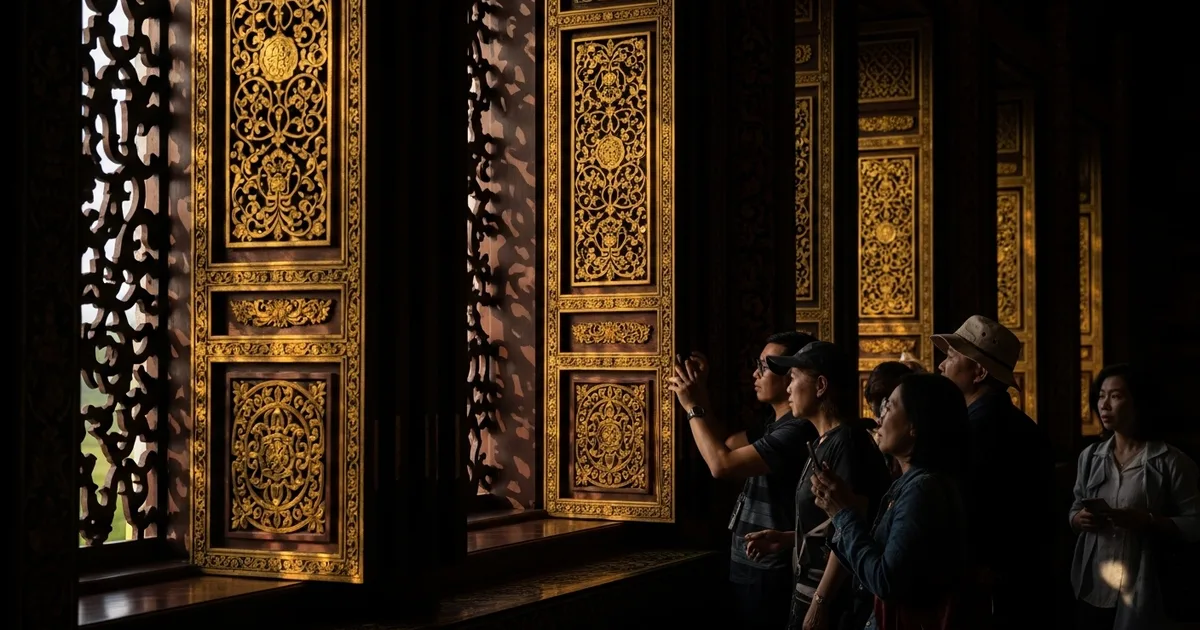
3 Days 2 Nights Itinerary: Expansion
Day 3 additions: Minh Mang Tomb (the most solemn and perfect in terms of architectural proportions), Truc Lam Bach Ma Zen Monastery (on an island in the middle of clear Truoi Lake), and in the afternoon head to Thuan An beach to rest after 2 days of visiting tombs.
10 Experiences That Make the Soul of Hue
1. Imperial City Just When the Gates Open (7:30 AM) Arrive before the tourist crowds — the Citadel is 36 hectares wide with over 100 architectural works, but at 7:30 AM it belongs to you. The early morning light slanting through Ngo Mon, Hien Nhon, and Chuong Duc gates creates frames that only appear for 30 minutes every day.
2. Hue Folk Songs on the Perfume River Hue court music — nha nhac — is recognized by UNESCO as an Intangible Heritage. But only listening to it live on a boat in the middle of the Perfume River at night can you truly feel its weight. The Nam Binh, Nam Ai melodies are neither happy nor sad — they drift along the river and settle down somewhere in the listener’s heart.
3. Khai Dinh Tomb — The Strangest Masterpiece in Hue If you can only visit 1 tomb — choose Khai Dinh Tomb. The outside looks like a European Gothic castle, the inside is millions of ceramic pieces mosaicked into paintings covering the ceiling and walls. Unimaginable until you see it with your own eyes.
4. Traditional Costumes at the Imperial City Rent a Nhat Binh or Ao Tac right at the gate of the Imperial City — then walk along the palace corridors. It’s not just “cosplay” — this is the most visual way to connect with the historical space surrounding you.
5. Vong Canh Hill — Sunset on the Perfume River A small hill located along the Perfume River, about 5 minutes from Tu Duc Tomb. There is nothing here but grass and stone benches — but when the sun goes down and the Perfume River turns golden, that’s all you need.
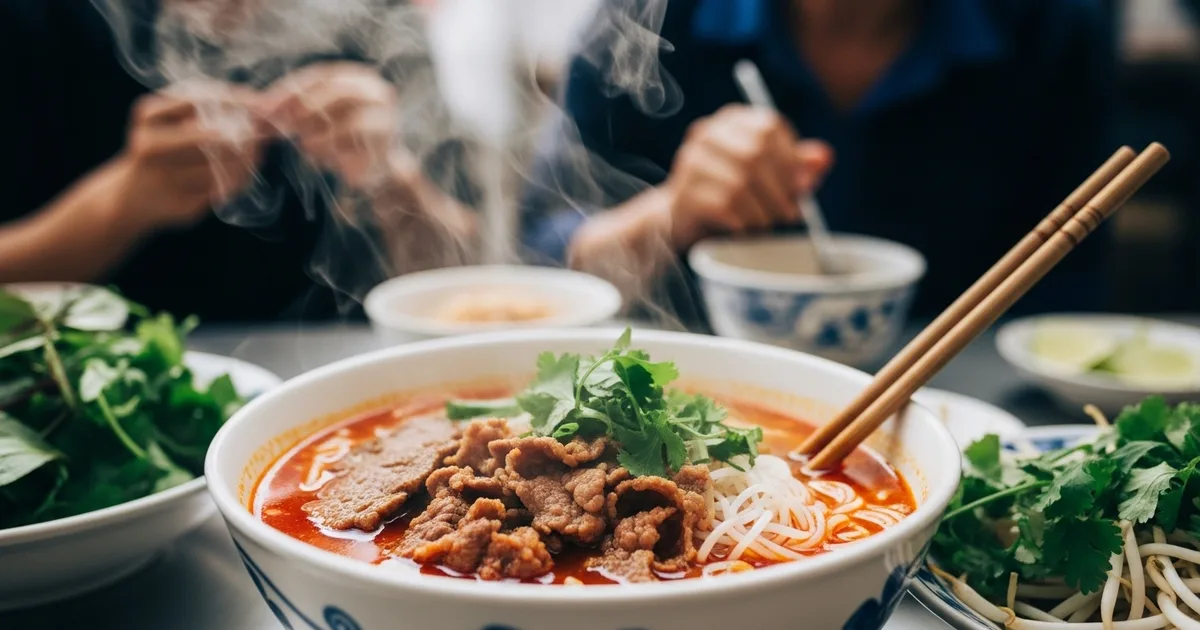
6. Bun Bo Breakfast at a Local Eatery Rule #1 in Hue: eat bun bo in the morning, at a cramped eatery with no English menu and low plastic tables. Mu Roi or O Cuong Chu Diep eateries — the broth pot is simmering from 4 AM, beef bones simmered for 8 hours, distinctively strong smell of lemongrass, chili, and shrimp paste. This is Hue beef noodle soup, not the bland version adjusted for tourists’ tastes.
7. Thien Mu Pagoda in the Late Afternoon The 7-story Phuoc Duyen Tower built in 1844 reflecting on the Perfume River — this image has appeared on hundreds of paintings, calendars, and postcards. But the feeling of standing in front of the real tower, hearing the temple bell echoing every beat through the evening air, no photo can express.
8. Truong Tien Bridge at Night Six white iron bridge spans crossing the Perfume River, lighting up at night slowly changing colors — green, purple, yellow, red. This is the symbol of Hue at night. Standing on the bridge looking down at the river and upstream into the darkness — this is the moment to take pictures and also to put your phone away.
9. Eating Banh Beo, Nam, Loc in the Afternoon Three small types of cakes, each made differently — all originating from simplified Hue royal cuisine. Enjoyed on a tray of many small bowls, dipped in slightly sweet fish sauce. Ba Do eatery on Nguyen Binh Khiem street is an address Hue people often take each other to.
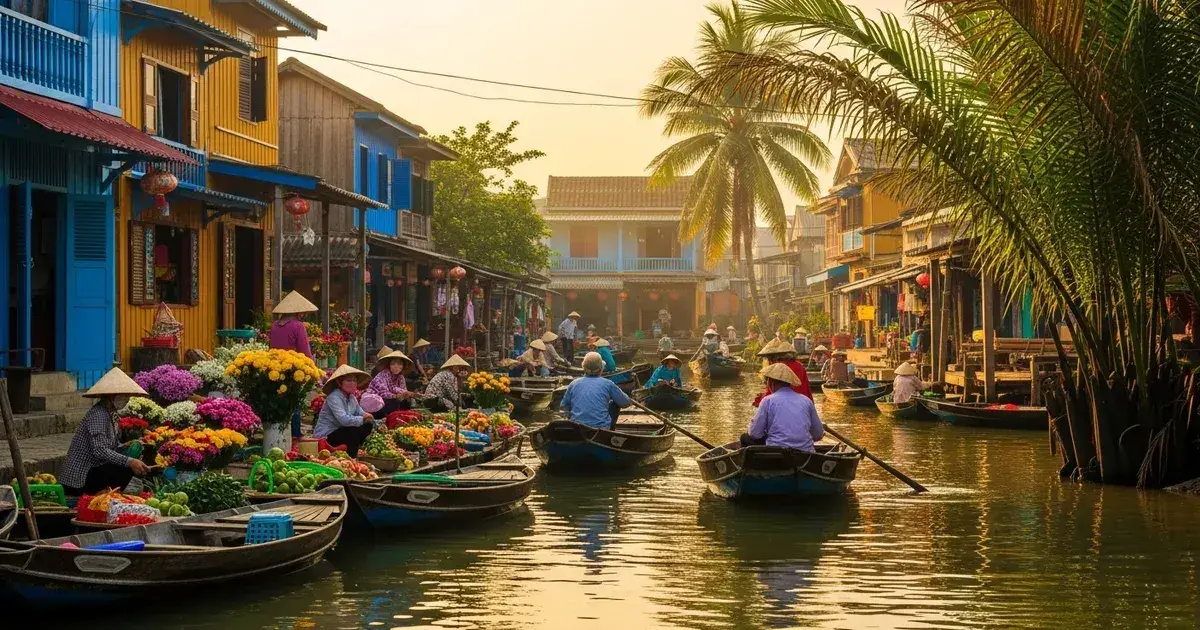
10. Wandering Dong Ba Market in the Morning The largest market in Hue is not for buying and selling — but to live in the breathing rhythm of the city. Someone buying dried squid, someone picking specialty sour shrimp, someone sitting eating a small bowl of crab noodle soup for 20 thousand. This is the Hue of Hue people, not of tourists.

Royal & Popular Cuisine of Hue
Hue cuisine has a strange feature: elaborate and exquisite royal dishes — but it is the popular dishes that hold the true soul of the flavor.
Bun Bo Hue (Hue Beef Noodle Soup) — Completely different from the Southern version of bun bo. Dark red broth from lemongrass, shrimp paste, and chili, distinctive strong aroma. Pork knuckle, beef shank, round crab sausage. Eat it for breakfast — and only breakfast is the right way. 30-50,000 VND (≈$2)/bowl.
Com Hen — Bun Hen (Baby Clam Rice/Noodles) — Specialty of Hen islet. Baby clams stir-fried with fat, mixed with noodles or cold rice, adding various herbs and fresh Hue chili — EXTREMELY spicy if you are not used to it. Ask in advance for less chili. Com Hen Hoa Dong right on Hen islet is the most authentic address.
Banh Beo, Nam, Loc — Three small types of cakes made from rice flour, each with a different filling: beo has baby shrimp, nam has minced pork, loc has a whole shrimp in a translucent dough shell. Each tray has 5-7 bowls, totaling only 30-60,000 VND (≈$2) — eat little by little, savor every layer.
Hue Sweet Soup (Che Hue) — Not 1 type of sweet soup, but an entire system: white bean sweet soup, lotus seed and longan sweet soup, millet sweet soup, taro sweet soup… and the most special is roasted pork sweet soup (che heo quay) — a strange taste, combining sweet and fatty in a way nowhere else has. Hue Sweet Soup Alley on Hung Vuong street.
Hue Salt Coffee — A controversial but truly unique drink: salt powder mixed into the creamy layer covering a cup of black coffee — salty, sweet, and bitter blending together. The Salt Coffee shop on Nguyen Huu Tho street is the pioneer.
Buying Souvenirs — Thien Huong sesame candy (fragrant with sesame, crispy), Hue sour shrimp (distinctively spicy and sweet), royal tea (lotus-scented). You can never go wrong buying these three things as gifts.
Transportation & Costs
| Transportation | Cost | Time | Notes |
|---|---|---|---|
| Passenger bus | 80-140,000 VND (≈$5)/pax | 3-3.5h via tunnel | Cannot see Hai Van Pass |
| Train | 70-360,000 VND (≈$14)/pax | 2.5-3h | Beautiful coastal scenery, but less flexible |
| Private car (Faifo Express) | See price list | 2-2.5h (pass stop) | Door-to-door, stops at Hai Van Pass, Lang Co |
| Self-driving motorbike | Fuel cost ~100-180,000 VND (≈$7) | 2.5-3h | Interesting but tiring, harsh sun |
💡 Taking a private car from Da Nang to Hue usually doesn’t cost much more than a train if traveling in a group of 3-4 people, but the advantage is being able to stop at Hai Van Pass and Lang Co — two points that passenger buses or trains do not visit.
Practical Tips for Traveling to Hue
Getting around Hue:
- Rent a motorbike ~140,000 VND (≈$5)/day — Hue roads are wide and rarely jammed, much more convenient than Da Nang.
- Buying a tomb combo ticket (3 spots or 4 spots) is about 20-30% cheaper than buying individually.
- Tombs close at 5 PM — schedule so you don’t cram everything at the end of the day.
Sightseeing:
- Rent ancient costumes right at the gate of the Imperial City — no need to book in advance, ~100-240,000 VND (≈$9)/outfit depending on the material.
- Bring a conical hat or umbrella — the Imperial City campus is large with little shade, walking a lot under the sun is very tiring.
- Bring comfortable walking shoes — mandatory because the tomb gardens are not flat.
Culture:
- Hue people prefer gentleness and discretion — at tombs and pagodas, avoid loud laughing and joking.
- When taking pictures at the Incense Village: buy a few bundles of incense to support first — this is the livelihood of the uncles and aunts.
- Listening to Hue Folk Songs: book tickets in advance at Toa Kham wharf (Le Loi street) — it’s usually crowded in the evening.
Frequently Asked Questions
Frequently asked questions about Hue Self-Guided Travel 2026
How long does it take to get from Da Nang to Hue?
How much does it cost to rent a car from Da Nang to Hue?
How many days are enough for Hue?
What is the best way to use this guide to Hue Self-Guided Travel 2026: Imperial Capital Guide?
Is Hue Self-Guided Travel 2026: Imperial Capital Guide suitable for a first-time visitor?
Tags
The Faifo Express
This article was written by the driver and travel consultant team at Faifo Express — over 5 years of experience in travel transport across Da Nang, Hoi An, and Hue. All information is based on real experience serving 5,000+ customers every month.
Related services
Airport Transfer
Hotel pickup, all-inclusive price
View DetailsDay Tour Car Rental
Ba Na Hills, Hoi An, My Son...
View DetailsShared Car
From just 100K VND/person
View DetailsTourist Car Rental
Explore the beauty of Central Vietnam with our private tourist car service.
View Details🛣️ Popular Routes
Follow Faifo Express
Get exclusive deals, real reviews and the latest Central Vietnam travel tips.
Faifo Express
Updates, customer reviews & real trip photos.
@trm.anh.travel
Real experience videos, Da Nang – Hoi An travel tips.
@xedichvudananghoianhue
Real videos of routes, fleet and transfer services.
@xedananghoianFE
Quick news, flash deals and direct interaction.
DM us on Facebook — response within 5 minutes