


Hue's Royal Dessert Soups: Small Bowls With an Imperial Past
📋 Table of Contents
[!NOTE] Pricing Note for International Tourists The prices listed are inclusive of a 20% tax and service fee applied to foreign tourists. Estimated USD rates are based on current exchange rates and may slightly vary.
When Hue’s Small Alleys Preserve an Entire Dynasty
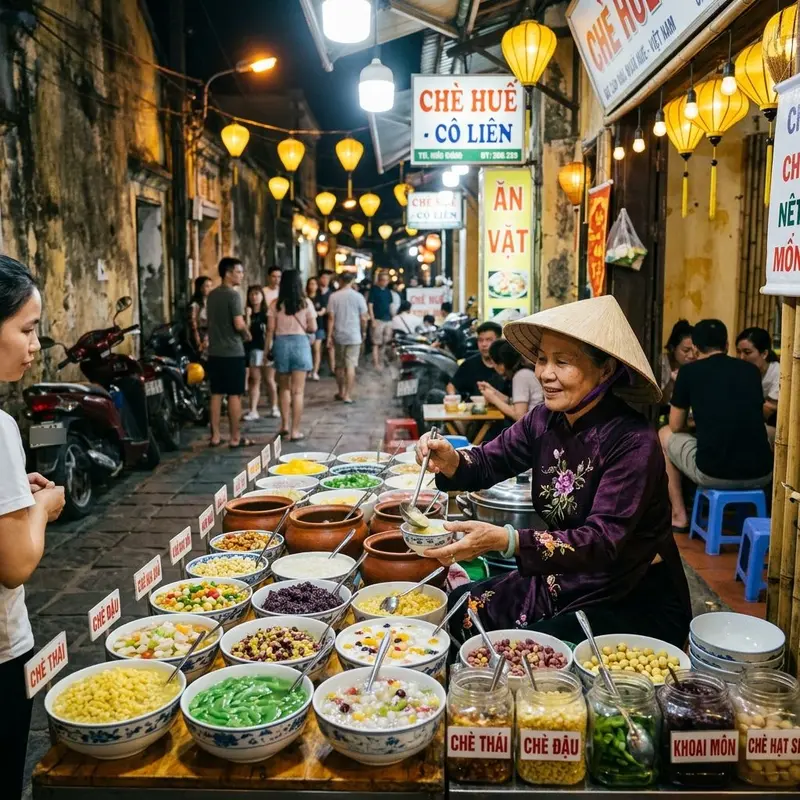
On some late afternoons in Hue, as the last rays of the sun slant through the ancient trees on Nguyen Binh Khiem street, I often wander into nameless small alleys. Not to search for anything specific, but simply to feel the slow, contemplative rhythm of a city that was once the capital of an entire dynasty. And then, on one such occasion, I happened to stop in front of a small dessert stall. An elderly woman was scooping white bean paste dessert into delicate porcelain bowls. The rich aroma of coconut milk mingled with the faint scent of pandan leaves, leaving me rooted to the spot.
That was the first time I truly understood Hue’s alley desserts. It wasn’t just a dessert. It was an entire culinary philosophy—refined, elaborate, deeply imperial—contained within a small bowl sold for less than ten thousand dong right in the heart of a deep alley. If you are planning to explore the ancient capital and want to touch the true soul of Hue, then the journey of savoring Hue’s alley desserts is an absolute must.
Hue Desserts — When Cuisine Becomes Intangible Cultural Heritage
Origins from the Thousand-Year-Old Imperial Court
To understand why Hue desserts are so special, you need to go back in history to the time of the Lords Nguyen and then the Nguyen Dynasty—Vietnam’s last feudal dynasty, which reigned in Hue for 143 years from 1802 to 1945. During that entire period, Hue was not only the political center but also the pinnacle of Vietnamese culture and cuisine.
According to historical documents preserved at the Hue Royal Antiquities Museum, the ngu thien phong—the department responsible for cooking for the royal family—employed hundreds of meticulously selected chefs from across the country. The dessert and sweet section alone had several dozen people, each specializing in a different ingredient. Desserts in the palace were not merely sweet dishes; they were art. From the colors, aromas, and consistency of the sugar syrup, to the decoration with jasmine or pomelo flowers, and even the material of the serving bowls—everything had to be perfect down to the smallest detail.
After the fall of the Nguyen Dynasty in 1945, palace maids, eunuchs, and those who had served in the imperial court gradually returned to civilian life. They brought with them the recipes and secrets of imperial dessert making, and slowly passed them down to their relatives and neighbors. This is precisely why, even in the smallest alleys of Hue, you can still find bowls of dessert prepared with a meticulousness and technique unmatched anywhere else in Vietnam.
The Unmistakable Characteristics of Hue Desserts
People in Hue say: “Hue desserts are not overly sweet, not greasy, not bland—Hue desserts are just right.” And that is precisely the culinary philosophy of this region.
Unlike Southern Vietnamese desserts, which are often intensely sweet, rich with coconut milk, and mostly served with shaved ice; and unlike Northern Vietnamese desserts, which lean towards simplicity and rustic charm—Hue desserts possess a unique and unmixable identity:
Regarding Ingredients: Hue people only use fresh, clean ingredients, carefully selected. Mung beans must be the small, nutty Hue variety. Lotus seeds must be from Tinh Tam lotus—a type of lotus grown within the city itself, renowned nationwide for its large, fluffy, and exceptionally fragrant seeds. Tapioca pearls must be handmade from tapioca starch mixed in the correct ratio to achieve a crystal-clear appearance.
**Regarding Sugar Syrup:**This is the biggest secret. Hue che’s sugar syrup is cooked with fresh pandan leaves, sometimes with finely crushed fresh ginger, creating a complex, subtle aroma that is not cloying. The sweetness is delicately adjusted—just enough to feel a refreshing sweetness without being overwhelming.
Regarding presentation: Traditional Hue che is never poured into large bowls. Each type of che is scooped separately into small bowls, arranged neatly, sometimes sprinkled with a few jasmine or gardenia petals on top. Looking at a tray of authentic Hue che, you will see meticulousness and care—the royal style is still present, even if the vendor is just an old woman sitting in a small alley.
Hue Alley Che Map — “Secret” Spots Only Locals Know
Alley 46 Tran Phu Street — Night Che Paradise
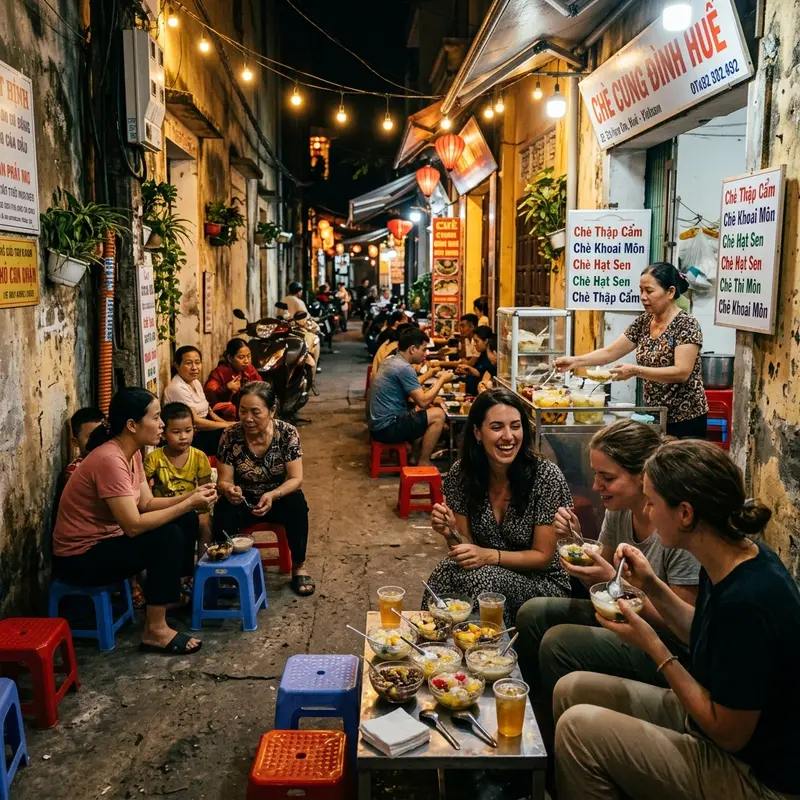
If you ask any Hue local about the best alley che in the city, the first name that will come up is the area around Tran Phu Street and its neighboring alleys. This is an old residential area where families have been selling che for three to four generations.
Mrs. Lan’s che stall (no sign, just ask locals) is located deep in alley 46 Tran Phu, open from 3 PM to 10 PM. Mrs. Lan is over 70 years old, learned the trade from her mother, and her mother learned from a palace lady in the imperial city. Her white flat bean che is considered the most authentic in Hue—the beans are cooked just right, not mushy, the sugar syrup is clear and fragrant with pandan leaves, topped with a light drizzle of coconut milk. The price is only 8,000 VND per bowl.
Dong Ba Market Area — Che Day and Night
Dong Ba Market is not just a place to shop. It is one of Hue’s most vibrant street food hubs, and the che here has two completely different “shifts.”
During the day, small che stalls gather at the back of the market, on Tran Hung Dao Street. You’ll find che hat luu (made from water chestnut wrapped in red powder that looks like a pomegranate seed), che khoai mon, and che dau do banh lot—more “common” but equally delicious types of che.
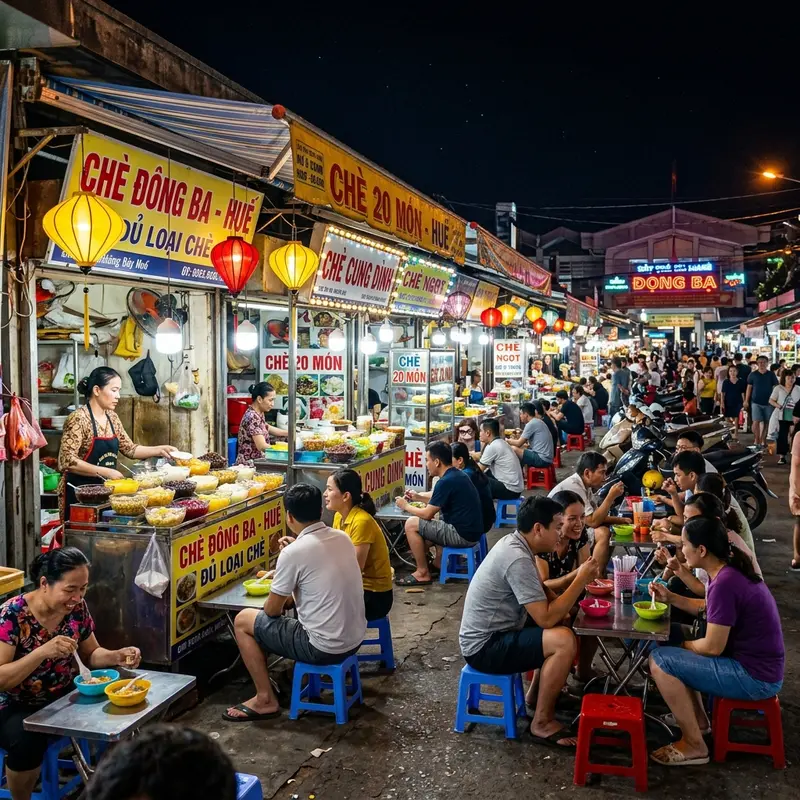
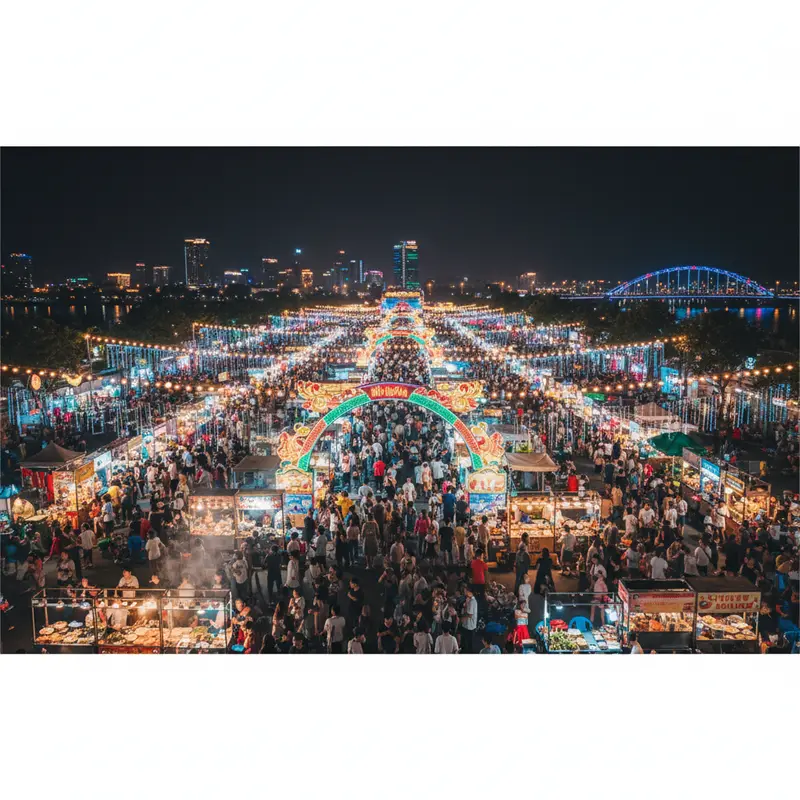
At night, from around 7 PM onwards, the sidewalk area of Tran Hung Dao Street near the market entrance transforms into an unofficial “che street.” Dozens of che stalls are set up, dim yellow lights flicker, and the lively sounds of people ordering create a scene that any travel blogger visiting Hue must stop to photograph.
Nguyen Binh Khiem Street — Hue’s Most Peaceful Che Alley
This is a location rarely mentioned in travel reviews, but it’s my personal favorite. This small street is located near the Imperial City area, much quieter and greener than the city center. In the late afternoon, sitting on a low plastic stool in front of an old woman’s house, sipping a bowl of lotus seed che cooked with rock sugar, and looking out at the deserted street—that’s a true “slow travel” experience you’ll remember forever.
[!TIP] To find these “no-name” alley che stalls, the best way is to ask your homestay owner or locals directly. Don’t be afraid to ask—Hue people are very friendly and will happily give you directions, even tell you the history of the stall.
”Must-Eat” List — 10 Most Characteristic Hue Che Varieties
Che Bot Loc Boc Thit Quay — The King of All Che
This is the most unique type of che in Hue and also the one that surprises outsiders the most when they first hear its name. Roasted pork in che? It sounds strange, but once you taste it, you’ll immediately understand why Hue people came up with this combination.
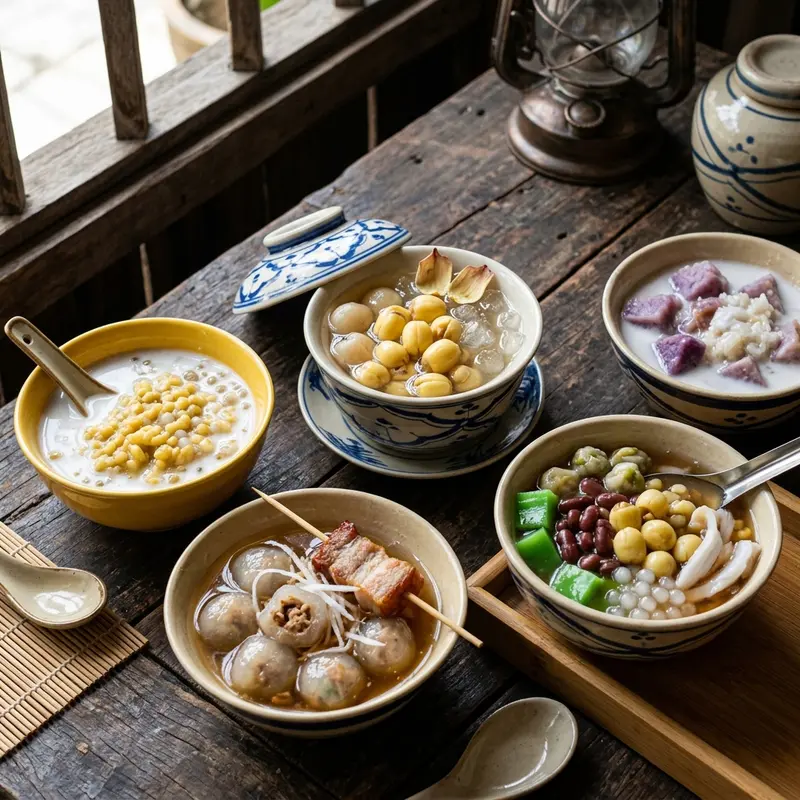
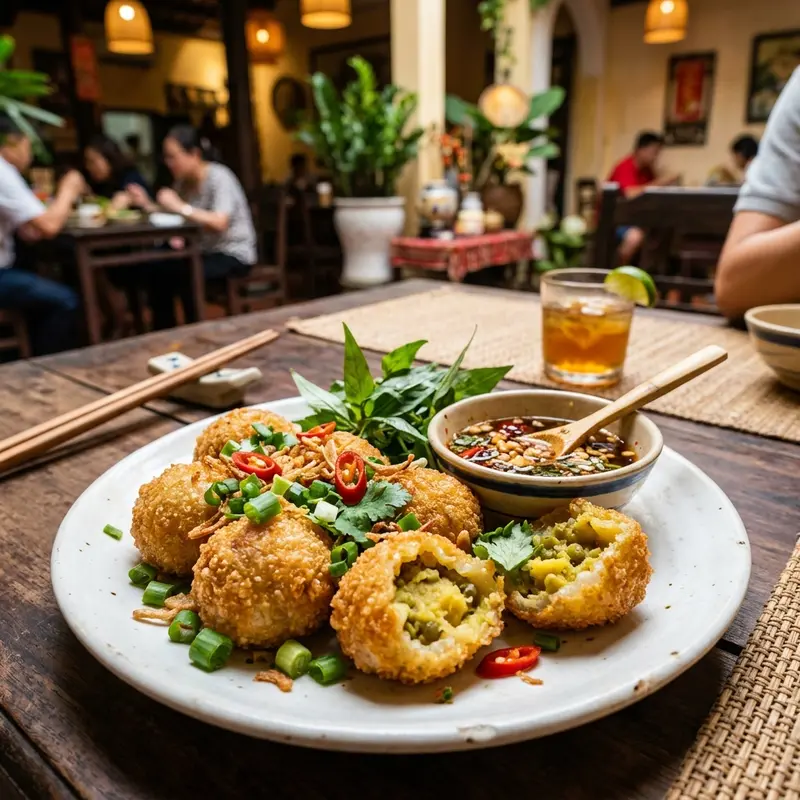
The wrapperBot loc is made from tapioca starch, which turns transparent like glass when cooked, with a chewy, soft texture and no distinct flavor. Inside, it’s filled with fragrant roasted pork belly, sometimes with dried shrimp. When eaten with sweet pandan leaf syrup — the salty and sweet flavors blend to create a taste experience unlike anything you’ve ever had. This is the hallmark of imperial cuisine: a delicate balance between seemingly opposing flavors.
Lotus Seed Sweet Soup with Rock Sugar — The Essence of Tinh Tam Lotus Pond
Hue lotus seeds are famous throughout the country, and lotus seed sweet soup is the most respectful way for Hue people to honor this precious ingredient. Simply fresh, shelled lotus seeds, cooked with rock sugar and a little pandan leaf — that’s it, nothing else added. This simplicity demands truly high-quality ingredients and precise cooking techniques.
The lotus seeds must be cooked to a perfect tenderness — not hard, not mushy. The syrup must be crystal clear, not cloudy. When eaten, the fragrant, nutty flavor of the lotus seeds blends with the light sweetness of the rock sugar, creating a gentle, elegant sensation — truly “imperial.”
White Cowpea Sweet Soup — Simple Yet Unforgettable
White cowpeas (also known as bau-shaped white beans) are a characteristic ingredient of Hue, rarely used in other regions. White cowpea sweet soup has a light, refreshing flavor — perfect for hot summer afternoons. Coconut milk is lightly drizzled on top, not too much, just enough to create a thin layer of richness coating each bean.
Purple Yam Sweet Soup — The Color of a Hue Sunset
Hue purple yams have a characteristic deep purple color, which turns a beautiful pinkish-purple when cooked into sweet soup. This is one of the most “photogenic” sweet soups, and it’s also the one young people often order first when they want to take pictures.
Royal Bean Sweet Soup — A Specialty Only Found in Hue
Royal beans were once used as tribute for the king, hence the name “ngu” (meaning “royal”). These beans are small, green, and have a unique nutty flavor that no other bean possesses. Royal bean sweet soup is a must-try at least once when you visit Hue — it’s something you can’t find anywhere else.
[!NOTE] Royal beans are only found in Hue and its surrounding areas, and their yield is not abundant. If you visit Hue during the summer (May-August), you’ll have the chance to eat royal bean sweet soup with freshly harvested beans — much tastier than dried ones.
Guide to Traveling to Hue and Exploring Alley Sweet Soup
From Da Nang to Hue — The Legendary Hai Van Pass Journey
Hue is about 100km from Da Nang via National Highway 1A, passing through Hai Van Pass — one of the most beautiful routes in Southeast Asia. This is not just a journey but also an independent travel experience with unforgettable majestic sea and mountain scenery.
There are many transportation options, but if you want to optimize your experience — especially if your goal is to wander through small alleys and enjoy night sweet soup — then I advise you to consider carefully.
Why not take public buses? Buses usually stop at Phu Bai bus station (over 10km from Hue city center) or An Cuu bus station, and you’ll have to find your own transportation to get to the center. In the evening, when you want to explore alley sweet soup, finding a taxi or Grab in Hue isn’t always easy — especially in deep alleys without clear addresses.
Why not rent a motorbike yourself if you’re not familiar with the roads? Hai Van Pass, though beautiful, has many…dangerous, especially when it rains or is foggy — which is quite frequent in Central Vietnam. Moreover, finding your way through the small alleys of Hue without a local guide is a real challenge.
The Best Solution: All-Inclusive Shuttle Service by Faifo Express
This is the option I always recommend to my friends and readers. Faifo Express offers a shuttle service from Da Nang to Hue with many advantages that regular taxis or Grab cannot provide:
- Local Drivers with Local Knowledge: More than just drivers, Faifo Express drivers are often natives of Da Nang or Hue, who know the roads well. They can suggest places to eat, visit, and even help you find the exact alley with the best che.
- Safe and Reliable: Vehicles are regularly maintained and fully insured, and drivers are well-trained — something that random taxis or ride-hailing bikes cannot fully guarantee.
- Fixed Price, No Worries About Being overpriced: The price is agreed upon in advance, with no meter tampering or detours. This is especially important for first-time visitors to the region.
- Flexible to Your Schedule: Want to stop for photos at the Hai Van Pass summit? Want to visit Tu Duc’s tomb before heading to the city center? Want to be taken directly to the alley with Ba Lan’s che stall at 7 PM? Everything can be arranged.
In addition to the Da Nang - Hue route, Faifo Express also offers Da Nang Airport shuttle service, transportation to Hoi An, and even transportation to Ba Na Hills — very convenient if you are planning a long trip to Central Vietnam.
[!TIP] Book your Faifo Express vehicle at least 24 hours in advance to ensure availability according to your schedule. During peak season (April-May and September-October), it’s advisable to book 2-3 days in advance. You can book directly through the website or via Zalo/WhatsApp — very convenient.
Getting Around Hue City
Once you arrive in Hue, the best way to explore the che alleys is by walking or renting a bicycle. Hue city center is quite compact, with most street food spots located within a 2-3 km radius. Cycling is both economical and allows you to stop anytime you see an enticing che cart.
If you need to travel further (e.g., to the imperial tombs on the outskirts), traditional xe om (motorbike taxis) are still quite common in Hue and more reliable than in many other places. Prices usually range from 30,000 to 100,000 VND (≈$4) depending on the distance.
Real Experience — An Ideal Evening with Hue Alley Che
Suggested Evening Itinerary
4:00 PM - 5:00 PM: Stroll Around the Imperial City Start from the Ngo Mon gate of the Hue Imperial Citadel. This is not only a historical landmark but also a place where you can feel the cultural context to better understand the royal che later on. Around the Imperial City area, there are many small, quiet, tree-lined streets — perfect for an afternoon stroll.
5:00 PM - 6:30 PM: Visit Tinh Tam Lake Tinh Tam Lake is located right in the heart of the city and was once a favorite spot for the king and queen to enjoy. This is the source of lotus seeds for royal che. During the lotus season (May-July), the lake blooms beautifully — this is also the best time to enjoy fresh lotus seed che.
6:30 PM - 8:00 PM: The Alley Che Journey This is the golden hour. Dusk is settling, streetlights are on, and che carts and alley che stalls begin to get crowded. Start from the Dong Ba Market area, then gradually venture deeper into the alleys. Try one dish from each stalldifferent types of che — don’t eat too much in one place, as the goal is to experience as much variety as possible.
8:00 PM - 9:00 PM: Sit Back and Savor After “touring” many stalls, choose your favorite spot, order another bowl of che, and linger longer. Chat with the vendors if you can — they often have fascinating stories about the history of their che.
The Best Check-in Spots for Hue Che Photos
If you want to capture beautiful photos of Hue che for your Instagram or personal blog, stop by the traditional stalls around Dong Ba Market at dusk or the alley che shops along Hung Vuong Street. The vibrant colors of lotus seeds, sweet beans, and rich coconut milk under warm yellow streetlights create stunning, atmospheric shots of imperial street food.
💡 Faifo Express Tip: Check our Da Nang to Hue private car transfer and intercity car rental to explore Hue’s imperial culinary scene in total comfort.
Frequently Asked Questions
Frequently asked questions about Hue's Alley Sweet Soup
What is the best way to use this guide to Hue's Alley Sweet Soup: Royal Dessert Delights in Vietnam?
Is Hue's Alley Sweet Soup: Royal Dessert Delights in Vietnam suitable for a first-time visitor?
Can I combine Hue's Alley Sweet Soup: Royal Dessert Delights in Vietnam with other nearby plans?
What should I confirm before making plans for Hue's Alley Sweet Soup: Royal Dessert Delights in Vietnam?
How can I avoid last-minute problems with Hue's Alley Sweet Soup: Royal Dessert Delights in Vietnam?
Tags
The Faifo Express
This article was written by the driver and travel consultant team at Faifo Express — over 5 years of experience in travel transport across Da Nang, Hoi An, and Hue. All information is based on real experience serving 5,000+ customers every month.
Related services
Airport Transfer
Hotel pickup, all-inclusive price
View DetailsDay Tour Car Rental
Ba Na Hills, Hoi An, My Son...
View DetailsShared Car
From just 100K VND/person
View DetailsTourist Car Rental
Explore the beauty of Central Vietnam with our private tourist car service.
View Details🛣️ Popular Routes
Follow Faifo Express
Get exclusive deals, real reviews and the latest Central Vietnam travel tips.
Faifo Express
Updates, customer reviews & real trip photos.
@trm.anh.travel
Real experience videos, Da Nang – Hoi An travel tips.
@xedichvudananghoianhue
Real videos of routes, fleet and transfer services.
@xedananghoianFE
Quick news, flash deals and direct interaction.
DM us on Facebook — response within 5 minutes