


Diving Cu Lao Cham from Hoi An: Coral Reefs Closer Than You'd Expect
📋 Table of Contents
[!NOTE] Pricing Note for International Tourists The prices listed are inclusive of a 20% tax and service fee applied to foreign tourists. Estimated USD rates are based on current exchange rates and may slightly vary.
Cham Island – The Island Preserving the Soul of the East Sea Right Next to Hoi An
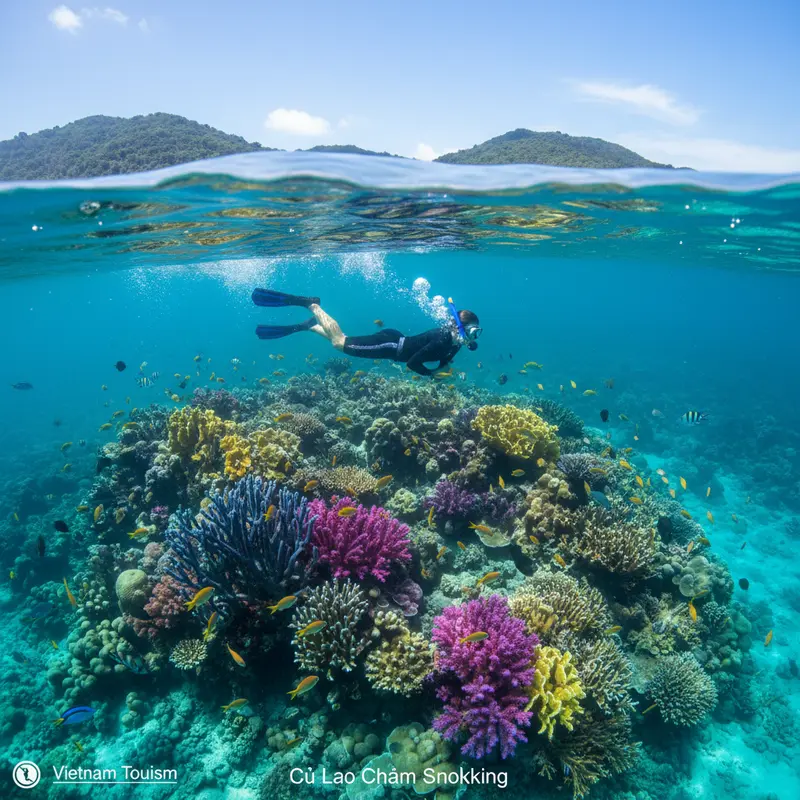
I still remember the feeling of the first time I jumped into the crystal-clear water at Bai Hon Dai – the cold water touching my skin, my eyes opening, and suddenly a whole different world appeared right before me. Colorful coral reefs, tiny Nemo fish hiding in sea anemone tentacles, groupers swimming lazily as if they didn’t care about my presence. That was my first time snorkeling in Cham Island, and also the time I understood why this small island was recognized by UNESCO as a World Biosphere Reserve.
If you are planning your Cham Island experience from Hoi An and want to enjoy top-notch snorkeling, then this article is exactly what you need to read before booking your ferry ticket. I won’t tell you things you’ve already read on every other travel website – I’ll tell you what someone who has lived in Hoi An for over 10 years actually knows about this island.
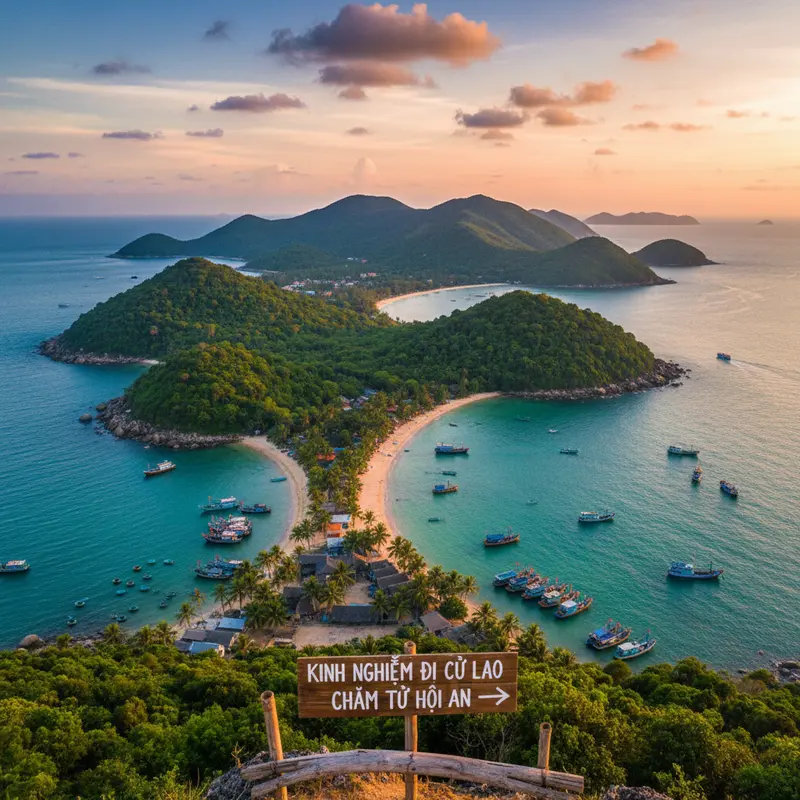
What is Cham Island? Why is it So Special?
An Archipelago with Thousands of Years of History
Cham Island is not just a tourist destination – it is a land with incredible historical depth. The archipelago consists of 8 large and small islands (Hon Lao, Hon Dai, Hon Mo, Hon Kho Me, Hon Kho Con, Hon La, Hon Tai, Hon Ong), with Hon Lao being the largest and the only inhabited island with about 3,000 residents.
From the 2nd-3rd century AD, Cham Island was an important stopover on the Maritime Silk Road. Merchants from China, Arabia, and Persia used to anchor their ships here to get fresh water and trade goods. This explains why so many ancient ceramics and coins from various civilizations have been found in the ground and on the seabed around the island.
In particular, Cham Island is famous for its bird’s nests – a type of nest considered the “white gold” of the Central Vietnamese coast. The bird’s nest caves on the sheer cliffs were once the main source of income for the islanders, and the bird’s nest harvesting profession here has a history of hundreds of years with very strict rules and rituals.
Why Did UNESCO Recognize Cham Island?
In 2009, UNESCO officially recognized Cham Island as a World Biosphere Reserve – and this is not a title given lightly. The marine ecosystem here is truly among the most special in Southeast Asia.
Beneath the waters of Cham Island, there are over 947 marine species, including 165 species of hard corals, 69 species of soft corals, over 200 species of reef fish, and many rare creatures such as sea turtles, seahorses, and ornate spiny lobsters. Coral coverage at some diving spots reaches 60-70%, a figure that many world-renowned marine protected areas would envy.
On the island, primary forests with over 499 plant species cover most of Hon Lao, serving as home to many species of primates, reptiles, and rare birds. The unique combination of forest and marine ecosystems in such a small area is what makes Cham Island invaluable.
[!NOTE] Cham Island is one of the first places in Vietnam to completely ban plastic bags in 2009. Islanders use banana leaves and natural styrofoam boxes to wrap goods. Tourists visiting the island should also bring fabric or paper bags to contribute to environmental protection.
Guide to Traveling from Hoi An to Cham Island
How to Get to the Island: High-Speed Ferry from Cua Dai Port
The only way to get to Cham Island is by ferry from Cua Dai Port (or the expanded Cua Dai Port near(An Bang beach). The speedboat takes about 15-20 minutes to cover the 18km sea route to the island. It sounds close, but these are 15-20 minutes on the open sea, and if the weather is rough, it could be the most memorable 15-20 minutes of your life, both literally and figuratively.
There are two main types of boats:
- Enclosed cabin speedboats: Faster, less affected by waves, suitable for those prone to seasickness.
- Traditional wooden boats: Slower (30-40 minutes), but offer a more “authentic” feel, with enjoyable views from the deck.
Boat ticket prices range from Contact us for a quote based on waiting time and stops – Contact us for a quote based on waiting time and stops/person/way**, depending on the operator and season. Most Cham Islands tours include round-trip boat tickets.
Getting From Da Nang/Airport to Cua Dai Port
This is a step many tourists overlook when planning, and it’s also where most problems arise. Cua Dai Port is about 4km from Hoi An city center and about 35km from Da Nang airport. If you fly into Da Nang and want to go to Cham Islands on the same day, you need to arrange your transportation from the airport to the port very carefully.
Why do I recommend using Faifo Express shuttle service instead of a taxi/Grab?
I’ve seen too many tourists get ripped off by booking transportation haphazardly. Traditional taxis in the Da Nang airport area can charge double if you don’t know how to negotiate. Grab is better, but still has limitations such as drivers not knowing the way to Cua Dai Port (which sounds funny but actually happens), not having large enough vehicles for groups, and most importantly, no one to assist you if issues arise.
Faifo Express is a professional shuttle service by Hoi An locals, with drivers who know every road and port in the area. Their Da Nang airport shuttle service operates 24/7, with new vehicles, cool air conditioning, and importantly, fixed prices with no “price gouging.” If you are planning to travel from Da Nang to Hoi An or vice versa, this is the safest and most convenient option.
Especially if you want to combine your trip to Cham Islands with visiting Ba Na Hills, Faifo Express can flexibly arrange the itinerary for your entire journey, helping you optimize your time without worrying about transportation.
[!TIP] Book your Faifo Express car at least 1 day in advance, especially during peak season (March-August). They can pick you up from the airport, take you directly to Cua Dai Port, wait for you to return from the island, and then take you back to your hotel – all in one neat package, so you don’t have to worry about anything.

Where to Buy Boat Tickets?
There are three ways to buy boat tickets to Cham Islands:
- Buy directly at the port: There are ticket counters right at Cua Dai Port. Prices are usually cheaper but don’t guarantee availability during peak season.
- Book through a package tour: Most travel agencies in Hoi An Ancient Town sell 1-day Cham Islands tours, which include boat tickets, a guide, lunch, and snorkeling activities.
- Book online: Some operators like Vu Lan Travel and Cham Islands Travel allow online booking via their website or hotline.
My advice: It’s best to book a package tour if this is your first time visiting the island. The price difference isn’t significant compared to booking individually, but you’ll have full support and won’t have to worry about boats, food, or snorkeling spots.
Real Experience at Cham Islands: What’s Worth Doing?
Snorkeling to See Coral – An Unmissable Experience
This is the main reasonand 90% of tourists go to Cham Islands. And truly, snorkeling to see coral at Cham Islands is worth every expectation – if you know how to choose the right diving spot and the right time.
The most famous diving spots:
- Bai Hon Dai: The most preferred diving spot, the water is so clear that you can see the seabed at a depth of 5-6m from the boat. The coral here is the most diverse and intact. There are so many fish that you can almost touch them.
- Bai Hon Tai: More suitable for beginner divers, with an average depth of 3-4m and gentler waves. The coral here has many vibrant soft coral species that are beautiful for photos.
- Bai Tra: A less known diving spot but with a very rich ecosystem, often taken by skilled dive instructors when the sea is calm.
- Bai Chong: Famous for its giant coral rocks stacked on top of each other, forming underwater caves, which are very magical.
Two types of diving:
- Snorkeling: No certification or experience required. You just need to wear a life jacket, goggles, and a snorkel to see coral at a depth of 2-3m. Suitable for children and non-swimmers (with a guide).
- Scuba Diving: Requires a certification or participation in a trial class (Discover Scuba Diving). This experience allows you to go down to 10-15m and see the full beauty of the coral reef. The price is about 800,000 – 1,800,000 VND (≈$71)/person depending on the package.
[!TIP] If you’ve never dived before, don’t hesitate to try Discover Scuba Diving. The instructors in Cham Islands are very professional and patient. You will have about 30 minutes of theory, 15 minutes of practice in shallow water, and then you will go to the actual dive site. It’s much safer than you think.
Explore the Fishing Village and the Lives of the Islanders
One thing that many tours overlook (and this is my “insider tip”): don’t just go to the island to dive and then leave. Spend at least 1-2 hours walking into Bai Lang village – the oldest fishing village on Hon Lao.
Bai Lang village has tiny alleys, old houses with faded yellow lime walls, old women mending nets in front of their houses, and barefoot children running on dirt paths. This is the real life of the people of Cham Islands – not a version embellished for tourists.
The communal house of Bai Lang village was built in the 17th century and still preserves many precious artifacts and royal decrees. Hai Tang Pagoda is also a worthwhile place to visit, especially in the early morning when the incense smoke is still rising and the temple bell echoes throughout the island.
What to Eat in Cham Islands?
This is the part I like best when writing about Cham Islands. The seafood here is so fresh that you will never want to eat seafood on the mainland again.
Must-try dishes:
- Cham Islands Stone Crab: This is the island’s most famous specialty. Stone crabs (also known as mountain stone crabs) have firmer, sweeter, and much richer meat than regular sea crabs. The price is about 300,000 – 600,000 VND (≈$24)/crab depending on size. Stone crabs are currently protected and only harvested under controlled conditions, so they are not always available.
- Salt and chili grilled triggerfish: The triggerfish here are large with thick meat, grilled over charcoal and dipped in green salt and chili – surprisingly simple but incredibly delicious.
- “Oc vu nang” snails: A characteristic type of snail from the waters of Cham Islands, steamed with lemongrass or grilled with scallion oil, the meat is crispy and has a natural sweetness.
- Fresh fish congee: In the early morning in Bai Lang, there are a few small eateries selling fish congee cooked with freshly caught fish. A bowl of hot congee eaten with fresh ginger andherbs, looking out at the sea – nothing is better.
- Banh Trang Cuon Thit Heo (Pork Rolled Rice Paper): It sounds ordinary, but on Cu Lao Cham, they roll it with fresh wild vegetables picked from the mountains, giving it a very different taste.
Reliable Dining Spots:
- Bai Chong Beachfront Restaurant Area: Many seafood restaurants, with clearly listed prices.
- Eateries in Bai Lang Village: Cheaper, more “authentic” food, but with a smaller menu.
- Restaurants at small resorts: More expensive but with stable quality.
[!WARNING] Avoid buying seafood from vendors on the beach or on boats. Prices are often inflated 2-3 times, and the quality is not guaranteed. Stick to restaurants with clearly posted price lists.
Other Activities on the Island
- Trekking through primeval forest: There is a trail leading to the summit of Hon Lao, through a primeval forest with many precious timber species. Go with a local guide for safety and to learn more.
- Night squid fishing: If you stay overnight, don’t miss the experience of fishing for squid on a boat. Flashlights attract squid to the surface, and you just need to cast your line to catch them.
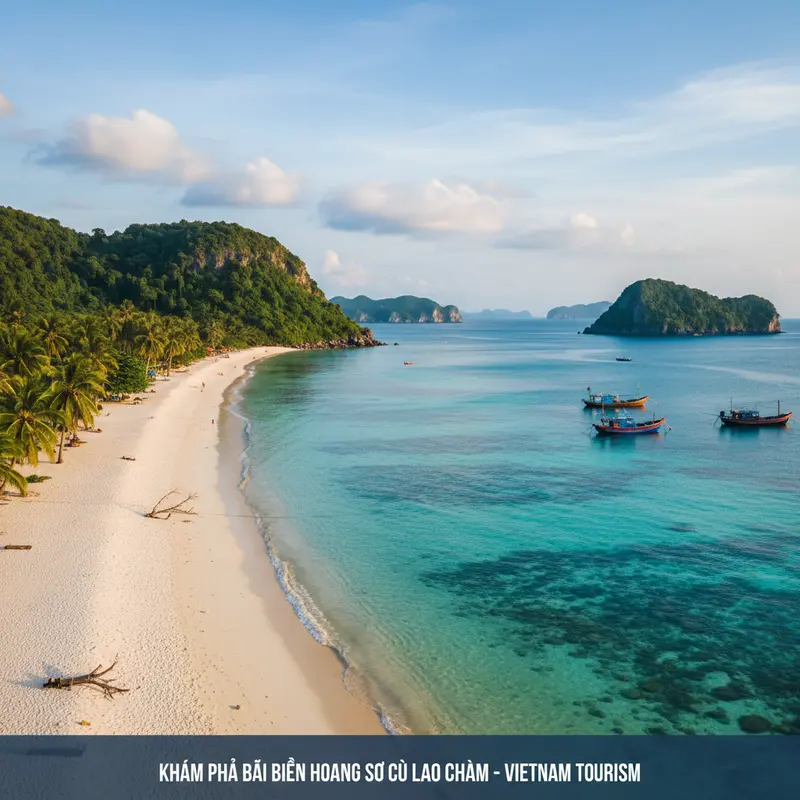
- Sunset photography at Bai Xep: A small beach with naturally stacked rocks, it’s a beautiful sunset photography spot that few tourists know about.
Estimated Costs for a Day in Cu Lao Cham
To help you budget accurately, here is a breakdown of actual costs (updated 2024):
Basic Costs
| Item | Cost (VND) |
|---|---|
| Round-trip boat ticket | 300,000 – 500,000/person |
| Island entrance fee | 60,000/person |
| Snorkeling (equipment rental + guide) | 200,000 – 350,000/person |
| Scuba Diving (Discover) | 800,000 – 1,500,000/person |
| Seafood lunch | 150,000 – 400,000/person |
| Drinks + snacks | 50,000 – 100,000/person |
| Car from Hoi An to Cua Dai Port | 50,000 – 100,000/person |
Package Tour vs. Individual Booking
1-day package tour (includes boat, guide, snorkeling, lunch): Approximately 600,000 – 1,080,000 VND (≈$42)/person
Individual booking: Total cost can range from 700,000 – 1,440,000 VND (≈$56)/person depending on activities.
As you can see, a package tour is actually not more expensive and is much more convenient. However, if you want to explore freely and have travel experience, booking individually offers more flexibility.
[!NOTE] If you are traveling in a group of 4 or more, you can negotiate to rent a private boat at a better price. A private boat allows you to choose your own diving spots, decide your own schedule, and avoid crowds from other groups.
Practical Experience: Things Only Locals Know
Ideal Time to Visit the Island
Best season: From March to August is the most ideal time to visit Cu Lao Cham. The sea is calm, the water is clear, and underwater visibility is best (visibility can reach 15-20m on good days).
Months to avoid: September to November is the storm season, the sea is rough, and boats often cannot run. October is usually the worst month.
Boat departure times: Boats usually depart from 7:30 AM – 8:30 AM and return at 3:00 PM – 4:00 PM. Do not take a boat later than 9 AM as you will miss the best time on the island. More importantly, the sea is usually rougher in the afternoon than in the morning.
How far in advance to book tickets?: During peak season (April-July, especially during holidays), boat tickets and tours can sell out very quickly. I recommend booking at least 3-5 days in advance, even 1-2 weeks if traveling during holidays.
Clothing and Essentials to Bring
- Swimsuit: Wear it underneath for convenience.- Change of clothes: Bring a dry set to change into when you get ashore.
- Long-sleeved sun protection shirt: Mandatory! The sun in Cham Islands is very harsh, especially when you are floating on the water snorkeling. Many people get severe sunburns due to overconfidence.
- Sunscreen free of harmful chemicals to coral: This is an important point that few people notice. Regular sunscreens contain oxybenzone and octinoxate, which are harmful to coral. Please use mineral sunscreen or sunscreen labeled “reef-safe”.
Frequently Asked Questions
Frequently asked questions about Cham Islands from Hoi An
Why do I recommend using Faifo Express shuttle service instead of a taxi/Grab?
What is the best way to use this guide to Cham Islands from Hoi An: Coral Diving Experience in Vietnam?
Is Cham Islands from Hoi An: Coral Diving Experience in Vietnam suitable for a first-time visitor?
Can I combine Cham Islands from Hoi An: Coral Diving Experience in Vietnam with other nearby plans?
What should I confirm before making plans for Cham Islands from Hoi An: Coral Diving Experience in Vietnam?
Tags
The Faifo Express
This article was written by the driver and travel consultant team at Faifo Express — over 5 years of experience in travel transport across Da Nang, Hoi An, and Hue. All information is based on real experience serving 5,000+ customers every month.
Related services
Airport Transfer
Hotel pickup, all-inclusive price
View DetailsDay Tour Car Rental
Ba Na Hills, Hoi An, My Son...
View DetailsShared Car
From just 100K VND/person
View DetailsTourist Car Rental
Explore the beauty of Central Vietnam with our private tourist car service.
View Details🛣️ Popular Routes
Follow Faifo Express
Get exclusive deals, real reviews and the latest Central Vietnam travel tips.
Faifo Express
Updates, customer reviews & real trip photos.
@trm.anh.travel
Real experience videos, Da Nang – Hoi An travel tips.
@xedichvudananghoianhue
Real videos of routes, fleet and transfer services.
@xedananghoianFE
Quick news, flash deals and direct interaction.
DM us on Facebook — response within 5 minutes