


Bay Mau Coconut Forest: Basket Boats, Green Water and a Few Tricks to Watch For
📋 Table of Contents
The March sun beat down on the water, the lush green coconut palms intertwined to form a cool, verdant canopy — that was the first moment I stepped onto a coracle boat in Bay Mau Coconut Forest and immediately understood why this place captivates millions of tourists. But it was also on that same trip that I witnessed a group of tourists from Hanoi being “ripped off” at nearly double the listed price, simply because they didn’t realize they were being led into a tout’s trap right from the entrance. This article is a compilation of all the experience of visiting Bay Mau Coconut Forest that I’ve gathered over multiple visits — from actual ticket prices, ideal visiting times, to “survival” tips to ensure you don’t waste money and still have the most fulfilling day.
[!NOTE] Pricing Note for International Tourists The prices listed are inclusive of a 20% tax and service fee applied to foreign tourists. Estimated USD rates are based on current exchange rates and may slightly vary.
What is Bay Mau Coconut Forest? Why is This Place So Special?
History and Origin of the Coconut Forest
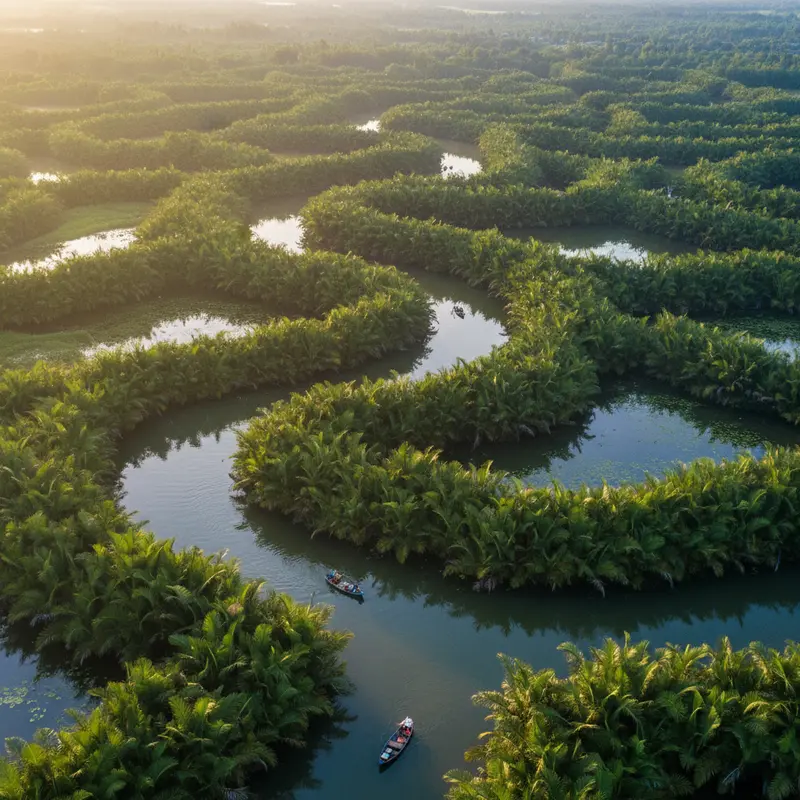
Located in Thanh Tam Dong village, Cam Thanh commune, about 3–4 km southeast of Hoi An Ancient Town center, Bay Mau Coconut Forest (also known as Cam Thanh Water Coconut Forest) is one of the most unique brackish ecosystems in Central Vietnam. “Bay Mau” (Seven Mau) in its name refers to the forest’s original area — about seven mau of land (equivalent to about 2.5 hectares), but today this ecological area has expanded to over 100 hectares of lush water coconut palms stretching along the Thu Bon River tributaries.
What few people know is that during the resistance war against America, this water coconut forest served as a secret base for the revolutionary forces. The dense palm canopy and intricate network of canals were places to hide provisions, weapons, and even people. Locals still recount how many families in the village harbored cadres right under the water coconut fronds, right under the eyes of the enemy army, without being discovered. It is this heroic history that has created a deep cultural layer for the forest — not just a beautiful check-in spot, but also a living memory of an entire land.
Unique Beauty Found Nowhere Else
Unlike eco-tourism areas that are “professionally invested” with wooden bridges, LED lights, and thumping music, Bay Mau Coconut Forest retains a surprisingly wild and authentic charm. The towering water coconut palms (Nypa fruticans) with their vibrant green fronds intertwine to form natural green tunnels over the water. Light filters through the leaves, creating shimmering streaks on the dark, glossy water — a scene no photo studio can replicate.
The ecosystem here is incredibly rich: crabs, fish, shrimp, and snails live naturally among the coconut roots. You can observe egrets perched on the coconut tops, hear the clear chirping of birds, and if you’re lucky, you might see long-tailed monkeys leaping from one palm frond to another. This is why Cam Thanh has been recognized by UNESCO as part of Hoi An World Heritage and is within a biosphere reserve.
How to Get to Bay Mau Coconut Forest
From Da Nang to Bay Mau Coconut Forest
The distance from Da Nang city center to Bay Mau Coconut Forest is approximately 30–35 km, taking about 45–60 minutes of travel depending on the mode of transport and traffic conditions. This is a convenient route to combine with a visit to Hoi An within the same day.
Transportation options:
- Self-drive motorbike: Suitable for young travelers familiar with the roads. From Da Nang, follow National Highway 1A or the coastal road through Non Nuoc, Cua Dai, then turn into Cam Thanh. However, the road into the communeCam Thanh has a narrow section with no clear signage, making it easy to get lost if you’re unfamiliar with the area.
- Taxi/Grab: A one-way trip from Da Nang costs around 250,000–420,000 VND (≈$16). The issue arises when you want to return; calling a car in the rural area of Cam Thanh is very difficult – you often have to wait 20–30 minutes, and sometimes there are no cars available.
- All-inclusive shuttle service: This is the option I always recommend to tourists, especially those coming from Da Nang.
Why Book a Shuttle Service with Faifo Express?
After many personal trips and witnessing friends encounter troubles, I realized that using a professional shuttle service is not just about convenience – it’s about true safety and savings.
Faifo Express is a reputable tourism transport provider in Da Nang – Hoi An with a team of local drivers who deeply understand this region. What I appreciate most is:
Local drivers who know the area: Faifo Express drivers don’t just know the roads – they also know the best parking spots, the best times to visit to avoid crowds, and can even recommend delicious local eateries nearby that won’t overcharge tourists. This is the kind of information no app can provide.
All-inclusive service, no hidden fees: When you book a car from Da Nang to Hoi An with Faifo Express, you know the cost upfront, with no worries about extra charges for traffic jams or tolls. They pick you up at your location, wait for your sightseeing, and take you back – no standing in the sun trying to hail a Grab with no cars available.
Safety for families and children: If you’re traveling with family, especially with young children or the elderly, having a reliable driver waiting is invaluable. You don’t have to worry about children getting carsick on motorbikes or the elderly getting tired in the sun.
Combine multiple attractions in one day: Faifo Express can arrange a flexible itinerary for you to visit the Bay Mau Coconut Forest, then explore Hoi An Ancient Town, have lunch, and return to Da Nang – all in one trip with a fixed price. If you’re planning your entire trip, don’t overlook their Da Nang airport transfer, Ba Na Hills car service, or other routes from Faifo Express for a worry-free vacation.
[!TIP] Book your car at least 1 day in advance, especially during peak season (April–August and holidays). Faifo Express can arrange to pick you up from your hotel at 7 AM to arrive at the Coconut Forest before 8 AM – the golden hour to avoid crowds and get the best lighting for photos.
From Hoi An to Bay Mau Coconut Forest
If you’re in Hoi An, the distance is only 3–4 km, and you can:
- Rent a bicycle: This is the most romantic way. Cycling through the Cam Thanh village roads in the early morning, hearing the roosters crow, and smelling the straw – this is an experience many Western tourists have told me is “the highlight of my whole Vietnam trip.”
- Ride-hailing motorbike: Around 30,000–60,000 VND (≈$2) one way.
- Book a car with Faifo Express: If you want to combine a full day of sightseeing from Da Nang, this remains the optimal choice.
Bay Mau Coconut Forest Ticket Prices 2024 – The Most Detailed Price List
This is the most important section I want you to read carefully, as the price difference here can be up to 100–200% if you’re not aware.
Official Ticket Prices at the Entrance
The Bay Mau Coconut Forest tourist area currently has multiple operating units, not a single entity. This creates price complexities that many tourists don’t understand. However, the most common standard prices are:
| Service | Listed Price (VND/person) |
|---|---|
| Basket boat ride (30 minutes) | 150,000 – 200,000 |
| Rowing boat tour through the forest (45–60 minutes) | 150,000 – 200,000 |
| Combo basket boat + rowing boat | 300,000 – 350,000 |
| Crab fishing, snail catching (experience) | 50,000 – 100,000 additional |
| Renting an “ao ba ba” for photos | 30,000 – 50,000 |
[!WARNING] The numbers above are the official listed prices at the ticket counters of registered businesses. If someone approaches you outside the entrance and offers a “cheaper” price or a “more special spot,” they are almost certainly touts. I will discuss this issue in more detail in the next section.
Food and Drink Costs in the Area
- Fresh seafood at riverside eateries: Grilled fish, shrimp, squid cost around 80,000–180,000 VND (≈$7) per portion. This is a normal price, not too expensive for a tourist area.
- Banh dap, Mi Quang, Cao lau: 30,000–60,000 VND (≈$2) per portion. Eating at small eateries in the village is tastier and much cheaper than at “scenic view” restaurants right at the entrance.
- Fresh coconut water: 20,000–40,000 VND (≈$2) per coconut. Drinking it here is a must—it’s delicious and perfectly fitting for the location.
Estimated Total Cost for One Day
| Category | Estimated Cost (1 person) |
|---|---|
| Transportation Da Nang – Coconut Forest – Hoi An (Faifo Express) | 250,000 – 400,000 |
| Entrance Ticket (boat combo) | 300,000 – 350,000 |
| Lunch + Drinks | 100,000 – 200,000 |
| Souvenir Shopping (optional) | 50,000 – 200,000 |
| Total | 700,000 – 1,150,000 |
This is a very reasonable cost for a day of high-class nature experience. Compared to many ecological tourist areas in Vietnam, Bay Mau Coconut Forest still offers affordable prices.

Real Experiences at Bay Mau Coconut Forest – What to Do, What to Eat, Where to Take Photos?
Must-Do Activities
1. Basket Boat Ride
This is the “signature” activity of Bay Mau Coconut Forest and what has made this place famous worldwide. The basket boat (coracle) is a traditional round boat of Central Vietnamese fishermen, woven from bamboo and coated with resin to waterproof it. The rower uses a single oar to steer, and they can skillfully spin the boat 360 degrees—a skill only locals possess.
While on the basket boat, you’ll be guided through narrow, dark, and cool water coconut tunnels, listening to the gentle flow of water and smelling the distinct scent of mud and coconut leaves. This is an extremely relaxing and poetic experience—many people told me it was the first time on their trip they truly “disconnected” from their phones and felt present.
[!TIP] Ask the rower if they can perform a “basket boat dance”—this is a special performance where the rower spins the boat while dancing to music. Not everyone can do this, but if you meet the right person, it will be the most memorable moment of your trip.
2. Kayaking or Wooden Boat Tour of the Forest
If you want to explore deeper into the smaller canals, kayaking is an excellent choice. You can paddle yourself or have a guide. The canals deeper in the forest are usually less crowded, quieter, and much more beautiful than the areas near the entrance.
3. Crab Fishing and Mud Snail Catching
This is an activity that I see many families with children enjoy. Local fishermen will guide you on how to catch crabs with simple bait, or catch mud snails (a type of small snail living in the mangrove mud). Afterwards, you can take your catch to roadside eateries to have it cooked—a true “farm to table” experience.
4. Visiting Craft Villages and Fishermen’s Lives
Few tourists know that around the forest, there are also small hamlets whereThe fishermen still maintain their traditional way of life. In the early morning, you can see people pulling nets, mending fishing gear, and drying fish right beside the nipa palm groves. This is a “living picture” of Central Vietnamese culture that you won’t find in any travel brochure.
The Most Beautiful Check-in Spots
Spot 1 – Nipa Palm Tunnel: Venture about 10–15 minutes by boat into the forest, and you’ll encounter stretches of canals where the nipa palm fronds on both sides completely interlace, forming a “green tunnel.” The light filtering through the canopy in the morning (7 AM–9 AM) creates a stunning “god rays” effect.
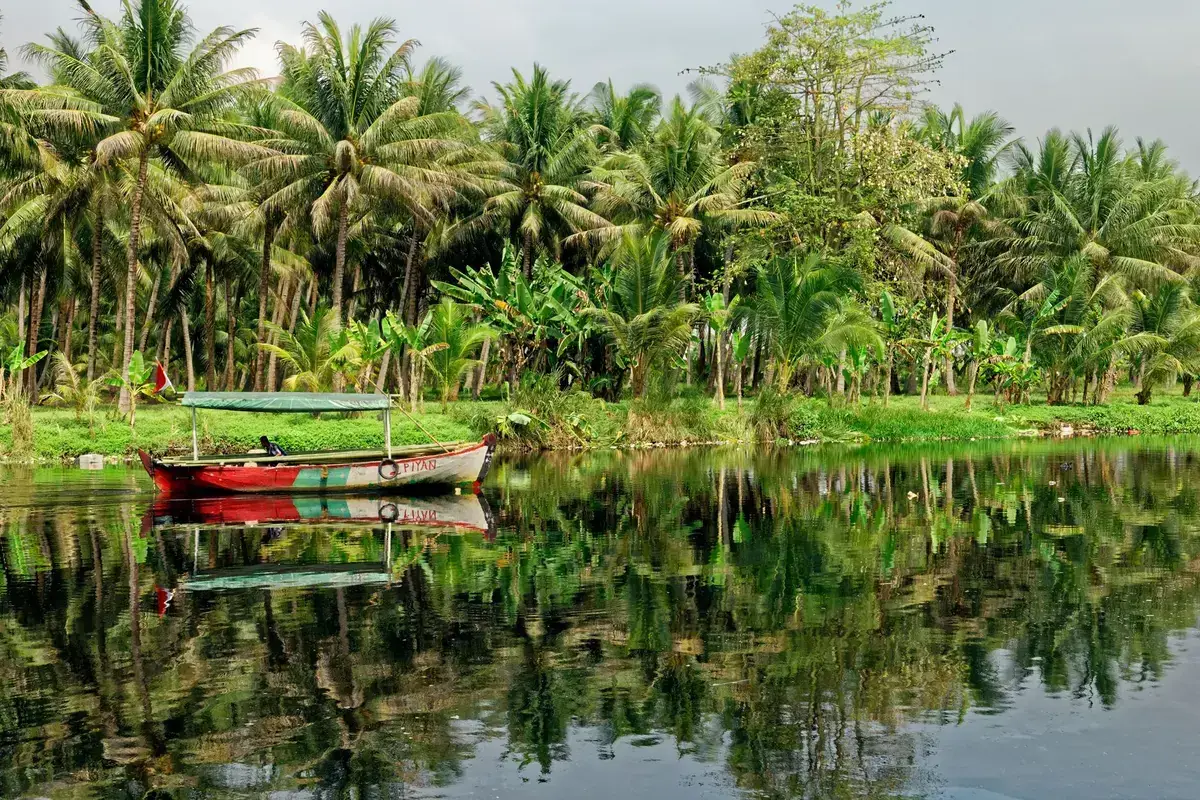
Spot 2 – Basket Boat with Reflected Palm Fronds: When the water is calm (usually early morning or late afternoon), the water’s surface perfectly reflects the image of the palm fronds and the basket boat. This is the most shared photo spot on Instagram.
Spot 3 – Bamboo Bridge Overlooking the Forest: Some spots in the area have small bamboo bridges crossing the canals. Standing on them and looking out at the green coconut sea offers a beautiful panoramic view for group photos.
Spot 4 – Sunset on the Thu Bon River: If you stay until late afternoon, the area where the forest meets the Thu Bon River offers an incredibly beautiful sunset. The orange-red sky reflects on the river’s surface, with wooden boats anchored — a scene that even professional photographers would admire.

What to Eat at Bay Mau Coconut Forest?
Fresh seafood is a must-try. Grilled parrotfish with chili salt, steamed tiger prawns, stir-fried crab with tamarind — all are caught on the same day. I usually eat at small eateries in Thanh Tam Dong village rather than the larger restaurants at the entrance because they are tastier, cheaper, and offer a much more “authentic” atmosphere.
Banh Dap with Mam Nem — this is a signature Hoi An snack you can find at street vendors around the area. Crispy grilled rice paper, soft steamed rice paper, filled with grilled meat and dipped in mam nem — simple yet unbelievably delicious.
Hoi An Che (Sweet Soup) — after a morning of wading through water, enjoying a bowl of dau van che or bap che in the shade is the best thing in the world.
Practical Experience – Best Time to Visit, What to Wear, and Tips to Avoid risks
When is the Ideal Time to Visit the Coconut Forest?
This is the question I get asked most often by friends and readers. The short answer is: 7 AM–9 AM.
Reasons:
- The early morning light is perfect for photos — soft golden sunlight, not harsh, creating a natural warm effect.
- The number of visitors is significantly less than after 10 AM. In the early morning, you can almost have a stretch of the canal to yourself without seeing other boats.
- The temperature is cooler. From April to August, Hoi An’s temperature can reach 38–40 degrees Celsius at noon. Visiting in the early morning will prevent you from getting exhausted by the sun.
- The water is clearer and calmer. In the early morning, the canal water is usually less disturbed, resulting in better reflections.
[!NOTE] Avoid visiting between 10 AM–2 PM on weekends and holidays. This is the busiest time, with boats queuing, loud noise, and a significantly diminished experience. If you can only go in the afternoon, choose after 3 PM — most people will have left, and the afternoon light is also very beautiful.
Suitable Attire
This is something many people overlook and later regret:
- Wear light-colored or neutral-toned clothing (white, beige, light blue) for better photos and to avoid absorbing heat.
- Wear sandals or flip-flops — you’ll need to get on and off the boat, sometimes stepping into wet mud. Sneakers will get wet and dirty.
- Bring a light jacket or scarf — it’s quite cool inside the coconut forest,but will be dazzling in direct sunlight. A lightweight sun-protective jacket is ideal.
- Rent an “ao ba ba” on-site if you want more “soulful” photos. The rental price is 30,000–60,000 VND (≈$2), which is very worthwhile.
- Wear a conical hat (non la) — it protects from the sun and is a fantastic photo prop. You can rent one on-site or buy one as a souvenir.

Tips for a Hassle-Free Visit – The Most Important Part of the Article
Frequently Asked Questions
Frequently asked questions about Bay Mau Coconut Forest Experience
What is the best way to use this guide to Bay Mau Coconut Forest Experience: Tickets?
Is Bay Mau Coconut Forest Experience: Tickets suitable for a first-time visitor?
Can I combine Bay Mau Coconut Forest Experience: Tickets with other nearby plans?
What should I confirm before making plans for Bay Mau Coconut Forest Experience: Tickets?
How can I avoid last-minute problems with Bay Mau Coconut Forest Experience: Tickets?
Tags
The Faifo Express
This article was written by the driver and travel consultant team at Faifo Express — over 5 years of experience in travel transport across Da Nang, Hoi An, and Hue. All information is based on real experience serving 5,000+ customers every month.
Related services
Airport Transfer
Hotel pickup, all-inclusive price
View DetailsDay Tour Car Rental
Ba Na Hills, Hoi An, My Son...
View DetailsShared Car
From just 100K VND/person
View DetailsTourist Car Rental
Explore the beauty of Central Vietnam with our private tourist car service.
View Details🛣️ Popular Routes

Follow Faifo Express
Get exclusive deals, real reviews and the latest Central Vietnam travel tips.
Faifo Express
Updates, customer reviews & real trip photos.
@trm.anh.travel
Real experience videos, Da Nang – Hoi An travel tips.
@xedichvudananghoianhue
Real videos of routes, fleet and transfer services.
@xedananghoianFE
Quick news, flash deals and direct interaction.
DM us on Facebook — response within 5 minutes