


Thanh Ha Pottery Village: Getting Your Hands on the Wheel
📋 Table of Contents
When Hands Touch Clay – The Story of Thanh Ha Hoi An Pottery Village
Some trips are just for looking, taking photos, and returning. And then there are trips where you feel with all five senses – the smell of damp earth mixed with kiln smoke, the sound of the potter’s wheel spinning steadily in the early morning, the cool, smooth feel of clay under your palms as you learn to shape a pot for the first time. This is exactly what awaits you at Thanh Ha Pottery Village – Hoi An, one of the rare cultural landmarks that retains its traditional handicraft soul amidst the flow of modern tourism.
Exploring Thanh Ha Pottery Village is no longer just a “check-in spot.” For us locals, this is where you understand why Hoi An is honored by UNESCO – not just for its ancient town shimmering with lanterns, but also for the intangible values deeply embedded in every product created by the hands of potters for the past 500 years.
This article is a practical guide from the perspective of someone who has visited Thanh Ha no less than ten times – from the initial curiosity to being able to shape a pot worthy of taking home as a souvenir. Everything you need to know is here.
What is Thanh Ha Pottery Village? A 500-Year History Not Everyone Knows
Origin and 5 Centuries of Journey
Thanh Ha Pottery Village is located about 3km west of Hoi An Ancient Town, along the poetic Thu Bon River. According to local historical records, the village was formed around the 15th-16th centuries when potters from Thanh Hoa followed migrating groups south to establish their livelihoods and brought with them their ancestral craft.
What few people know is that Thanh Ha was once the official pottery supplier for the entire Hoi An trading port during its golden age in the 17th-18th centuries. Jars, large pots, and ceramic vessels from here were loaded onto merchant ships by Japanese, Chinese, and Dutch traders. As the Hoi An trading port declined, the pottery village also went through a difficult period – many kilns were abandoned, and skilled artisans dispersed.
It wasn’t until the 2000s, when Hoi An tourism began to boom, that Thanh Ha Pottery Village received local investment for restoration and officially became a cultural attraction in 2005. But unlike many “traditional craft villages” that have been commercialized to the point of being mere shells, Thanh Ha has maintained its true core – elderly artisans still sit by the potter’s wheel every morning, not for a performance, but because it is their life.
What Makes Thanh Ha Pottery Different?
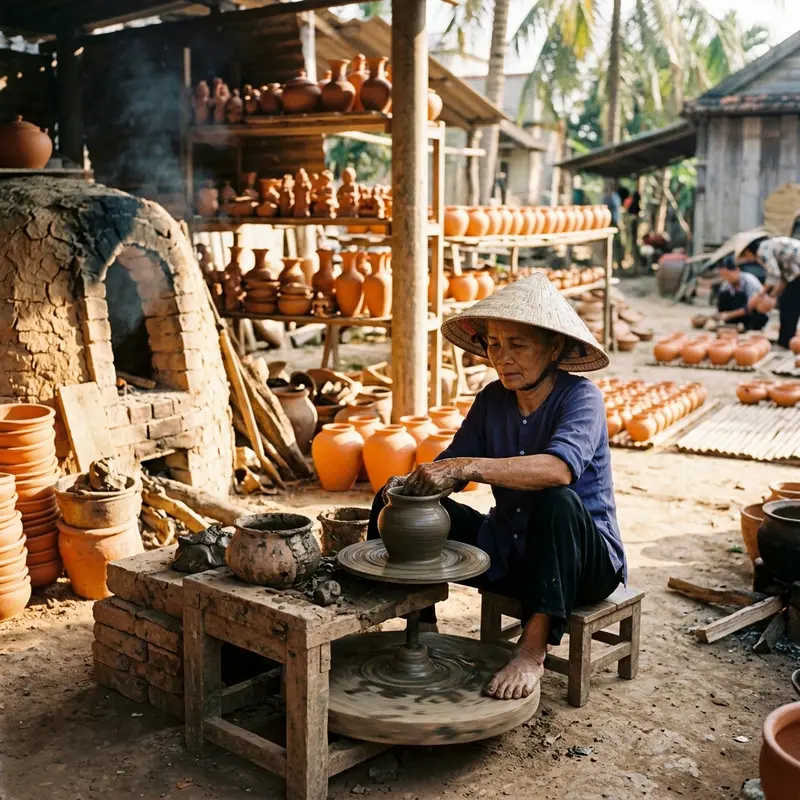
There’s a saying among those in the trade: “Thanh Ha pottery is beautiful even without glaze.” And that is the truth. The pottery here is made from a special type of clay extracted from the Thu Bon Riverbed – a type of clay with high fineness, few impurities, which, when fired, yields a distinctive brick-red color that is unmistakable.
The production technique for Thanh Ha pottery remains entirely manual: the clay is kneaded thoroughly by hand and foot (yes, using feet to knead the clay is an important step!), then shaped on a traditional potter’s wheel, air-dried naturally, and fired in a wood-fired kiln. No industrial machinery is involved in this production chain.
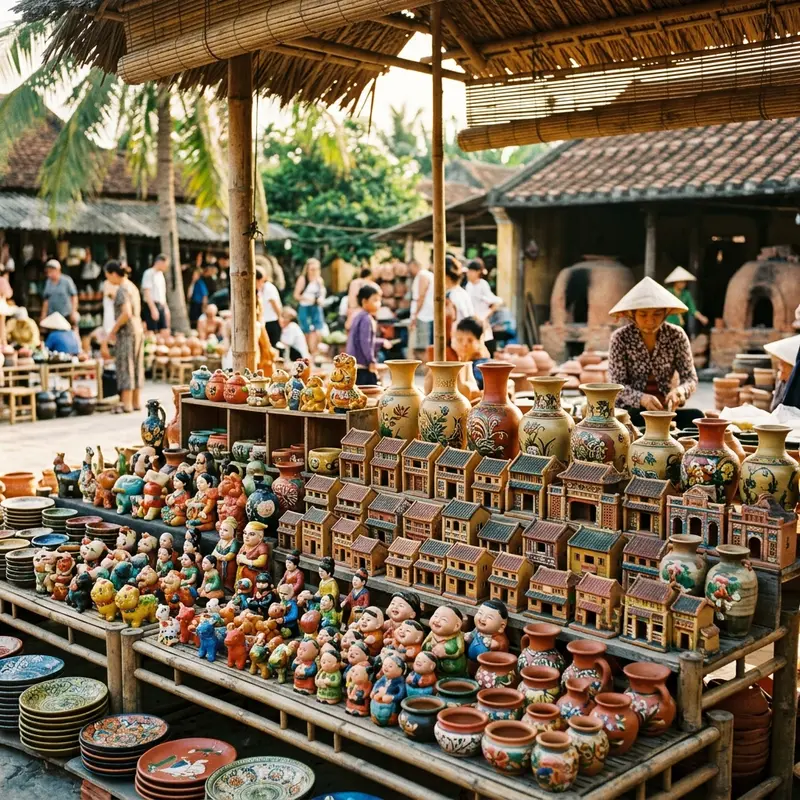
The village’s products are diverse: from everyday household items like jars, large pots, and earthenware pots, to exquisite decorative items such as statues, vases, and tourist souvenirs. Particularly, the Ceramic City model built within the village grounds is an unmissable highlight – all the characteristic architecture of Hoi An is recreated in miniature ceramic form, astonishingly intricate.
How to Get to Thanh Ha Pottery Village from Da Nang and Hoi An
From Hoi An City Center to the Pottery Village
From Hoi An Ancient Town, you can reach Thanh Ha Pottery Village in several ways:
- By Bicycle: This is the most romantic option. Rent a bicycle in the ancient town (around 30,000–60,000 VND (≈$2)/day), cycle along Nguyen Phuc Chu street, and then turn into Thanh Ha street. The distance is about 3km, taking 15–20 minutes, perfect for a cool morning.
- By Motorbike/Electric Scooter: Faster and more convenient if you are traveling in a group or on a very hot day.
- By Thu Bon River Boat: This is an extremely worthwhile option that many tourists overlook. From Hoi An’s boat station, you can hire a small wooden boat to travel along the Thu Bon River to the pottery village – a journey of about 20–30 minutes, offering beautiful river scenery, costing around 100,000–180,000 VND (≈$7)/person (negotiate with the boat owner).
From Da Nang to Thanh Ha Pottery Village – Don’t Go Alone If You Don’t Know the Way
This is where I want to be direct with you: If you are starting from Da Nang, do not use Grab or regular taxis to get to Hoi An and then figure out the rest yourself.
Why? Because the journey from Da Nang to Hoi An (about 30km) already costs money, then you have to rent another vehicle in Hoi An, find your way to the pottery village, and worry about getting back at the end of the day. The total cost is often much higher than imagined, not to mention the risk of being overpriced at transfer points.
The optimal solution often suggested by locals: Book a package transfer service from Faifo Express – a professional transfer service from Da Nang to Hoi An with local drivers who know every nook and cranny.
I have used Faifo Express’s Da Nang to Hoi An car service multiple times to take friends from Da Nang airport directly to Hoi An attractions, including Thanh Ha Pottery Village. The biggest difference compared to Grab or traditional taxis:
- Local Drivers: They know the exact entrance to the pottery village, know when it’s crowded, and even know which artisan is best at pottery shaping.
- Fixed Price, No Hidden Fees: No “extra charges for traffic jams” or “detours without prior notice.”
- Spacious, Air-Conditioned Cars: After a tiring pottery session with clay all over your hands, sitting in a cool car immediately is invaluable.
- Flexible Itinerary: You can combine it with Ba Na Hills, Hoi An Ancient Town, or any other point of interest during the day without worrying about transportation.
If you are flying into Da Nang and want to go directly to Hoi An to visit the pottery village on your first day, Faifo Express’s Da Nang airport transfer service is the smartest choice – book in advance, the driver will hold a name sign and pick you up right at the exit, no need to worry about anything.
[!TIP] If you want to combine a visit to Thanh Ha Pottery Village with Ba Na Hills on the same trip, Faifo Express has a very convenient Ba Na Hills car package. The driver will advise on a reasonable itinerary to avoid peak hours at both locations.
Real Experience at Thanh Ha Pottery Village – What to Do, What to See, Where to Take Photos
Visiting the Village Grounds and Pottery Workshops
Upon entering the Thanh Ha Pottery Village (after purchasing your ticket), your tour usually begins with a stroll around the spacious grounds, lined with lush trees, ancient kilns, and hundreds of pottery products displayed along the pathways.
The first place to visit is the pottery production workshop – where you can observe artisans at work. This is not a performance – they are actually producing goods. You will see someone kneading clay, others are shaping pots on the potter’s wheel, and others are refining products with bamboo and wooden tools. The entire space carries the distinct scent of damp earth, and the air is cooler than outside because the clay absorbs heat.
Local Tip: Don’t just watch from afar. Ask for permission and get closer. Most artisans are happy to see visitors genuinely interested in their work. Some elderly individuals might not speak English, but they will smile and nod, allowing you to take close-up photos.
Experience Traditional Pottery Shaping – An Unmissable Highlight
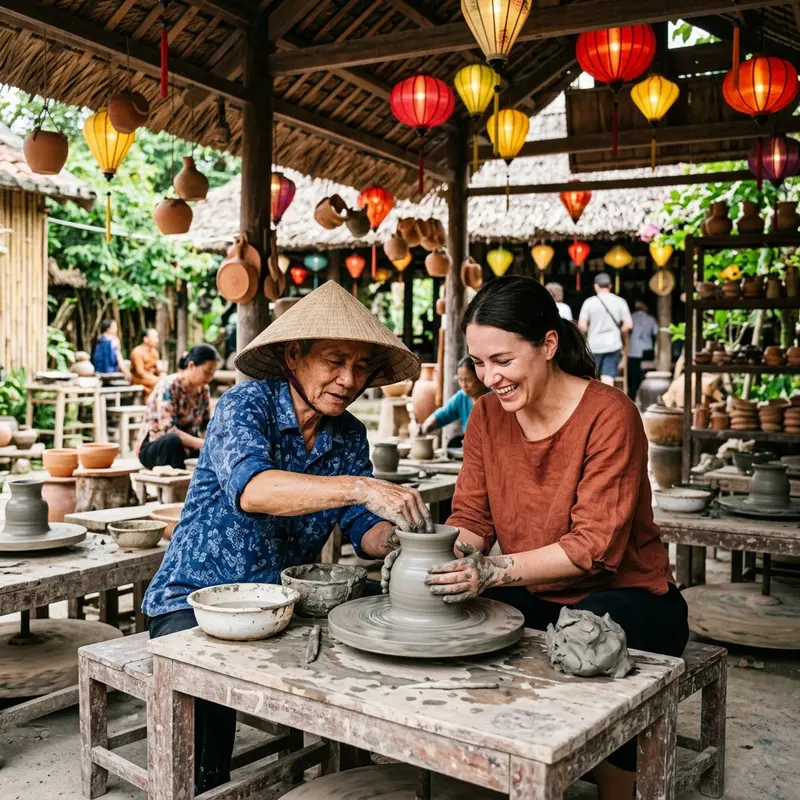
This is the part I guarantee will become the most memorable part of your trip. The pottery shaping experience at Thanh Ha village is organized as a small workshop, usually with 1-2 artisans providing direct guidance.
The process of a pottery shaping class typically unfolds as follows:
- Clay Preparation: You’ll be given a lump of pre-kneaded clay, soft and pliable enough. The artisan will guide you on how to place the clay on the potter’s wheel correctly centered – this is the hardest step!
- Opening the Clay (Centering): While the wheel spins, you use the palms of both hands to press from both sides to make the clay “sit” in the center. It sounds simple, but doing it in practice is… not simple at all.
- Shaping: Use your fingers to create a hole in the middle, then slowly pull up the walls to form the body of the pot. This is when you’ll most vividly feel the cool, smooth clay running through your fingers.
- Finishing: Use bamboo tools to trim excess clay, create borders, and add decorative details.
The result? 90% of first-time visitors will create a product that… isn’t quite what they intended. But that’s precisely the fun part! The artisan will “rescue” your creation with a few skillful movements, and in the end, you’ll still have a pot/plate/cup that you truly made with your own hands.
[!NOTE] The ceramic product you make in the workshop will need to be dried and fired in a kiln. If you don’t have time to wait (usually 1-2 days), the pottery village can help you ship the product to your address via postal service for an additional fee. Alternatively, you can purchase ready-made finished ceramic products at the village’s shop.
Miniature Ceramic City – Hoi An’s Most Unique Check-in Spot
If you only have 30 minutes at Thanh Ha pottery village, dedicate all of it to the Miniature Ceramic City. This is a collective art project by the village artisans, recreating the entire characteristic architectural space of Hoi An using fired clay: the Japanese Covered Bridge, the ancient town, ancestral houses, the Thu Bon River boat dock…
The miniature scale is incredibly detailed and accurate. Natural light in the early morning or late afternoon casting over the exhibition area creates beautiful photo opportunities.
The Best Check-in Angle (Only Locals Know): Stand at the northeast corner of the Ceramic City, slightly to the left, and you’ll get a shot with the entire model and the green trees behind it. The best time is between 7:00 AM and 8:30 AM when the light is soft and there aren’t many tourists.
Buying Pottery as Souvenirs – What to Buy and What Not to Buy
The pottery shops in the village sell a wide variety of products, with prices ranging from 20,000 VND (≈$1) (small keychains) to several million VND (large vases, high-end tea sets). Some suggestions:
- Recommended to buy: Red ceramic tea cup sets (around 80,000–180,000 VND (≈$7)/set of 4 cups), small decorative ceramic figurines, ceramic plates with Hoi An patterns.
- Be cautious with: Products labeled “Thanh Ha pottery” but sold in souvenir shops in the ancient town at prices that are too high.p 2–3 times. Always buy directly at the village to ensure quality and reasonable prices.
[!WARNING] Some shops outside the village (on the way in) sell pottery not from Thanh Ha but with similar labels. How to distinguish: Real Thanh Ha pottery has a characteristic brick-red color, a slightly rough natural surface, and no glossy glaze on the outside (except for some high-end product lines with glaze). Ask the seller directly: “Is this firewood-kiln fired pottery?” – a hesitant answer is a suspicious sign.
What to Eat Near Thanh Ha Pottery Village – Local Foodie Secrets
Breakfast before entering the village
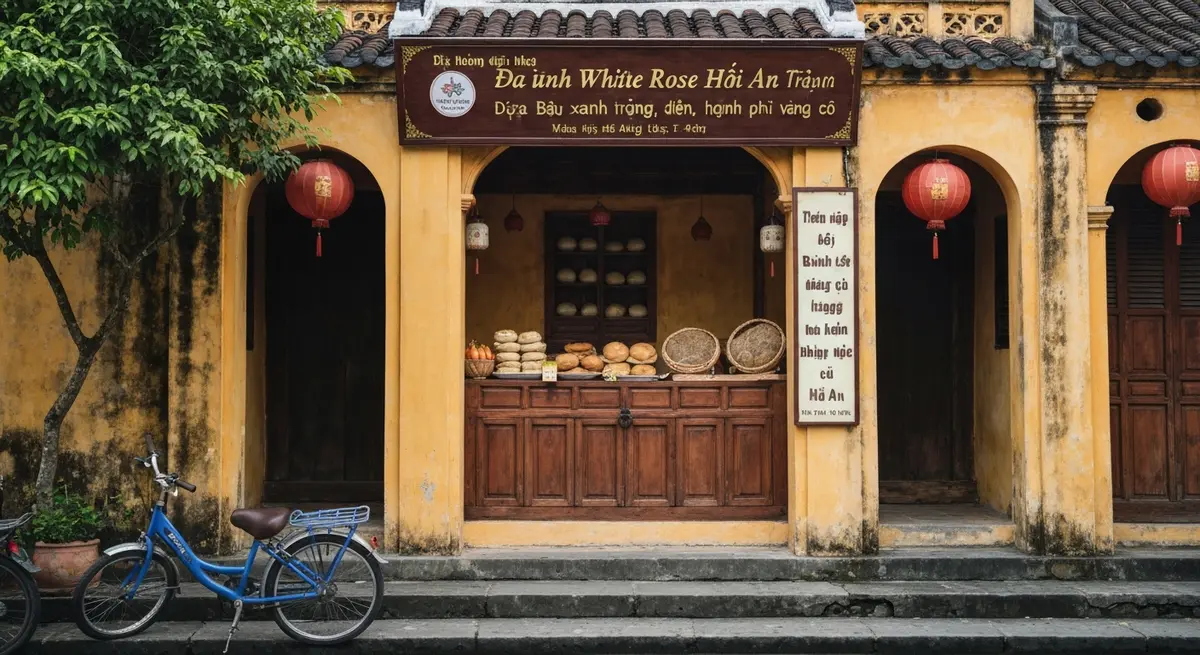
Don’t skip breakfast before your visit! On the way from the ancient town to the pottery village, the Nguyen Phuc Chu street has some delicious and affordable breakfast spots:
- Cao Lau Ba Be (near the intersection before the village): A bowl of authentic Hoi An cao lau, with golden noodles made from bamboo ash water, char siu pork, and crispy fried crackers. Price: 30,000–50,000 VND (≈$2)/bowl.
- Banh Mi Phuong, Thanh Ha branch: Few people know that there’s a small Banh Mi Phuong cart operating in the morning near this area. It’s not the main store but uses the same recipe.
Lunch after visiting
After about 2–3 hours at the pottery village, you can return to Hoi An Ancient Town for lunch. Or, if you want to experience riverside cuisine, ask locals about the small family-run com (rice) restaurants along the Thu Bon River near the pottery village – these places don’t have big signs and aren’t on Google Maps, but the grilled river fish and stir-fried morning glory with garlic here are “inexplicably” delicious.
Estimated Costs for Visiting Thanh Ha Pottery Village
Here is a reference cost table (updated 2024–2025):
[!NOTE] Pricing Note for International Tourists The prices listed are inclusive of a 20% tax and service fee applied to foreign tourists. Estimated USD rates are based on current exchange rates and may slightly vary.
| Item | Cost |
|---|---|
| Thanh Ha Pottery Village Entrance Fee | 40,000 VND (≈$2)/adult, 30,000 VND (≈$1)/child |
| Pottery Wheel Workshop Experience | 50,000–100,000 VND (≈$4)/person (often included in the ticket or charged extra) |
| Bicycle Rental from Ancient Town | 30,000–60,000 VND (≈$2)/day |
| River Boat from Hoi An | 100,000–180,000 VND (≈$7)/person (negotiable) |
| Shuttle Bus Da Nang – Hoi An (Faifo Express) | From 300,000 VND (≈$12)/vehicle (contact for exact price) |
| Breakfast | 30,000–70,000 VND (≈$3)/person |
| Buying Pottery as Souvenirs | 60,000 VND (≈$2) – several million VND (depending on needs) |
| Estimated Total (excluding transportation) | ~200,000–480,000 VND (≈$19)/person |
[!TIP] The Thanh Ha Pottery Village entrance ticket usually includes a basic pottery wheel experience (1 try). If you want to learn more thoroughly or make additional products, you will pay an extra fee. Inquire clearly at the ticket counter before entering to avoid misunderstandings.

Practical Experience – Things Only Frequent Visitors Know
What is the best time to visit?
Best: 7:00 AM – 9:30 AM. This is the golden hour at Thanh Ha Pottery Village. Reasons:
- The most beautiful natural light for photography
- No large tourist groups yet (they usually arrive after 9:30 AM)
- Artisans are in their most focused working state, allowing you to observe and chat more comfortably
- The temperature is cooler and much more pleasant than midday
Avoid: 10:00 AM – 2:00 PM, especially during summer (June–August). This is when it’s intensely sunny, crowded, and hot from the kilns.
Suggested Itinerary for the Day:
- 7:00 AM: Depart from Hoi An/Da Nang- 7:30 AM–8:00 AM: Arrive at the pottery village, tour the production workshop
- 8:00 AM–9:00 AM: Pottery making experience
- 9:00 AM–9:30 AM: Visit Ceramic City, take photos
- 9:30 AM–10:00 AM: Shopping at the store
- 10:00 AM: Depart the village, have a late breakfast or explore Hoi An Ancient Town
What to Wear and Prepare
- What to wear: Clothes you don’t mind getting dirty. Clay will stick to your hands and might splash onto your clothes when the wheel spins. Many people wear white shirts and regret it later.
- What shoes to wear: Closed-toe shoes or sandals with a heel strap. The pottery workshop floor is often damp and a bit slippery.
- What to bring: Plenty of wet wipes or tissues, sunscreen, a wide-brimmed hat if visiting at noon.
- Phone/Camera: Prepare a zip-lock bag to protect your phone/camera
Frequently Asked Questions
Frequently asked questions about Thanh Ha Pottery Village
What is the best way to use this guide to Thanh Ha Pottery Village: Traditional Experience in Hoi An?
Is Thanh Ha Pottery Village: Traditional Experience in Hoi An suitable for a first-time visitor?
Can I combine Thanh Ha Pottery Village: Traditional Experience in Hoi An with other nearby plans?
What should I confirm before making plans for Thanh Ha Pottery Village: Traditional Experience in Hoi An?
How can I avoid last-minute problems with Thanh Ha Pottery Village: Traditional Experience in Hoi An?
Tags
The Faifo Express
This article was written by the driver and travel consultant team at Faifo Express — over 5 years of experience in travel transport across Da Nang, Hoi An, and Hue. All information is based on real experience serving 5,000+ customers every month.
Related services
Airport Transfer
Hotel pickup, all-inclusive price
View DetailsDay Tour Car Rental
Ba Na Hills, Hoi An, My Son...
View DetailsShared Car
From just 100K VND/person
View DetailsTourist Car Rental
Explore the beauty of Central Vietnam with our private tourist car service.
View Details🛣️ Popular Routes

Follow Faifo Express
Get exclusive deals, real reviews and the latest Central Vietnam travel tips.
Faifo Express
Updates, customer reviews & real trip photos.
@trm.anh.travel
Real experience videos, Da Nang – Hoi An travel tips.
@xedichvudananghoianhue
Real videos of routes, fleet and transfer services.
@xedananghoianFE
Quick news, flash deals and direct interaction.
DM us on Facebook — response within 5 minutes