


Dong Ba Market: A Morning Inside Hue's Beating Heart
📋 Table of Contents
[!NOTE] Pricing Note for International Tourists The prices listed are inclusive of a 20% tax and service fee applied to foreign tourists. Estimated USD rates are based on current exchange rates and may slightly vary.
Dong Ba Market – Where the Soul of the Ancient Capital Emerges Amidst a Myriad of Flavors
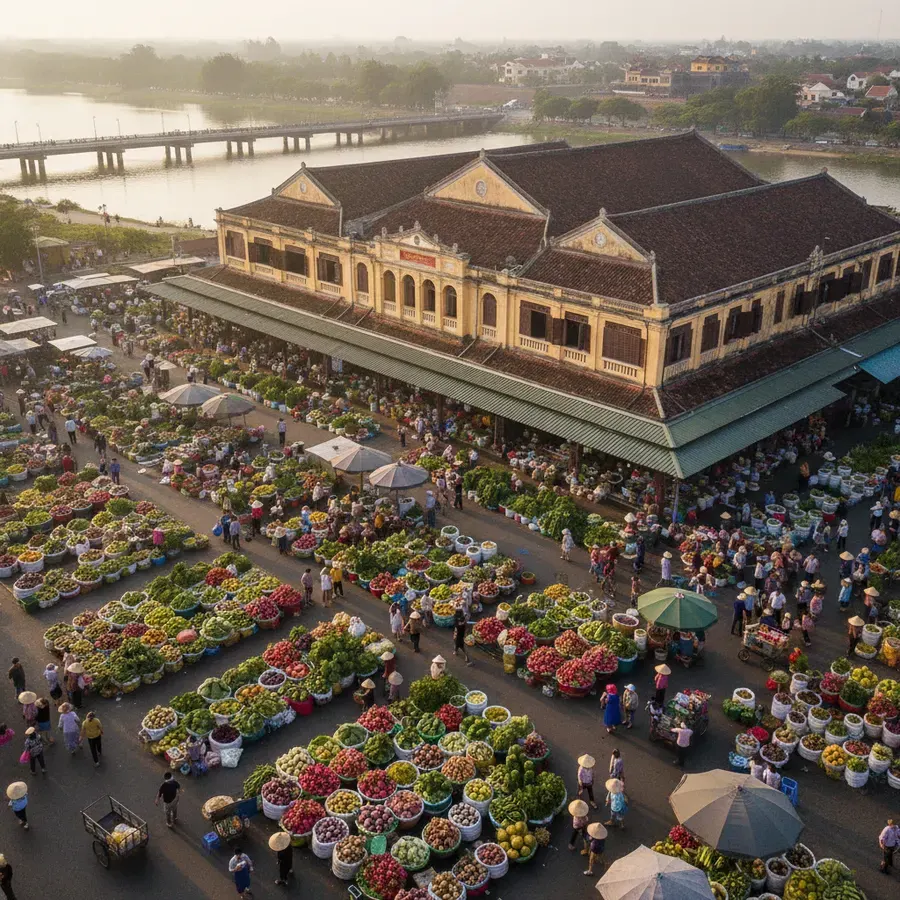
There is a place in Hue that, if you visit just once, you will immediately understand why people say, “Hue is more than just tombs and palaces.” This place isn’t hidden behind moss-covered walls or beneath the shade of majestic triple gates – it lies right in the heart of the city, bustling, vibrant, and fragrant with the scent of shrimp paste and freshly steamed banh beo. This is Dong Ba Market, the most bustling ancient market of the former imperial capital, existing for over a century and still beating with the most vibrant rhythm every early morning when the city has yet to wake.
I have been to Hue no less than ten times, and each time, the first thing I do after putting down my luggage is not to visit the Imperial City or Thien Mu Pagoda – but to go straight to Dong Ba, pull up a stool at a bun bo stall, order a bowl of bun, and watch a miniature world unfold before my eyes. This is the real Hue, the Hue of the Hue people, not the Hue of glossy brochures.
This article will take you into Dong Ba Market Hue in a way only a local can – through every nook and cranny, every dish you should try, every thing to watch for to avoid, and even the little secrets that no travel guide bothers to write about.
Dong Ba Market – Over 100 Years of History in the Heart of the Ancient Capital
From “Court Market” to the Economic Heart of Hue
Few people know that Dong Ba Market didn’t spontaneously appear in its current location. The history of this market is closely tied to the history of the imperial capital of Hue during the Nguyen Dynasty. In the 19th century, when King Gia Long established his capital in Hue and built the Imperial City, a market formed just outside the Dong Ba Gate – one of the most important gates of the Hue Imperial City. The name “Dong Ba” itself originates from this gate’s location.
Initially, the market was merely a place for local residents to exchange goods, serving both the needs of the royal court and daily life. Over time, especially in the late 19th and early 20th centuries under French colonial rule, Dong Ba Market was systematically planned and rebuilt with a more organized architecture. In 1899, the market was rebuilt by order of King Thanh Thai, and from then on, it became the largest commercial center of Hue.
Through two wars, historical upheavals, renovations, and improvements, Dong Ba Market has stood firm. The current market was rebuilt after 1968 and has undergone numerous upgrades, but its soul – that noisy, friendly atmosphere, deeply imbued with the Hue spirit – has never changed.
Architecture and Scale: The Largest Market in Thua Thien Hue Province
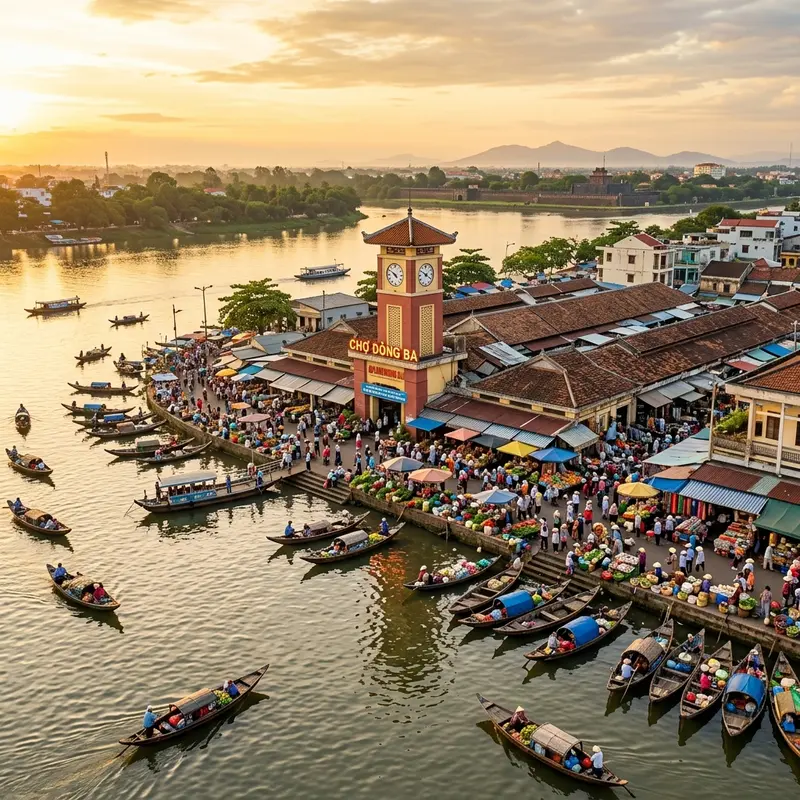
Dong Ba Market is located right on the banks of the Perfume River, at the intersection of Tran Hung Dao and Huynh Thuc Khang streets, in Phu Hoa ward, Hue city. This prime location – with the poetic Perfume River on one side and the city’s central thoroughfare on the other – has made it an ideal trading hub since ancient times.
In terms of scale, Dong Ba Market currently has over 2,700 fixed businesses and hundreds of freelance vendors operating outside the market premises. The market spans tens of thousands of square meters, comprising various distinct functional areas: fresh food section, dry goods section, fabric section, Hue specialties section, handicraft section, food court…
The clock tower at the main entrance of the market is the unmistakable symbol of Dong Ba. That old clock tower, despite being repaired many times, remains a familiar meeting point for generations of Hue people: “Let’s meet at the Dong Ba clock tower” – this phrase has become etched in the memories of many sons and daughters of Hue.
Guide to Getting to Dong Ba Market from Da Nang and Nearby Provinces
From Da Nang to Hue: What’s the Best Option?
If you’re in Da Nang and want to explore Dong Ba Market and the entire ancient capital of Hue in a day or on a short trip, there are a few popular options:
- Inter-provincial bus: Cheap but involves a lot of waiting time, not flexible with schedules.
- Train: Enjoy the beautiful Hai Van Pass scenery, but train times are fixed and not convenient for visiting multiple spots in a day.
- Taxi/Grab: High cost, drivers are not always knowledgeable about the local area, no support when needed.
- All-inclusive shuttle service from Faifo Express: This is the option I always recommend to friends and readers.
The reason I trust Faifo Express’s shuttle service is not just for convenience – but for peace of mind. Faifo Express drivers are all locals, familiar with every road, every stop, and every delicious eatery along the journey. They know when to take detours to avoid traffic jams, where to park closest to Dong Ba Market without getting fined, and more importantly – they never overcharge tourists.
Faifo Express vehicles come in various types: from 4-seater cars for couples to 16-seater vans for families, all equipped with air conditioning, Wi-Fi, and regularly maintained. Especially, if you are planning to combine multiple destinations in one trip – for example, airport transfers from Da Nang then directly to Hue – Faifo Express can arrange a very reasonable all-inclusive itinerary.
[!TIP] If you book a Faifo Express car for your Da Nang – Hue journey, ask the driver to stop at Hai Van Pass for about 15-20 minutes for photos and sightseeing. This is one of the most beautiful coastal passes in Southeast Asia and is directly on the way. Most Faifo Express drivers are willing to stop upon request without extra charge.
Getting Around Hue City to Dong Ba Market
Dong Ba Market is located very centrally, only about 1km from the Imperial City of Hue, and less than 500m from Truong Tien Bridge. If you are in the center of Hue city, you can easily walk to the market.
Exact address: Tran Hung Dao, Phu Hoa, Hue City, Thua Thien Hue.
Market entrances:
- Main entrance: Tran Hung Dao Street (with the clock tower, the most recognizable)
- Side entrance by the river: Bach Dang Street (near the boat landing, suitable if you are taking a boat on the Huong River)
- Fresh food entrance: Huynh Thuc Khang Street (for early morning shoppers)
[!NOTE] If you are combining a visit to Hoi An and want to stop by Hue, Faifo Express also offers shuttle services from Da Nang to Hoi An and flexible inter-provincial routes, helping you design your itinerary as you wish without being dependent on fixed departure times.
Dong Ba Market Area Map: Where to Go, What to Buy, What to Eat?
Food Court: Hue’s Culinary Paradise
This is where I spend the most time whenever I visit Dong Ba. Located on the ground floor inside and along the walkways on both sides, the Dong Ba Market food court is where you can taste almost the entire essence of Hue cuisine in just one morning.
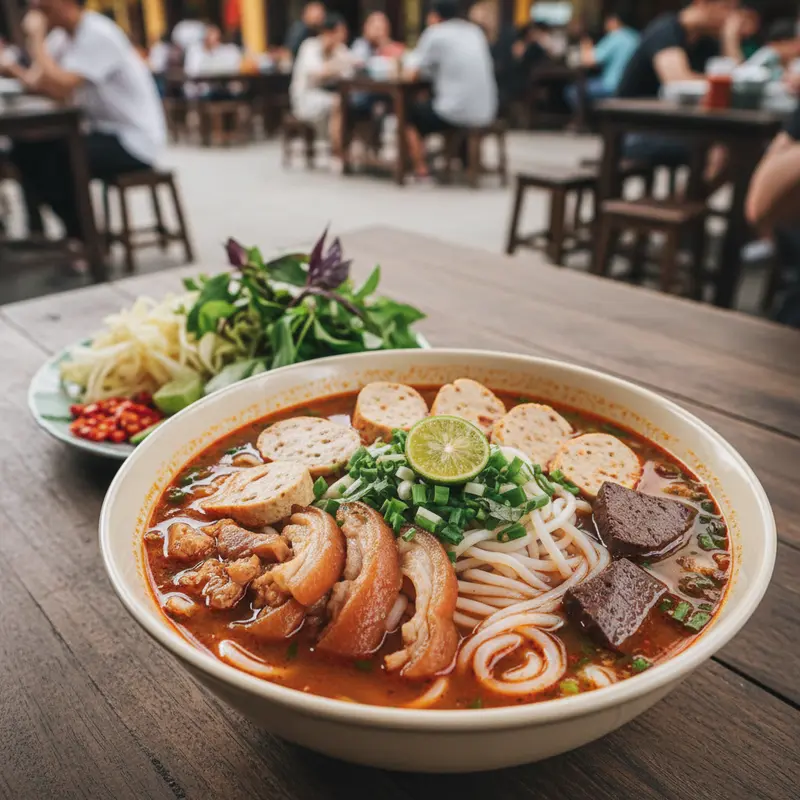
Bun Bo Hue: Never eat bun bo at restaurants with large English menus near the Imperial City. Go straight to Dong Ba Market, find the bun bo stalls with queues forming from 6 AM. The bun bo bowls in the market have a richer broth, more meat, and most importantly – they are nearly half the price compared to outside. Prices range from 25,000 – 50,000 VND (≈$2) per bowl.
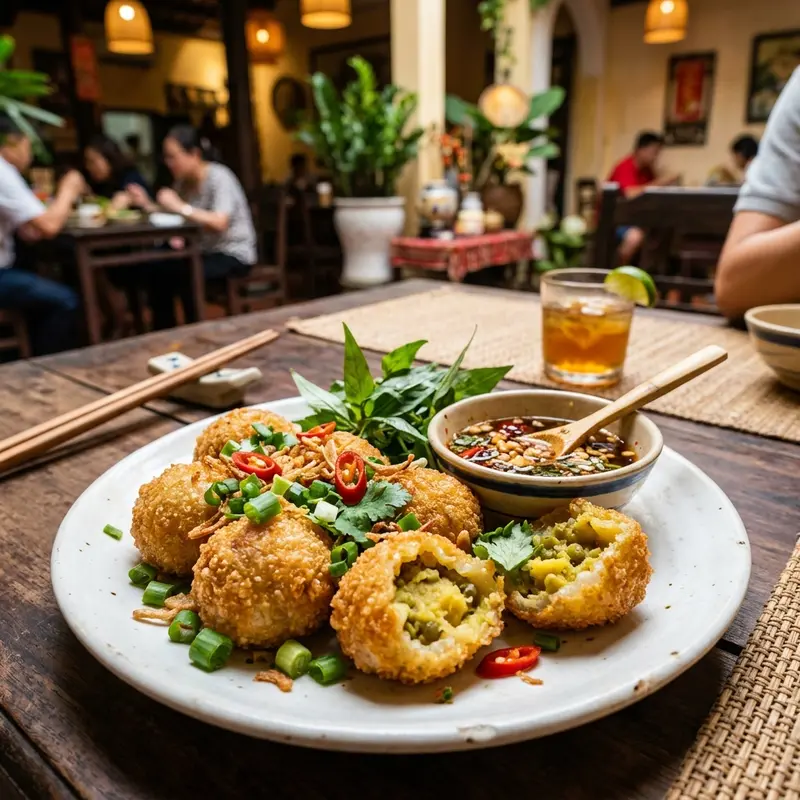
Banh Beo, Banh Nam, Banh Loc: Hue people have a whole “collection” of cakes that you won’t find anywhere else in Vietnam.can be found. In Dong Ba Market, you will find elderly women sitting and selling banh from early morning. The banh are steamed fresh on the spot and served with a sweet and sour Hue-style fish sauce. A plate of 10 banh beo costs only 15,000 – 20,000 VND (≈$1).
Com Hen: This is the most characteristic dish of Hue, which few tourist restaurants prepare authentically. Com hen in the market is made from real Huong River clams, stir-fried with scallion oil, served with fresh herbs, crispy pork rinds, chili paste… The distinct spicy flavor will be unforgettable. The price is only 15,000 – 30,000 VND (≈$1)/bowl.
Che Hue: Hue people have dozens of types of che – che dau van, che bap, che hat sen, che khoai tia… The che section in the market is usually located at the end of the food alley and operates all day and into the evening.
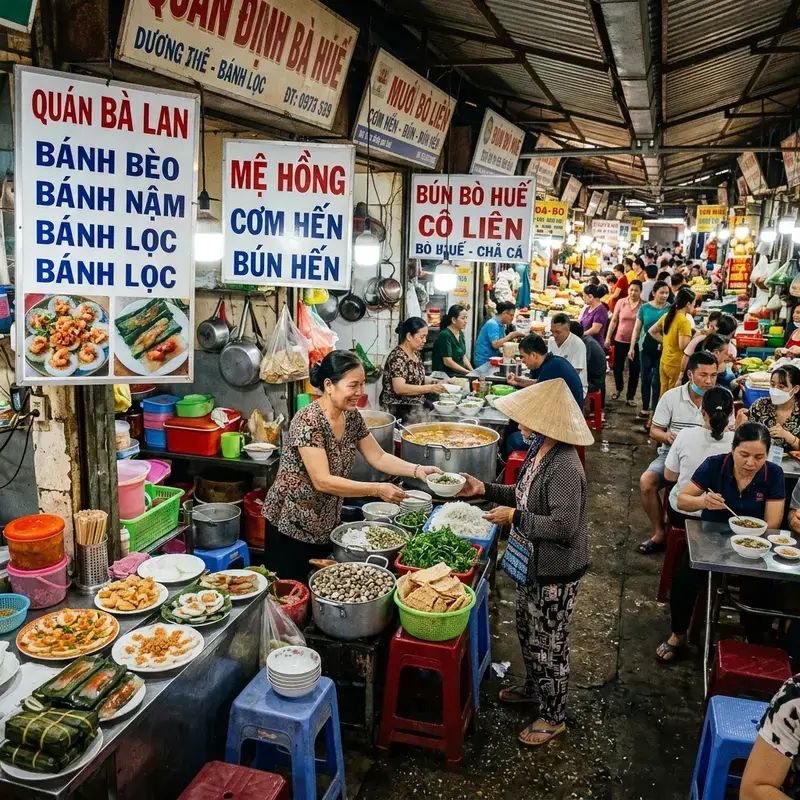
[!TIP] Local secret: Visit Dong Ba Market between 6:00 AM – 7:30 AM for breakfast. This is when the food stalls are most crowded, the food is freshest, and you’ll be eating alongside locals, not tourist groups. Early morning vendors are often friendlier and more willing to chat.
Specialty and Souvenir Area: What to Buy Without Regret?
The specialty area of Dong Ba Market is where you can buy gifts for family and friends at the best prices and with the most assured quality – as long as you know how to choose.
Me xung: The number one specialty of Hue, made from roasted sesame seeds and malt syrup, with a delicate sweetness and a crispy texture. In Dong Ba Market, there are many different brands of me xung. Don’t buy the cheapest – it’s usually of poor quality. Ask the vendor for a sample before buying. Prices range from 60,000 – 180,000 VND (≈$7)/box depending on the type.
Mut Hue: Ginger jam, winter melon jam, lotus seed jam… Hue has a long-standing tradition of making jams. In the market, you can buy by the hectogram or by the box, at much more affordable prices than in tourist shops outside.
Non La Hue: Non bai tho – the characteristic conical hat of Hue, with images of landscapes or poetry inside that can be seen through the light. Prices range from 60,000 – 240,000 VND (≈$9) depending on quality and craftsmanship.
Tuong ot and Mam ruoc Hue: If you are a food enthusiast, don’t miss the authentic jars of Hue shrimp paste sold in the market. Hue shrimp paste has a characteristic purple color and a distinct, strong aroma, making it an essential ingredient in bun bo Hue and many other dishes.
Silk and Ao Dai: The fabric section of Dong Ba Market is famous for its silk and brocade fabrics, with many tailor shops for ao dai on-site. If you want to have a genuine Hue ao dai made at a reasonable price, this is the place to go.
Fresh Produce Area: Where Locals Actually Shop
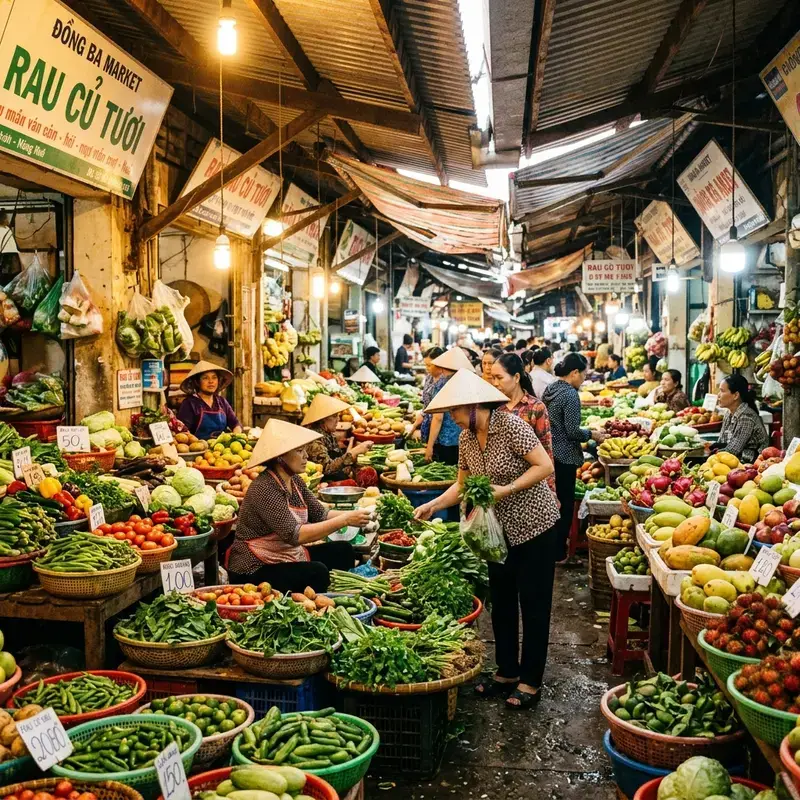
This is the area least visited by tourists, but it’s my favorite. The fresh produce section of Dong Ba Market is most active from 4:00 AM – 8:00 AM, with all kinds of fresh seafood from Thuan An beach, vegetables from the outskirts of Hue, poultry, and livestock…
This is where you’ll see real Hue people – housewives shopping from dawn, haggling for every dong, choosing every sprig of herb. The atmosphere here is noisy, crowded, with the smell of fish and shrimp mixed with the scent of herbs, but that is the smell of life.
Beautiful Check-in Spots In and Around Dong Ba Market
Clock Tower – An Unmissable Symbol
The clock tower at the main entrance of Dong Ba Market is a photo opportunityThe first photo you must have. Taken in the early morning when the golden sunlight shines from the east, with the stream of people going to the market as a backdrop, the photo will have depth and beautiful colors. The best shooting angle is from Tran Hung Dao street, about 20-30m back to capture the entire scene of the tower and the market roof.
Truong Tien Bridge and Perfume River at Sunset
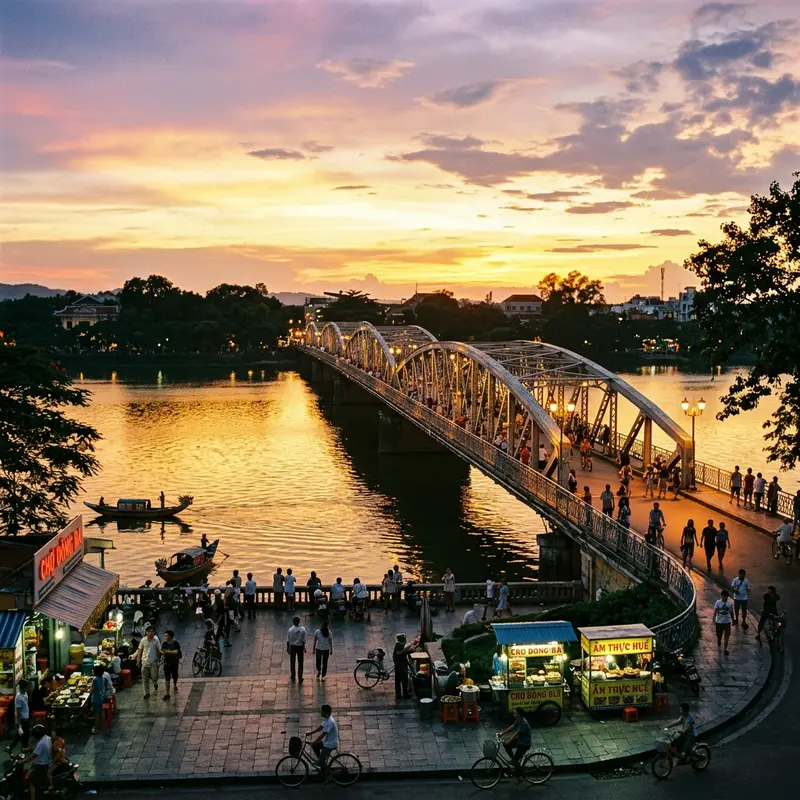
Just a few steps from the market, Truong Tien Bridge spanning the Perfume River is one of the most romantic spots in Hue. At sunset, when the sunlight spills onto the river and the six-span bridge reflects its shadow onto the blue water, this is a scene that any camera can capture beautifully.
Nguyen Dinh Chieu Walking Street – Hue’s Night Scene
In the evening, the area around Dong Ba Market and Nguyen Dinh Chieu Walking Street becomes lively with street food stalls, carts selling Hue’s sweet soups and banh mi, and warm yellow streetlights. This is the ideal time to photograph Hue’s night scene with its ancient yet bustling atmosphere.
Estimated Costs for a Visit to Dong Ba Market
Reference Cost Table (Updated 2024-2025)
| Item | Estimated Cost |
|---|---|
| Market Entrance Fee | Free |
| Breakfast (bun bo/banh beo/com hen) | 25,000 – 60,000 VND (≈$2)/person |
| Hue Sweet Soup | 15,000 – 30,000 VND (≈$1)/cup |
| Me Xuong (souvenir) | 60,000 – 240,000 VND (≈$9)/box |
| Hue Conical Hat | 60,000 – 240,000 VND (≈$9)/hat |
| Ready-made fabric/ao dai | 200,000 – 960,000 VND (≈$38) |
| Shuttle bus Da Nang – Hue (Faifo Express) | Contact for group quote |
| Motorbike taxi/taxi within the city | 20,000 – 60,000 VND (≈$2)/trip |
[!NOTE] Dong Ba Market does not charge an entrance fee. All incurred costs are for shopping, dining, and transportation. This is one of the rare “free” attractions that offers the richest experience in Hue.
Suggested Budget for a Morning at Dong Ba Market
If you only have a morning and want to fully experience Dong Ba Market without spending too much money:
- Budget-friendly: 100,000 – 180,000 VND (≈$7)/person (breakfast + 1-2 small souvenirs)
- Comfortable budget: 300,000 – 600,000 VND (≈$24)/person (breakfast + specialty shopping)
- “Shopping” budget: 500,000 – 1,800,000 VND (≈$71)/person (dining + buying fabric, hats, jams, me xuong)
Practical Experience: Things Only Locals Know
Golden Hours for Visiting Dong Ba Market
Dong Ba Market operates almost 24/7, but each time slot has its own charm:
- 4:00 AM – 6:00 AM: The time for fresh produce. The freshest fish and shrimp, the best vegetables. For those who want to see the market in its most “raw” state.
- 6:00 AM – 9:00 AM: The golden hour for food and shopping. The liveliest, freshest, and most vibrant atmosphere.
- 9:00 AM – 11:00 AM: Still crowded, suitable for buying specialties and gifts.
- 11:00 AM – 2:00 PM: The market starts to thin out, many stalls close for lunch.
- 3:00 PM – 6:00 PM: The afternoon market reopens, focusing on food stalls.
- 6:00 PM – 9:00 PM: Night market with street food stalls and food carts.
Appropriate Attire for Visiting Dong Ba Market
Dong Ba Market is a traditional market, not a “staged” tourist attraction. Therefore:
- Wear light and comfortable clothing – the space inside the market is quite hot and crowded.
- Wear flats or sandals – the market floor can be wet or slippery, especially in the fresh produce section.
- No need to wear an ao dai for photos inside the market – it will be very inconvenient and somewhat out of place.
- Bring a cloth bag or basket to carry your purchases – it’s both convenient and environmentally friendly.### How to Bargain and Getting Fair Prices
This is the most important part that many travel blogs dare not write directly:
Bargaining is a culture, not rudeness: At Dong Ba Market, bargaining is completely normal and accepted. However, bargain politely, not too aggressively for small-value items.
**Prices for foreig
Frequently Asked Questions
Frequently asked questions about Discover Dong Ba Market
What is the best way to use this guide to Discover Dong Ba Market: Hue's Busiest Ancient Market?
Is Discover Dong Ba Market: Hue's Busiest Ancient Market suitable for a first-time visitor?
Can I combine Discover Dong Ba Market: Hue's Busiest Ancient Market with other nearby plans?
What should I confirm before making plans for Discover Dong Ba Market: Hue's Busiest Ancient Market?
How can I avoid last-minute problems with Discover Dong Ba Market: Hue's Busiest Ancient Market?
Tags
The Faifo Express
This article was written by the driver and travel consultant team at Faifo Express — over 5 years of experience in travel transport across Da Nang, Hoi An, and Hue. All information is based on real experience serving 5,000+ customers every month.
Related services
Airport Transfer
Hotel pickup, all-inclusive price
View DetailsDay Tour Car Rental
Ba Na Hills, Hoi An, My Son...
View DetailsShared Car
From just 100K VND/person
View DetailsTourist Car Rental
Explore the beauty of Central Vietnam with our private tourist car service.
View Details🛣️ Popular Routes
Follow Faifo Express
Get exclusive deals, real reviews and the latest Central Vietnam travel tips.
Faifo Express
Updates, customer reviews & real trip photos.
@trm.anh.travel
Real experience videos, Da Nang – Hoi An travel tips.
@xedichvudananghoianhue
Real videos of routes, fleet and transfer services.
@xedananghoianFE
Quick news, flash deals and direct interaction.
DM us on Facebook — response within 5 minutes