


What to Do in Hue: 15 Places Where the Old Capital Still Lives
📋 Table of Contents
Hue – The City of Memories, Where Every Brick Tells a Story
One early morning, as I sat on a dragon boat gliding gently down the Perfume River, watching the mist shroud the Imperial City of Hue in the pale dawn light, I suddenly understood why people say Hue is not just a destination – Hue is an emotion. As the former capital of the Nguyen Dynasty, it preserves almost intact the soul of a fallen empire. Hue possesses a serene, profound, and mysterious beauty that no other city in Vietnam can replace.
If you’re wondering what to do in Hue, the answer cannot be contained in a few lines. From the majestic Imperial City to the royal tombs hidden among pine forests, from the Thien Mu Pagoda reflected on the Perfume River to the small alleys selling fragrant Banh Beo and Banh Nam – Hue is a thick book where every page is worth pausing to read slowly. This article will guide you through the top 15 must-visit tourist attractions in Hue, along with “insider” perspectives that only those who have truly lived and traveled here can share.
1. Hue Imperial City – The Heart of the Ancient Capital
An Irreplaceable History and Beauty
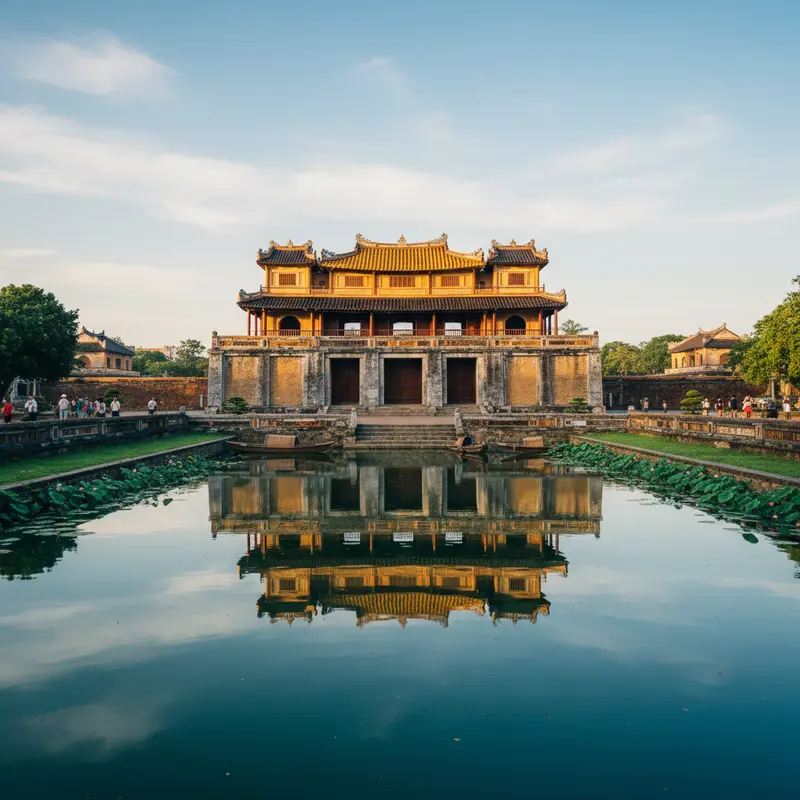
The Imperial City, also known as the Citadel of Hue, is the most monumental architectural work left by the Nguyen Dynasty to posterity. Built starting in 1804 under King Gia Long and completed under King Minh Mang, the Imperial City is a complex of over 100 architectural structures within a vast enclosure of more than 520 hectares. It served as the center of power for 13 Nguyen emperors for 143 years (1802–1945).
What sets the Imperial City apart from royal palaces around the world is not just its scale, but also its exquisite blend of court architecture and Eastern philosophy. Each structure – from the majestic Ngo Mon Gate, the splendid Thai Hoa Palace, to the serene The Mieu Temple – was built according to principles of feng shui and imbued with deep symbolic meaning.
A corner often overlooked: Duyet Thi Duong – the oldest royal theater in Vietnam, located right within the Imperial City. Here, performances of Nha Nhac, Hue royal court music (a UNESCO Intangible Cultural Heritage of Humanity), are held regularly. If you visit without watching this performance, you’ve missed the soul of Hue.
[!TIP] It’s best to visit the Imperial City early in the morning (before 8 AM) or in the late afternoon after 4 PM to avoid the heat and crowds. The late afternoon sunlight casting on the golden-glazed imperial tiles creates breathtakingly beautiful scenes that require no filters.
Entrance Fee: Approximately 240,000 VND (≈$9) per adult. It’s recommended to hire a local guide (around 150,000–240,000 VND (≈$9)) to gain a deeper understanding of each structure.
2. Tu Duc Tomb – Where a Poet King Sleeps Eternally
The Most Romantic Architecture in Hue’s Royal Tomb System
Among the royal tombs in Hue, Tu Duc Tomb is the place I always recommend visitors go first – not because it’s the grandest, but because it’s the most beautiful in a very unique way. King Tu Duc (1848–1883) was an extraordinary king: he not only ruled the country but was also a poet, a profound lover of nature and art. Therefore, his tomb was built more like a royal retreat than a typical burial site.
The tomb complex covers 12 hectares, surrounded by lush pine forests, with the poetic Luu Khiem Lake and the Xung Khiem Pavilion – where King Tu Duc often sat fishing and composing poetry.. This is where this very king lived and worked for 16 years before his death.
[!NOTE] Few people know that King Tu Duc personally wrote the longest stele inscription in Vietnam (about 4,935 characters) for himself, placed in Bi Dinh within the mausoleum complex. In it, he frankly admitted his own mistakes and shortcomings in governing the country – something extremely rare for any monarch in the world.
3. Khai Dinh Mausoleum – A Unique East-West Fusion
The most “distinctive” architectural work of the Nguyen Dynasty
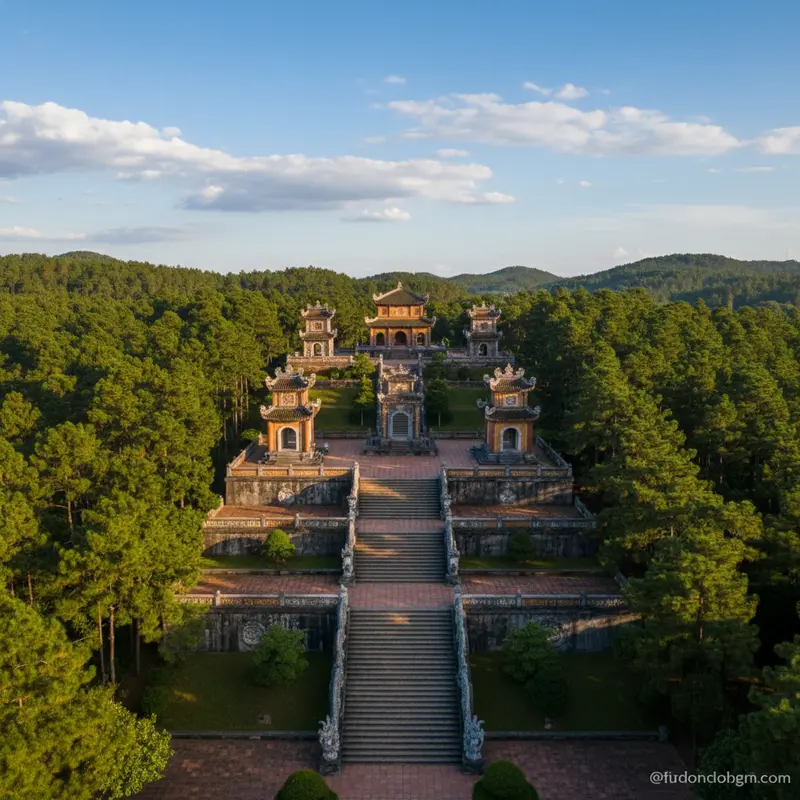
If Tu Duc Mausoleum is a lyrical poem, then Khai Dinh Mausoleum is a chaotic and impressive symphony. Built from 1920–1931, Khai Dinh Mausoleum is a bold blend of Vietnamese court architecture, European Gothic, Baroque, and Hinduism. The construction materials were largely imported from France, China, and Japan.
The unmissable highlight is the Kien Trung Palace – where the bronze statue of King Khai Dinh sits on his throne, surrounded by intricate ceramic mosaics depicting “Nine Dragons Hidden in Clouds” on the ceiling. The entire interior is decorated with millions of pieces of porcelain and glass – a project that required thousands of artisans working for many years.
[!WARNING] Khai Dinh Mausoleum is located on a high hill; you have to climb about 127 steps to reach the main palace. Wear flat-soled shoes and avoid short skirts or shorts, as this is a historical site with dress code regulations.
4. Thien Mu Pagoda – The Thousand-Year Spiritual Symbol of Hue
The 7-story tower and immortal legends
Thien Mu Pagoda is not just a pagoda – it is a spiritual and cultural symbol intertwined with the formation history of the Hue region. Located on Ha Khe hill by the Huong River, the pagoda was built in 1601 under Lord Nguyen Hoang. The 7-story Phuoc Duyen Tower, 21m high, is an indispensable representative image in any photograph of Hue.
What I want to emphasize is the experience of visiting Thien Mu Pagoda by dragon boat on the Huong River – this is the most “proper” way to feel the beauty of this pagoda. As the boat slowly approaches the shore, the Phuoc Duyen Tower gradually appears from behind the dense green foliage, a feeling that cannot be put into words.
Within the pagoda grounds, there is also an antique Austin car – the car that carried Venerable Thich Quang Duc to Phan Dinh Phung intersection (Saigon) to perform the historic self-immolation in 1963, protesting the Buddhist persecution policies of the Ngo Dinh Diem regime.
[!TIP] Rent a dragon boat at Toa Kham pier (near Truong Tien Bridge) to visit Thien Mu Pagoda combined with Minh Mang Mausoleum by river. The price is about 150,000–240,000 VND (≈$9)/person for a half-day tour. This is a characteristic experience that only Hue offers.
5. Minh Mang Mausoleum – The Majesty of an Outstanding Emperor
The most architecturally perfect mausoleum complex
King Minh Mang (1820–1841) was one of the most talented kings of the Nguyen Dynasty, and his mausoleum reflects that spirit: grand, balanced, majestic, and perfect in every detail. Minh Mang Mausoleum (also known as Hieu Lang) was built from 1840–1843, nestled amidst pine forests and clear blue lakes.
The mausoleum’s architecture follows an absolute symmetrical axis with three main paths: Trung Dao, Ta Dao, and Huu Dao, creating a sense of absolute balance and solemnity. Ho Trung Minh in the centerwith the red Trung Dao bridge reflecting on the water, it’s a “classic” check-in spot that almost everyone visiting Hue has to capture.
6. Truong Tien Bridge – The Romantic Heart of the Perfume River City
Six spans, a century of history
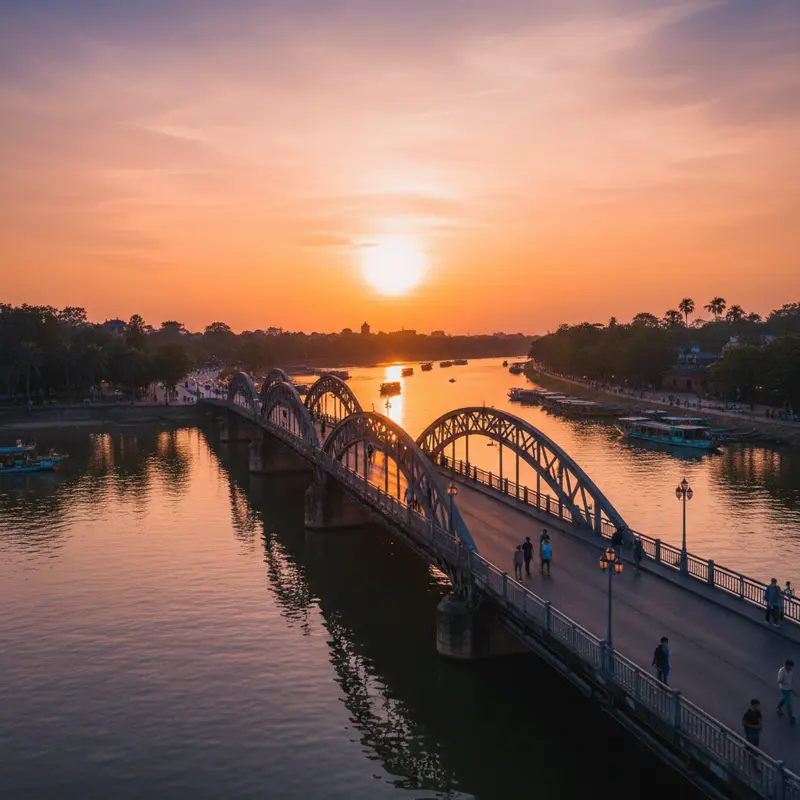
Truong Tien Bridge is more than just a bridge – it’s the symbol of Hue, the main character in countless poems, songs, and memories of Hue’s people. Built from 1897–1899 during the French colonial period, the bridge has 6 slender steel spans, stretching 402.6m across the Perfume River.
The experience I highly recommend you try: walking across Truong Tien Bridge at sunset. As the sun dips low, golden light bathes the Perfume River, and the old iron spans create a breathtakingly beautiful scene. Standing in the middle of the bridge, looking upstream, you’ll see the distant silhouette of Ngu Binh Mountain – this is the “landscape painting” that Hue’s people are so proud of.
[!NOTE] During holidays, Lunar New Year, and the Hue Festival (held every two years), Truong Tien Bridge is decorated with colorful LED lights and is the city’s main fireworks display point – a scene no less beautiful than Da Nang’s Dragon Bridge.
7. Bao Vinh Ancient Town – A Miniature Hoi An by the Bo River
The unpolished gem of Hue tourism
If you’ve been to Hoi An and loved its ancient streets, then Bao Vinh is “Hue’s Hoi An” – but not yet overly commercialized. Bao Vinh Ancient Town is located about 5km from the center of Hue. It was once the busiest trading port in Dang Trong from the 17th–18th centuries, where merchants from China, Japan, and France came to trade.
Today, Bao Vinh still preserves ancient houses with moss-covered tiled roofs, small alleys paved with red bricks, and most importantly – Bao Vinh Market, which opens at dawn with all kinds of fresh Hue specialties. This is where locals truly shop, not a tourist market, so prices are very affordable and the food is extremely fresh.
8. Ngu Binh Mountain and Vong Canh Hill – Nature Surrounding the Ancient Capital
The best panoramic viewpoint of Hue
Ngu Binh Mountain, 103m high, is located south of the city and is considered a natural “screen” protecting the Imperial City of Hue according to feng shui principles. From the mountaintop, you can see the entire city of Hue stretching along the winding Perfume River – one of the most beautiful landscapes in Central Vietnam.
Nearby, Vong Canh Hill is the best spot in Hue to watch the sunset. As the sun sets in the west, golden light bathes the Perfume River and the tombs hidden within the pine forests, creating a majestic natural panorama. This is a location that professional photographers often choose to capture Hue’s landscapes.
[!TIP] Bring snacks and drinks when climbing Ngu Binh Mountain. The path is not too steep but requires about 30–45 minutes of walking. Early morning is the ideal time – mist covers the city, creating a mystical scene like a watercolor painting.
9. Tu Hieu Pagoda – Where Thich Nhat Hanh Returned
The pagoda of filial piety and absolute peace
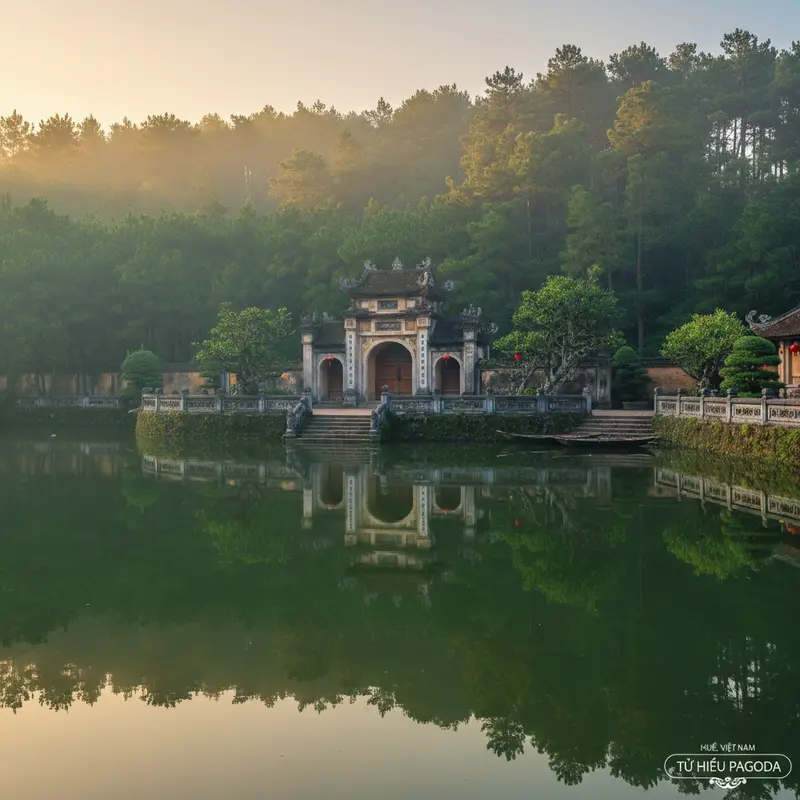
Tu Hieu Pagoda is not as famous as Thien Mu, but for those seeking tranquility and spiritual depth, this is Hue’s hidden gem. The pagoda was built in 1843, nestled within a dense pine forest west of the city. What’s special is that this is the ancestral pagoda of Zen Master Thich Nhat Hanh – the person whoc Time Magazine named him one of the most influential spiritual leaders in the world.
The crescent-shaped lake in front of the pagoda reflects the pine forest and ancient tiled roofs, creating a wonderfully meditative scene. In the early morning, the pagoda bell rings through the quiet pine forest – a sound I believe will stay with you long after you leave Hue.
10. Thuy Xuan Incense Village – Where Incense Flowers Bloom Between Heaven and Earth
Experience a unique traditional craft village only in Hue
About 7km south of Hue city center, Thuy Xuan incense-making village has become one of Hue’s most “viral” photo spots in recent years. Bunches of red, yellow, and purple incense sticks are dried into giant circles under the sun, creating overwhelmingly vibrant and colorful images.
But this is not just a “photo spot” – it’s a traditional craft village that has existed for hundreds of years, where families still make incense by hand using traditional methods. You can directly participate in the incense-making process, learn how to roll incense from elderly artisans, and buy fragrant incense sticks as souvenirs – both meaningful and characteristic of Hue.
[!TIP] The best time to photograph Thuy Xuan incense village is in the morning from 8 AM to 10 AM when the sun is just rising, and natural light shines directly onto the incense sticks, creating the most vibrant colors. Avoid visiting during the harsh midday sun.
11. Dong Ba Market – The Soul of Hue’s Cuisine and Life
If you haven’t been to Dong Ba Market, you haven’t been to Hue
Dong Ba Market – Hue’s largest and oldest market, is located right on the banks of the Huong River, opposite the East Gate of the Citadel. Built during the reign of King Thanh Thai (1899), Dong Ba Market is a convergence of the most exquisite aspects of Hue’s cuisine and culture.
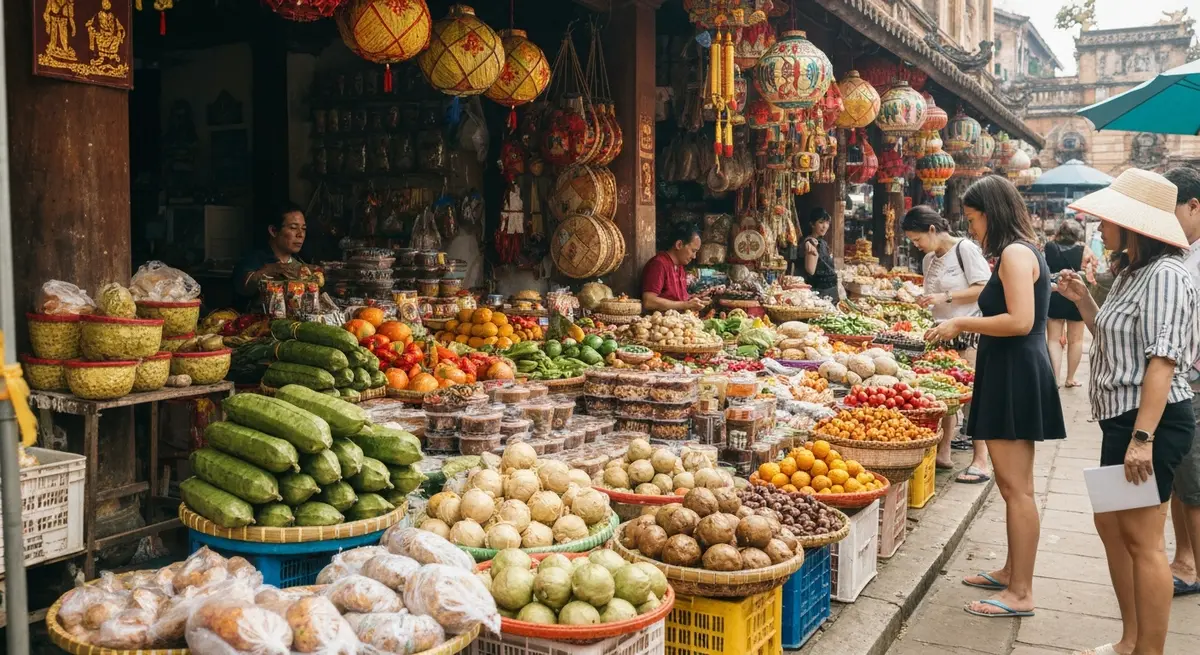
This is where you can find the freshest and cheapest banh beo, banh nam, banh loc, com hen, and bun bo Hue in the city. The ground floor houses fresh produce and specialties, while the upper floor offers clothing and souvenirs. But what I want to emphasize is: don’t just come to shop – come to observe. The way Hue people buy and sell, communicate, and bargain – all contain the calm, gentle essence of Hue that cannot be found anywhere else.
12. Tinh Tam Lake – A Green Gem Hidden Within the Citadel
A forgotten royal garden
Tinh Tam Lake is located within the Imperial City, once the royal garden of the Nguyen emperors. Today, it is one of the most peaceful and romantic spots in Hue – where locals often come for morning strolls and couples have afternoon dates.
In the summer (May-July), Tinh Tam Lake blooms with thousands of pink lotus flowers – creating a picturesque scene. This is a “secret” spot that many tourists overlook, but Hue locals and professional photographers know about it.
[!NOTE] The lotus blooming season at Tinh Tam Lake is usually from May to July. If you visit Hue during this time, don’t miss the opportunity to take photos with the vibrant pink lotus flowers reflecting the ancient citadel.
13. Phuoc Tich Ancient Village – A 500-Year-Old Village by the O Lau River
A rare ancient village heritage remaining in Central Vietnam
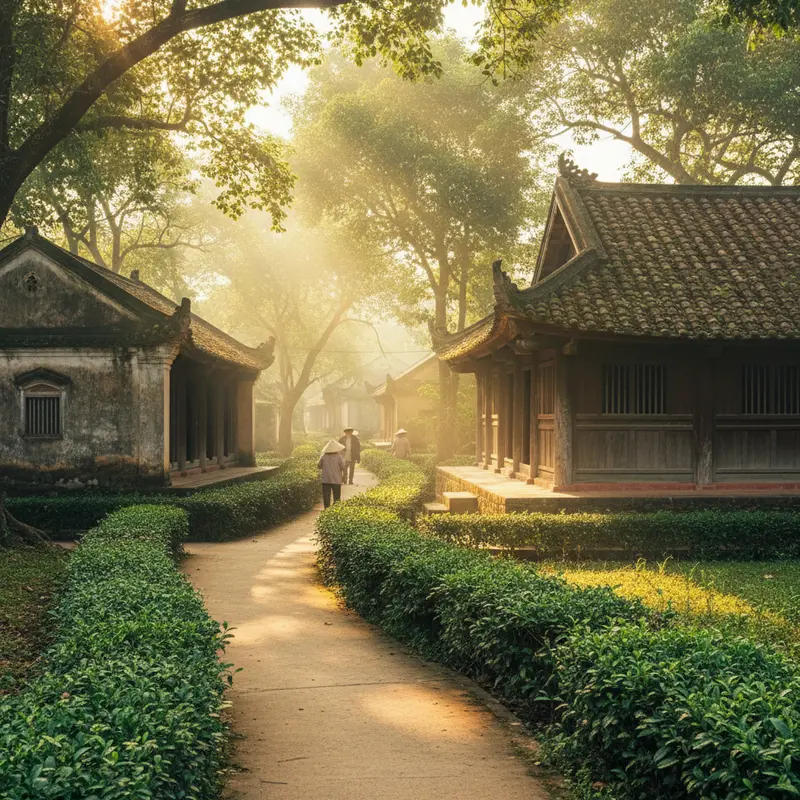
About 40km north of Hue, Phuoc Tich Ancient Village (Phong Hoa Commune, Phong Dien District) is one of only two ancient villages recognized as National Heritage sites in Vietnam (along with Duong Lam Ancient Village in Hanoi). The village has a history of over 500 years, with 27intact ancient nha ruong houses, red-tiled paths, lush green che tau hedges, and ancient laterite stone wells.
The most special thing about Phuoc Tich is the Hue nha ruong – the traditional house style of Hue people with exquisite wooden structures, yin-yang tiled roofs, and surrounding gardens. Some families have opened their doors for homestays, allowing visitors to experience the real lives of the local people.
14. Lang Co Beach – A Blue Sea Paradise 60km from Hue
Bay
Helpful Related Routes & Travel Guides
To help you plan your itinerary seamlessly across Central Vietnam, here are our recommended transfer routes and travel resources:
- 🚗 Da Nang to Hue Heritage Transfer — Scenic journey across Hai Van Pass and Lang Co Bay.
- 🚗 Hoi An to Hue Private Car — Direct intercity connection between heritage cities.
- 🚗 Intercity Private Car Service — Long-distance comfort with experienced chauffeurs.
Check our full pricing directory, explore vehicle choices in our modern fleet, or book easily via our contact page.
Frequently Asked Questions
Frequently asked questions about Top 15 Hue Tourist Spots
What is the best way to use this guide to Top 15 Hue Tourist Spots: Ancient Capital Charm?
Is Top 15 Hue Tourist Spots: Ancient Capital Charm suitable for a first-time visitor?
Can I combine Top 15 Hue Tourist Spots: Ancient Capital Charm with other nearby plans?
What should I confirm before making plans for Top 15 Hue Tourist Spots: Ancient Capital Charm?
How can I avoid last-minute problems with Top 15 Hue Tourist Spots: Ancient Capital Charm?
Tags
The Faifo Express
This article was written by the driver and travel consultant team at Faifo Express — over 5 years of experience in travel transport across Da Nang, Hoi An, and Hue. All information is based on real experience serving 5,000+ customers every month.
Related services
Airport Transfer
Hotel pickup, all-inclusive price
View DetailsDay Tour Car Rental
Ba Na Hills, Hoi An, My Son...
View DetailsShared Car
From just 100K VND/person
View DetailsTourist Car Rental
Explore the beauty of Central Vietnam with our private tourist car service.
View Details🛣️ Popular Routes


Follow Faifo Express
Get exclusive deals, real reviews and the latest Central Vietnam travel tips.
Faifo Express
Updates, customer reviews & real trip photos.
@trm.anh.travel
Real experience videos, Da Nang – Hoi An travel tips.
@xedichvudananghoianhue
Real videos of routes, fleet and transfer services.
@xedananghoianFE
Quick news, flash deals and direct interaction.
DM us on Facebook — response within 5 minutes