


Tam Giang Lagoon: Southeast Asia's Largest Stretch of Brackish Water
📋 Table of Contents
[!NOTE] Pricing Note for International Tourists The prices listed are inclusive of a 20% tax and service fee applied to foreign tourists. Estimated USD rates are based on current exchange rates and may slightly vary.
Tam Giang Lagoon – Where Brackish Water Tells Thousand-Year Stories
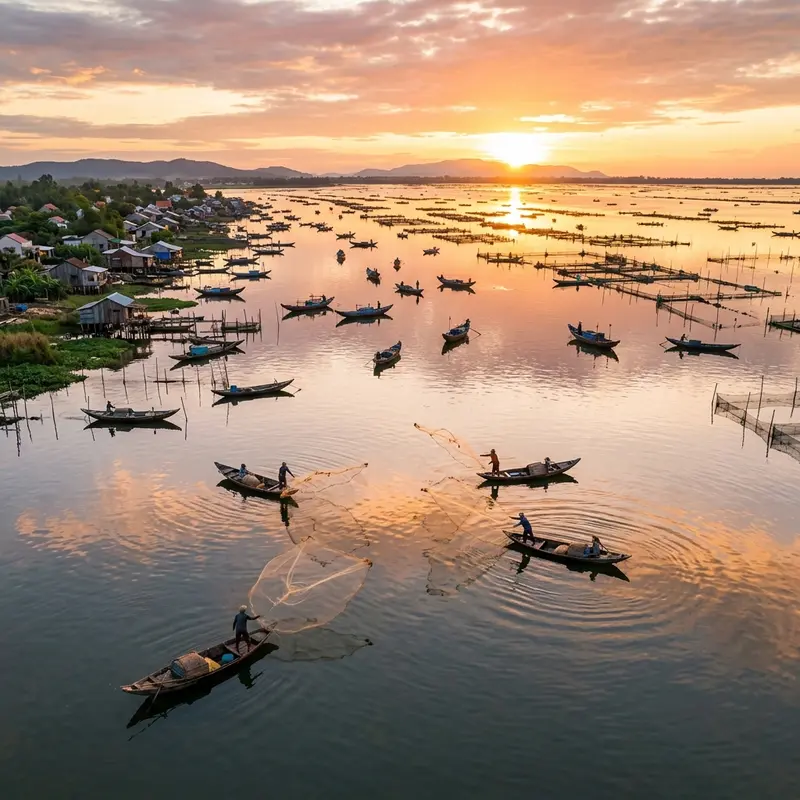
There are places where you just need to stand still, gaze at the vast expanse of water, and feel the entire world slow down. Tam Giang Lagoon is one of them. The first time I stepped onto a small sampan at the crack of dawn, with mist still blanketing the lagoon, and saw fishermen already hauling in their nets since midnight – I immediately understood why this place is called the “soul of Hue.” It’s not beautiful in a flashy way, but in a quiet, authentic, and vibrant manner that makes you want to stay forever.
Exploring Tam Giang Lagoon is more than just a sightseeing trip. It’s a journey to touch a unique ecosystem, an ancient fishing culture, and a natural beauty that not every tour can lead you to at the right place and time. This article is everything I’ve learned after years of traveling between Hue – Da Nang – Hoi An, talking with local fishermen, sharing meals at their homes, and sleeping on boats in the middle of the lagoon. Nothing here is copied from Wikipedia.
What is Tam Giang Lagoon? Understand It Right to Experience It Right
Southeast Asia’s Largest Brackish Lagoon – Not Just a Title
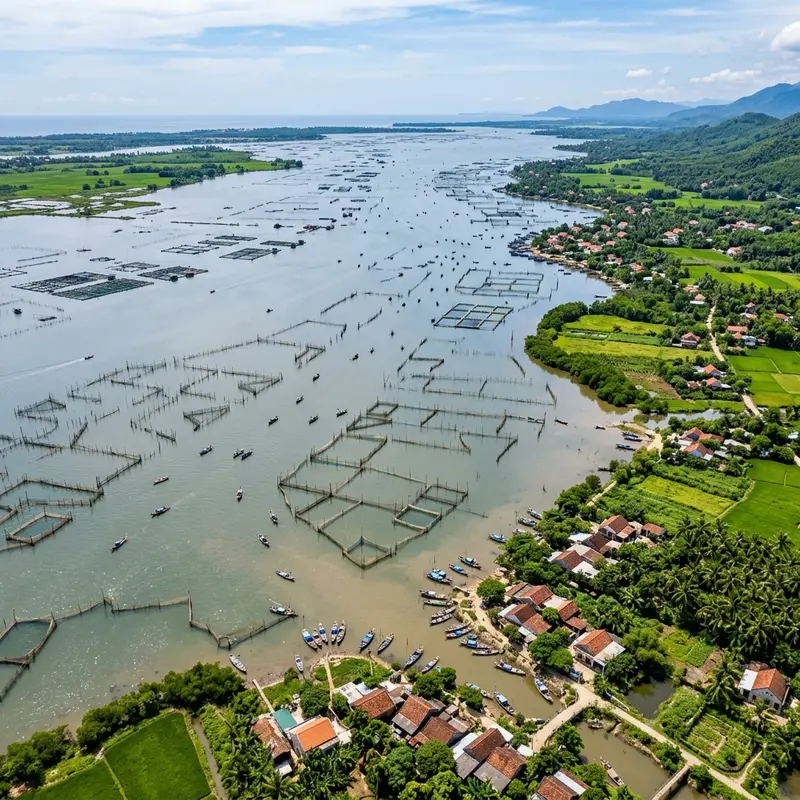
When people say Tam Giang Lagoon is Southeast Asia’s largest brackish lagoon, the figure often cited is about 216 km² of water surface, stretching over 68 km from O Lau estuary in the north to Thuan An estuary in the south, within Thua Thien Hue province. But numbers don’t tell the whole story. What’s truly remarkable is that it’s an interconnected lagoon system comprising three consecutive lagoons – Tam Giang Lagoon (north), An Truyen Lagoon (middle), and Cau Hai Lagoon (south) – forming a massive body of water running parallel to the coast, separated from the East Sea only by a narrow strip of sand dunes.
The water here is brackish – a mixture of freshwater from the rivers flowing in (O Lau River, Huong River, Bo River, Truoi River) and saltwater from the sea seeping through the estuaries. This unique blend creates an incredibly rich ecological environment, home to hundreds of species of fish, shrimp, crabs, oysters, and other aquatic life. This is why aquaculture and fishing have thrived here for thousands of years.
History and Culture of Tam Giang Lagoon Fisherfolk
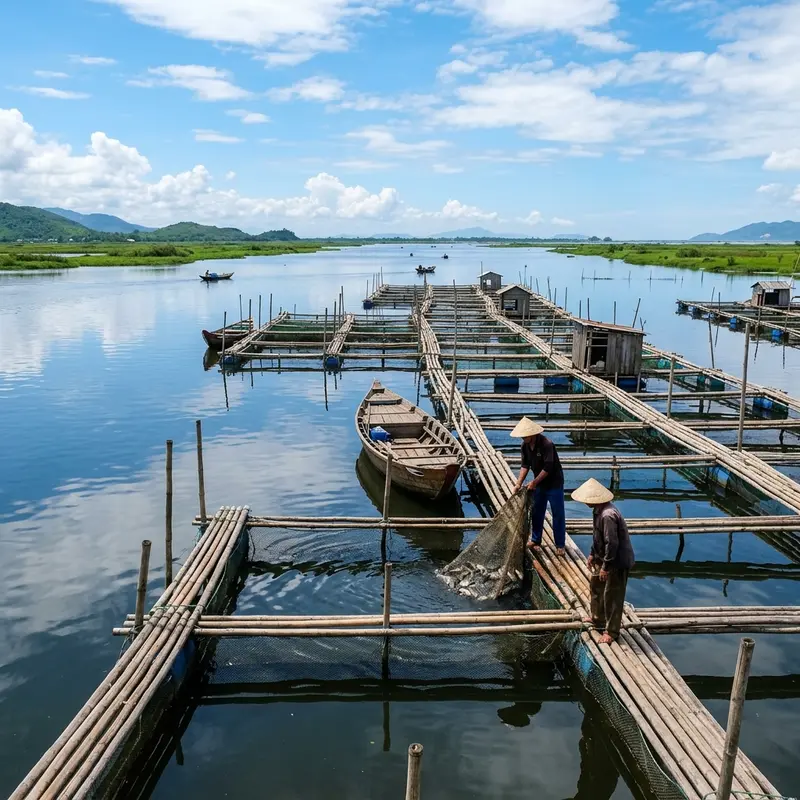
The people living on Tam Giang Lagoon don’t live beside the lagoon – they live on the lagoon. There are floating fishing villages, houses built on bamboo stilts driven into the lagoon bed, and children born and raised on the water. This is a boat-dwelling community – a distinctive cultural feature of the Thua Thien Hue lagoon region that you’ll hardly find anywhere else in Vietnam.
Historically, Tam Giang Lagoon has been the battlefield for many conflicts. In the 15th century, it was a disputed territory between Dai Viet and Champa. During the Nguyen Dynasty, Tam Giang Lagoon was a vital waterway connecting the capital Hue with the southern regions. The royal dragon boats of the Nguyen lords once glided across these waters during ceremonies to pray for favorable weather.
Today, although many fishing families have moved ashore according to provincial policies, thousands still cling to their fishing livelihoods on the lagoon. Meeting them at 4-5 AM, watching their calloused hands pull in nets under the dim flashlight – those are moments you’ll remember for a lifetime.
How to Get to Tam Giang Lagoon – Don’t Let Your Trip Go Wrong From the Start
From Hue to Tam Giang Lagoon
From the center of Hue city, there are several ways to reach Tam Giang Lagoon depending on your desired destination:
- Thuan An Bridge: About 13 km northeast of Hue center. This is the most popular entry point, accessible by motorbike via Nguyen Sinh Cung or To Huu street.
- Ca Cut Bridge (Quang Loi): About 25 km from Hue, this area has the highest concentration of fishermen, ideal for experiencing fishing village life.
- Tam Giang Bridge: About 30 km from Hue, this offers the most beautiful panoramic views of the lagoon, especially at sunset.
If you are in Da Nang or Hoi An and wish to visit Tam Giang Lagoon as a stop on your journey to Hue, the distance from Da Nang is about 100 km via National Highway 1A or the coastal road through Lang Co.
Why Choose a Transfer Service Instead of Driving Yourself or Using Grab?
This is something I want to be upfront about from my own experience: do not use Grab or regular taxis for this trip.
The reason is simple: most Grab drivers in Hue are not familiar with the smaller, scattered spots along Tam Giang Lagoon. I’ve witnessed many tourists being dropped off at the wrong locations, or drivers refusing to wait while guests are out on a boat. Driving a motorbike yourself can be dangerous if you’re not familiar with the roads, especially the dike roads surrounding the lagoon – they are narrow, lack streetlights at night, and are very slippery when it rains.
The option I always recommend to friends and readers is to use Faifo Express’s transfer service. They are a reputable tourism transport provider in the Da Nang – Hoi An – Hue area with a team of local drivers who are knowledgeable about the terrain. When booking a car with Faifo Express:
- Drivers know exactly the best boat boarding points depending on the season.
- The car will wait for you throughout your exploration (no extra waiting charges included in the package).
- You can combine multiple destinations in one day (Tam Giang Lagoon + craft villages + ancient Hue).
- It’s safe, the vehicles are fully insured, and you don’t have to worry about being overpriced.
If you are in Da Nang and want to visit Tam Giang Lagoon before heading to Hue, Faifo Express also offers very convenient Da Nang Airport transfer services and cars to Hoi An to help you plan a flexible itinerary.
[!TIP] Book your car the evening before and request the driver to pick you up at 4:30 AM if you want to watch the sunrise over the lagoon. Faifo Express offers early morning pickups, and the driver will know the exact standing points for the best view.
Unmissable Experiences at Tam Giang Lagoon
Boat Trip at Sunrise – The Ultimate Experience
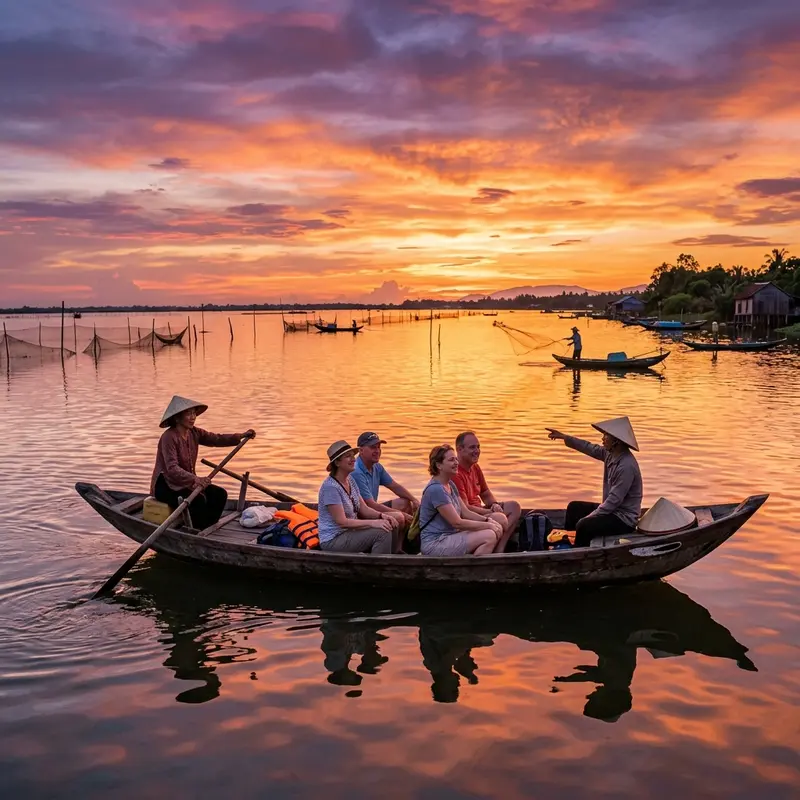
If I could only choose one activity at Tam Giang Lagoon, I would choose it without hesitation: a boat trip at 5 AM. This is not a tourist boat with loud music and scripted guides. This is a real fisherman’s boat, heading out to the middle of the lagoon as the sun just peeks over the horizon.
The morning mist at Tam Giang Lagoon is hard to describe in words. It’s not as dense as mountain fog, but enough to create a thin, ethereal layer of smoke on the water’s surface, making distant fishing boats appear to be floating in the clouds. As the first rays of sunlight descend, the lagoon’s surface transforms from silvery gray to golden orange and then jade green – a color transformation that happens within 20 minutes and you won’t want to blink.
How to rent a boat: Go to the fishing villageDock at Quang Loi or Thuan An wharf and ask fishermen directly. The rental price for a small boat (2-4 people) is about 200,000 – 420,000 VND (≈$16)/hour. Don’t book through apps or intermediaries – going straight to the wharf to ask for prices will be cheaper and you can choose a boat you like.
[!WARNING] Some people who call themselves “guides” stand at the wharf offering tours at much higher prices. Go straight to the wharf, observe the fishermen preparing their boats, and ask them directly. If you don’t speak the local language, ask your driver to act as an interpreter.
Watching the Sunset from Tam Giang Bridge – Golden Moments
Tam Giang Bridge (also known as Ca Cut Bridge) is one of the most beautiful, yet little-known, sunset viewing spots in Central Vietnam. Unlike Golden Bridge in Da Nang or Dragon Bridge – which are already overcrowded check-in spots – Tam Giang Bridge still retains its tranquility and authenticity.
Standing in the middle of the bridge, looking west between 5-6 PM (depending on the season), you will see the sun setting behind distant mountains, with golden-red light reflecting on the vast lagoon. Below, fishing boats begin to set out for their night fishing trips – the lights on the boats twinkle like falling stars. This is a moment that even the best camera would struggle to capture fully.
Exploring Fishing Villages and Fishermen’s Lives
Quang Loi, Quang Ngan, and Quang Dien fishing villages are places you should visit to understand the real life of the people on Tam Giang Lagoon. Here, you can:
- Watch fishermen weaving and mending nets in the morning (around 7-9 AM)
- Participate in harvesting oysters and clams – locals are happy to let you try if you politely ask for permission
- Buy fresh seafood right at the wharf at much lower prices than in city markets
- Take photos of colorful coracle boats – blue, red, yellow – moored side by side
[!NOTE] The people here are very friendly but also quite reserved with strangers at first. Don’t rush to take photos as soon as you meet them. Greet them, ask about their work, show genuine interest – they will open up and even invite you in for a drink and to share stories about life on the lagoon.
Cycling Along the Tam Giang Lagoon Dike
A less-mentioned but extremely enjoyable experience is cycling along the dike that runs parallel to the lagoon. This dike is tens of kilometers long, flat enough for comfortable cycling, with the vast lagoon on one side and rice paddies and vegetable gardens of the locals on the other. Early morning or late afternoon are the most beautiful times.
You can rent bicycles in the Thuan An area or bring your own from Hue. The most scenic stretch for cycling is from Thuan An Bridge to Quang Loi village, about 15 km, taking 1-1.5 hours of leisurely pedaling.
What to Eat at Tam Giang Lagoon – A Brackish Seafood Paradise
Must-Try Dishes
This is my favorite part of writing about Tam Giang Lagoon. The brackish seafood here has a completely different flavor from ordinary sea seafood – sweeter, firmer, and more special because it’s raised in a natural brackish environment.
Tam Giang Oysters: These are the “stars” of the lagoon. The oysters here are smaller than imported Pacific oysters but much sweeter and fattier. Eat them raw with lime and chili fish sauce, or grilled with scallions and oil – both ways are excellent. Price at the wharf: about 50,000 – 100,000 VND (≈$4)/kg. If eating at a restaurant by the lagoon: about 150,000 – 240,000 VND (≈$9)/plate.
Shrimp: A characteristic species of brackish water areas, small, thin-shelled, and sweet-fleshed. Salted fried or steamed with lemongrass are both delicious. This is something thatHue people miss the most when they are away from home.
Mud crabs and hybrid brackish water crabs: In brackish water areas, crabs can be mud crabs, sea crabs, or a hybrid of the two. This hybrid has more meat, rich roe, and is more reasonably priced than pure sea crabs.
Oyster porridge: A signature breakfast dish of Tam Giang Lagoon fishermen. The porridge is cooked thin, and oysters are added just before serving to maintain freshness, accompanied by shredded ginger and scallions. A bowl costs around 25,000 – 40,000 VND (≈$2) at small eateries along the lagoon.
Snakehead fish noodle soup: Not exclusively a specialty of Tam Giang Lagoon, but snakehead fish caught from the lagoon is significantly tastier. The broth is naturally sweet, the noodles are wide, and it’s served with fresh herbs, lime, and chili.
Where Are the Delicious Eateries?
I don’t recommend eating at large roadside restaurants with “Tam Giang Lagoon specialties” signs – they are usually overpriced and the seafood is not as fresh. Instead:
- Thuan An estuary area: There are many small eateries run by local fishermen’s families, selling seafood caught in the morning for lunch. Ask locals for the best place to eat that day.
- Quang Loi Village: Some local homes open their doors to guests for homestay-style meals. Prices are negotiable but usually very affordable and delicious.
- Thuan An Market: Buy live seafood to have cooked or take it back to Hue.
[!TIP] Ask your driver or locals about their “favorite spots” instead of relying on Google Maps reviews – the best places often don’t have many reviews because they primarily serve locals.
Estimated Costs for Exploring Tam Giang Lagoon
Detailed Cost Breakdown
Here is an estimated cost for one person for a day exploring Tam Giang Lagoon (departing from Hue):
| Item | Estimated Cost |
|---|---|
| Transportation (Hue – Tam Giang Lagoon – Hue) | 400,000 – 720,000 VND (≈$28)/car (4-seater) |
| Boat rental (2-3 hours, shared by 4 people) | 100,000 – 180,000 VND (≈$7)/person |
| Breakfast (oyster porridge + noodle soup) | 30,000 – 60,000 VND (≈$2) |
| Seafood lunch (oysters, shrimp, crabs) | 150,000 – 360,000 VND (≈$14)/person |
| Bicycle rental (optional) | 50,000 – 100,000 VND (≈$4)/day |
| Buying seafood to take home | Optional, around 200,000 – 600,000 VND (≈$24) |
| Total | ~500,000 – 1,200,000 VND (≈$47)/person |
If you are traveling from Da Nang and want to include Tam Giang Lagoon in your Da Nang – Hue itinerary, Faifo Express offers flexible car packages that allow you to stop at your desired points, with more competitive prices than renting a car for a full day from tour operators.
Practical Experience – Things Only Frequent Travelers Know
When Is the Best Time of Year?
Tam Giang Lagoon is beautiful year-round, but each season offers a different charm:
- March – May (Spring – Early Summer): The best weather, mild sunshine, gentle breezes, and clear blue lagoon waters. This is the best season for oysters. Highly recommended.
- June – August (Summer): Intense heat (38-40°C), but the seafood is most abundant. It’s best to visit early in the morning or late in the afternoon.
- September – November (Autumn – Rainy Season): This is the storm and flood season in Central Vietnam. The lagoon water levels can rise, preventing boats from going out. Avoid traveling in October – November.
- December – February (Winter): Cold and foggy, creating a magical and beautiful scene for photography. However, you need to dress warmly as the wind on the lagoon is very cold.
What to Wear and Bring
- Sun protection shirt/light jacket: Needed in any season, as the wind on the lagoon is much stronger than on shore.
- Flat shoes/sandals: Do not wear high heels on the boat; it’s dangerous and will ruin your shoes.
- SPF 50+ sunscreen: Facewater reflects UV rays twice as strongly
- Waterproof phone pouch: Small boats can be hit by waves, and phones can easily get wet.
- Seasickness medication: If you have a history of motion sickness, take it 30 minutes before boarding the boat.
Important Tips to Know
Tam Giang Lagoon is not a heavily crowded tourist destination, so there are fewer organized risks compared to some other places. However, there are a few things to keep in mind:
- Boat price: Clarify the price before boarding the boat, including waiting fees (if you want the boat to wait). Avoid asking for the price only when disembarking.
- “Special” seafood: Some vendors on boats may offer “rare” seafood at high prices. Refuse if you are unsure.
- All-inclusive tours from Hue: Some cheap tours
Frequently Asked Questions
Frequently asked questions about Tam Giang Lagoon
What is the best way to use this guide to Tam Giang Lagoon: Southeast Asia's Largest Lagoon?
Is Tam Giang Lagoon: Southeast Asia's Largest Lagoon suitable for a first-time visitor?
Can I combine Tam Giang Lagoon: Southeast Asia's Largest Lagoon with other nearby plans?
What should I confirm before making plans for Tam Giang Lagoon: Southeast Asia's Largest Lagoon?
How can I avoid last-minute problems with Tam Giang Lagoon: Southeast Asia's Largest Lagoon?
Tags
The Faifo Express
This article was written by the driver and travel consultant team at Faifo Express — over 5 years of experience in travel transport across Da Nang, Hoi An, and Hue. All information is based on real experience serving 5,000+ customers every month.
Related services
Airport Transfer
Hotel pickup, all-inclusive price
View DetailsDay Tour Car Rental
Ba Na Hills, Hoi An, My Son...
View DetailsShared Car
From just 100K VND/person
View DetailsTourist Car Rental
Explore the beauty of Central Vietnam with our private tourist car service.
View Details🛣️ Popular Routes
Follow Faifo Express
Get exclusive deals, real reviews and the latest Central Vietnam travel tips.
Faifo Express
Updates, customer reviews & real trip photos.
@trm.anh.travel
Real experience videos, Da Nang – Hoi An travel tips.
@xedichvudananghoianhue
Real videos of routes, fleet and transfer services.
@xedananghoianFE
Quick news, flash deals and direct interaction.
DM us on Facebook — response within 5 minutes