


Quoc Hoc High School: Hue's Century-Old Landmark of Yellow Walls and History
📋 Table of Contents
[!NOTE] Pricing Note for International Tourists The prices listed are inclusive of a 20% tax and service fee applied to foreign tourists. Estimated USD rates are based on current exchange rates and may slightly vary.
When the Fired Brick Red Tells a Hundred-Year Story — Unforgettable Emotions at Quoc Hoc Hue High School
On some mornings in Hue, when the mist hasn’t quite lifted from the Perfume River, I love to cycle along Le Loi Street to admire a structure that, each time I pass, evokes an indescribable feeling — a mix of pride, nostalgia, and a sense of touching a living page of history. This is Quoc Hoc Hue High School, the hundred-year-old school with its vibrant brick-red hue, standing majestically by the Perfume River like a silent witness to a century of change. If you’re planning to check in at Quoc Hoc Hue High School, please read this article carefully — not just to snap a few photos and leave, but to truly understand the place you are standing.
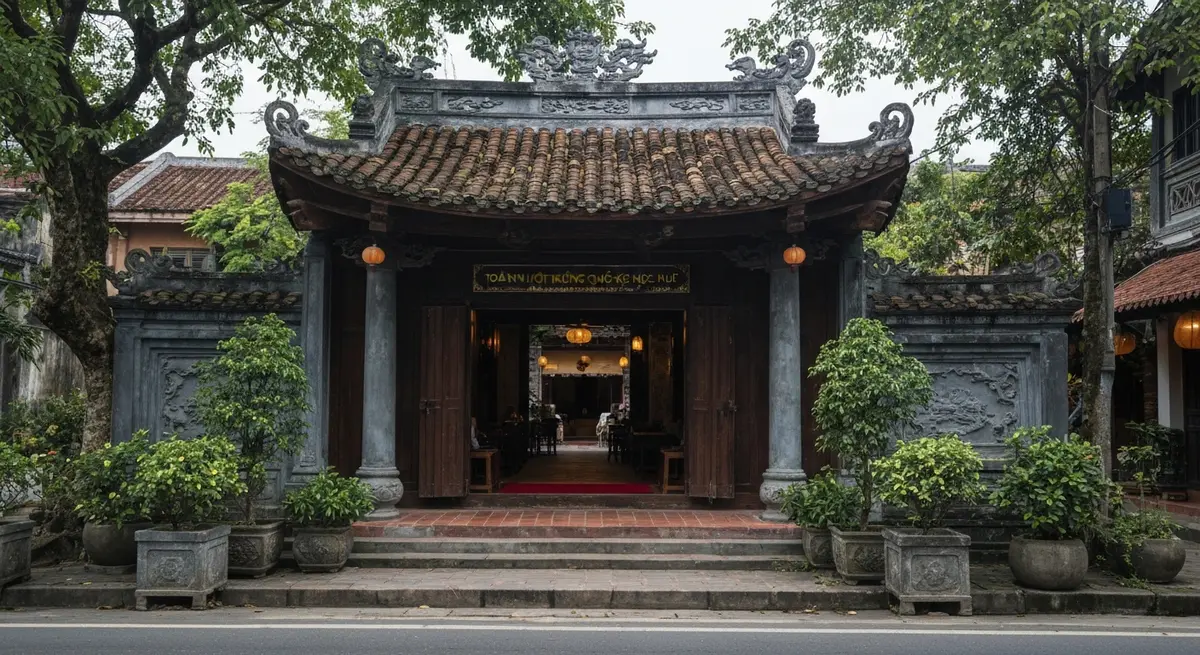
Quoc Hoc Hue High School — More Than a School, It’s a Symbol
The 125+ Year History of the Renowned School
Quoc Hoc Hue High School was founded in 1896 by a royal decree from King Thanh Thai, initially named Quoc Hoc Truong or College Quoc Hoc. Its original purpose was to train Vietnamese officials and intellectuals to serve the French colonial administration — but ironically and magnificently, it was from this very school that emerged individuals who would change the nation’s destiny.
When speaking of Quoc Hoc, one cannot forget to mention: Ho Chi Minh (a student of the first cohort), Vo Nguyen Giap (who once taught history here), Pham Van Dong, poet To Huu, or musician Trinh Cong Son. A school whose alumni could fill an entire chapter of modern Vietnamese history — that speaks volumes about the stature of Quoc Hoc Hue.
What fewer people know is that the school was initially located elsewhere. It was only when it was rebuilt in the early 20th century at its current location (12 Le Loi Street, Hue City) that the structure acquired its distinctive blend of French and Asian architecture that we see today. The entire main building is constructed with fired red bricks — a type of handmade brick once widely produced in the Thua Thien Hue region — creating its unique and unmistakable color.
French-Asian Architecture: The Beauty of Fusion
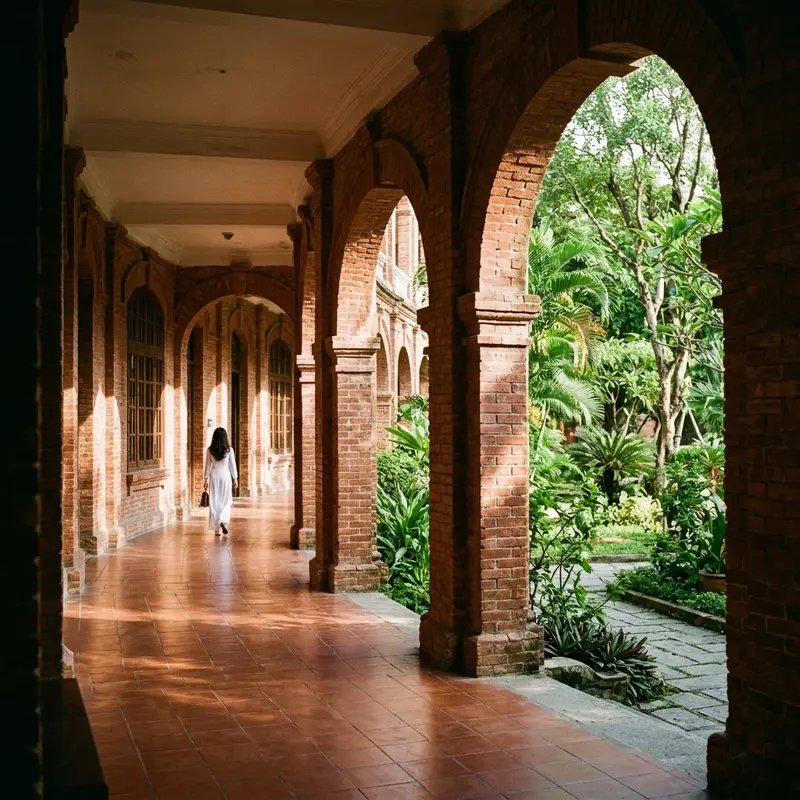
Standing before the school gate, the first thing that catches your eye is the two-story main building with its deep red brick walls and curved, yin-yang tiled roofs in the Hue royal style, yet enclosed by French-style arched doorways and round-columned corridors. This is the Indochinese architectural style — a deliberate blend of Western aesthetics and Eastern spirit.
Key highlights not to be missed:
- The central clock tower: Located in the middle of the facade, the antique clock still functions after more than a century, its chimes echoing far and wide.- The Perfume River’s bank: Hue people are accustomed to calling this the ” Quoc Hoc bell sound” — a sound tied to the school-day memories of many generations.
- Courtyard shaded by green trees: Ancient trees planted during the French colonial era still stand, their lush green canopies covering a wide courtyard, creating a rare cool space in the heart of the city.
- Classic iron fence and gate: The school gate with its intricately forged iron fence, topped with the prominent “QUOC HOC” inscription — this is the most sought-after check-in spot.
- Monument and campus space: Inside the school grounds, there is a monument and auxiliary structures bearing historical imprints.
[!NOTE] Quoc Hoc Hue High School is still an active high school, not a museum or tourist attraction. The interior campus is only open on special occasions or during events. Most visitors take photos at the gate area and the sidewalk of Le Loi street — this remains the most beautiful and convenient spot.
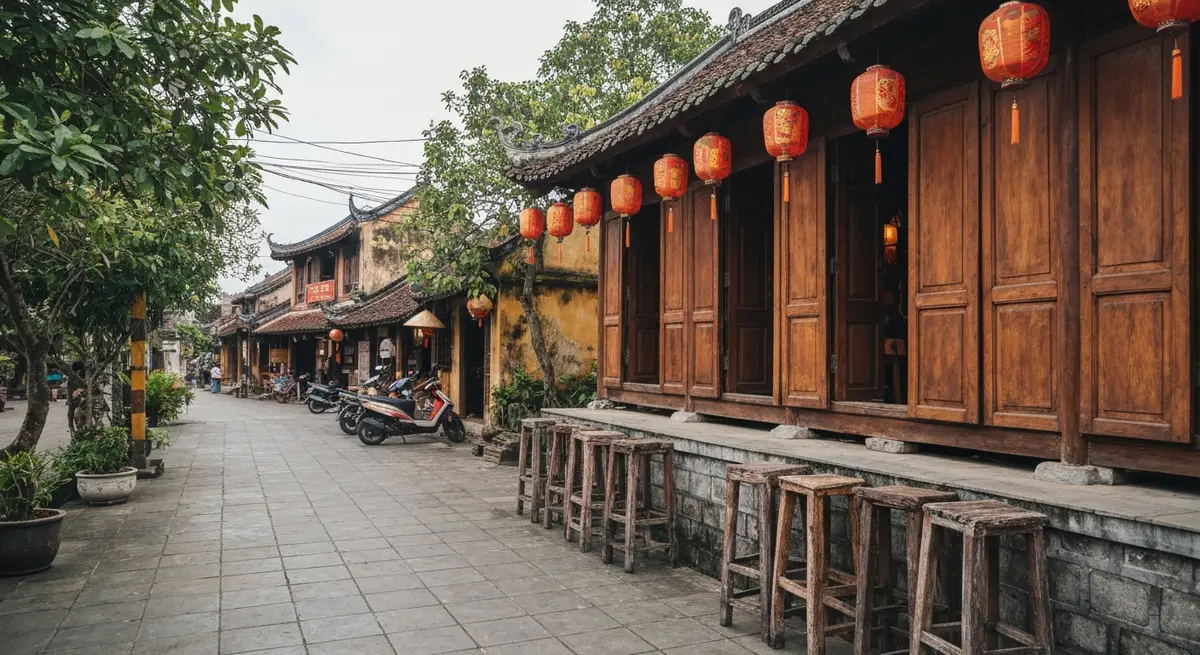
Guide to Getting to Quoc Hoc Hue High School
Location and How to Find It
Quoc Hoc Hue High School is located at 12 Le Loi Street, Vinh Ninh Ward, Hue City — one of Hue’s most beautiful streets running along the southern bank of the Perfume River. The location is extremely convenient: only about 500 meters west of Truong Tien Bridge, close to many other attractions such as Phu Cam Cathedral, Tu Dam Pagoda, or the Western Quarter on Pham Ngu Lao street.
From the center of Hue City (Dong Ba Market area, Hue Station), you can get here by various means:
- Walking: From Truong Tien Bridge, walk about 7-10 minutes along Le Loi Street — this is an ideal option in the early morning when the weather is still cool.
- Rented bicycle/motorbike: Le Loi Street is very easy to navigate, with a wide sidewalk and few trucks.
- Motorbike taxi/Grab: Quick, but sometimes difficult to park right in front of the gate during peak hours.
If You’re Coming From Da Nang or Hoi An — Don’t Miss This Option
This is what I want to tell you honestly, as someone who has traveled the Da Nang – Hue route dozens of times.
Many tourists coming to Hue often choose taxis or Grab from Da Nang airport, or book intercity buses on fixed routes. It sounds convenient, but what’s the reality? Da Nang airport taxi fares to Hue are unpredictable, many drivers are not familiar with Hue, and more importantly — you lack the flexibility to stop along the way to take photos of Hai Van Pass or visit Lang Co.
The option I always recommend to my friends and readers is Faifo Express’s shuttle service. This is a reputable tourism transport company with local drivers who have a deep understanding of all three regions: Da Nang – Hoi An – Hue. The difference:
- Private car, all-inclusive price: No worries about being overpriced or hidden fees.
- Local drivers: They know exactly where the best stops are on Hai Van Pass for photos, what time to travel to avoid traffic jams, and most importantly, they can tell you stories about this land that no guidebook can.
- Safe and punctual: Vehicles are regularly inspected, and drivers have experience handling the Central Vietnam routes with many passes and slopes.
If you are planning Da Nang airport pick-up to start your journey to explore Hue, or need a car from Hoi An to Hue for a comfortable and safe journey, Faifo Express is the top reliable choice. And if your itinerary includes Ba Na Hills, their dedicated shuttle service will also help you optimize your time and cost.
[!TIP] Book your Faifo Express car at least 1-2 days in advance, especially during peak seasons (April-May and August-September). You can request the driver to take you directly to Le Loi Street in front of Quoc Hoc School to start your check-in journey as soon as you arrive in Hue.
Real-Life Experience Checking In at Hue Quoc Hoc School
”Million-Like” Photo Spots Only Locals Know
Having stood at this spot dozens of times, I’ll show you the angles that big travel accounts often don’t share:
Spot 1 — Directly from the sidewalk of Le Loi Street (Classic Spot) Stand about 15-20 meters away from the school gate, use a wide-angle lens to capture the entire facade. Golden hour: 7 AM - 8 AM when the sunlight shines directly onto the red brick wall, creating a vibrant color effect without glare. If there’s a light mist — a huge bonus, the photos will have much more depth and emotion.
Spot 2 — Looking out from inside the gate (Artistic Spot) On occasions when the school is open (usually on weekends or for cultural events), stand inside the courtyard and look out at the iron gate with trees on both sides — the light filtering through the canopy creates a beautiful natural bokeh effect.
Spot 3 — Along the western fence (Little-Known Spot) Walk along the side of the school towards Dinh Tien Hoang Street, you’ll see a stretch of red brick wall with natural moss growing on it — this is the most “ancient” spot, perfect for film or vintage style photos.
Spot 4 — Looking in from the Perfume River Stand on the bank of the Perfume River (north side of Le Loi Street), looking towards the school with the Perfume River as the foreground — the photo will have excellent spatial depth, especially at sunset when the river reflects the red light.
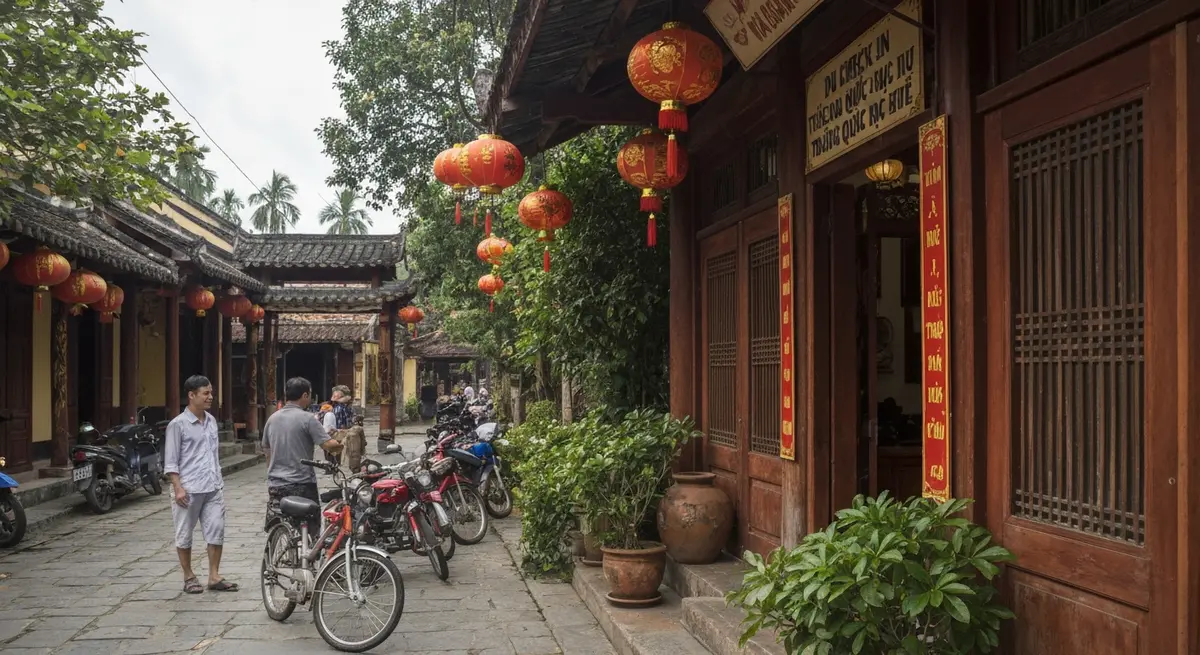
What to Wear for the Best Check-in Photos?
The red brick wall is the characteristic “background” of Quoc Hoc Hue, so the color of your outfit needs to be chosen carefully:
- Best: Traditional ao dai in white, yellow, blue, or green — contrasts beautifully with the red background.
- Also very beautiful: Vintage outfits, linen shirts in neutral tones (beige, light brown, cream).
- Should avoid: Red or orange colors will blend into the background; black can create a heavy feeling in outdoor photos.
[!TIP] If you want to wear an ao dai but don’t have one, the area around Nguyen Hue Street and Dong Ba Market has many shops renting ao dai for prices ranging from 80,000 – 180,000 VND (≈$7)/set, usually including hair and accessories. Some shops even offer photography services.
Nearby Attractions — Combine to Optimize Your Itinerary
Because of Hue Quoc Hoc School’s extremely convenient location, you can easily combine it into a morning trip:
- Truong Tien Bridge (500m to the east): The iconic 6-span iron bridge of Hue, most beautiful at dawn or when lit up at night.
- Thien Mu Pagoda (about 3km to the west): Walk along Le Loi Street upstream along the Perfume River, and you’ll reach the legendary Phuoc Duyen Tower.
- Hue Imperial City (across Truong Tien Bridge, about 1km): The citadel of Hue with its grand system of palaces and tombs.
- Riverside Park****Huong River: Right in front of the school is a beautiful walking path and riverside park, ideal for strolling and sightseeing.
What to Eat When Visiting the Quoc Hoc School Area?
”Secret” Eateries Only Locals Know
The Le Loi street area and surrounding alleys are a culinary paradise in Hue. Here are some places I often frequent:
Hue Beef Noodle Soup for Breakfast: Don’t eat beef noodle soup at the big, fancy restaurants on the main street—instead, venture into the small alleys near Dinh Tien Hoang street or the An Cuu market area. A true Hue-style beef noodle soup must have a deep red broth made from lemongrass and shrimp paste, thinly sliced beef, crab cakes, and pork knuckle—priced from only 35,000 – 60,000 VND (≈$2)/bowl.
Hue Bread: Unlike Saigon or Hoi An bread, Hue bread is usually smaller, with a crispier crust, and often includes characteristic Hue cold cuts. Look for sidewalk bread carts near Truong Tien Bridge in the morning.
Com Hen — Hue’s “National” Dish: Com Hen is widely sold near Gia Hoi Bridge and Dong Ba Market. This dish is eaten cold, mixed with stir-fried clams, herbs, roasted peanuts, and scallion oil—a unique blend of sour, spicy, salty, and sweet flavors found nowhere else.
Hue Sweet Soup (Che): After checking in, visit a sweet soup shop on Trinh Cong Son street (near Vy Da) to enjoy che dau van, che hat sen, or che bot loc boc thit quay—elaborate and refined Hue sweet soup dishes.
[!WARNING] Avoid eateries with people standing outside “hustling” tourists, especially in the area near Truong Tien Bridge. Prices are often doubled compared to the average. Ask for prices before ordering, or ask a local driver/guide to recommend a reputable place.
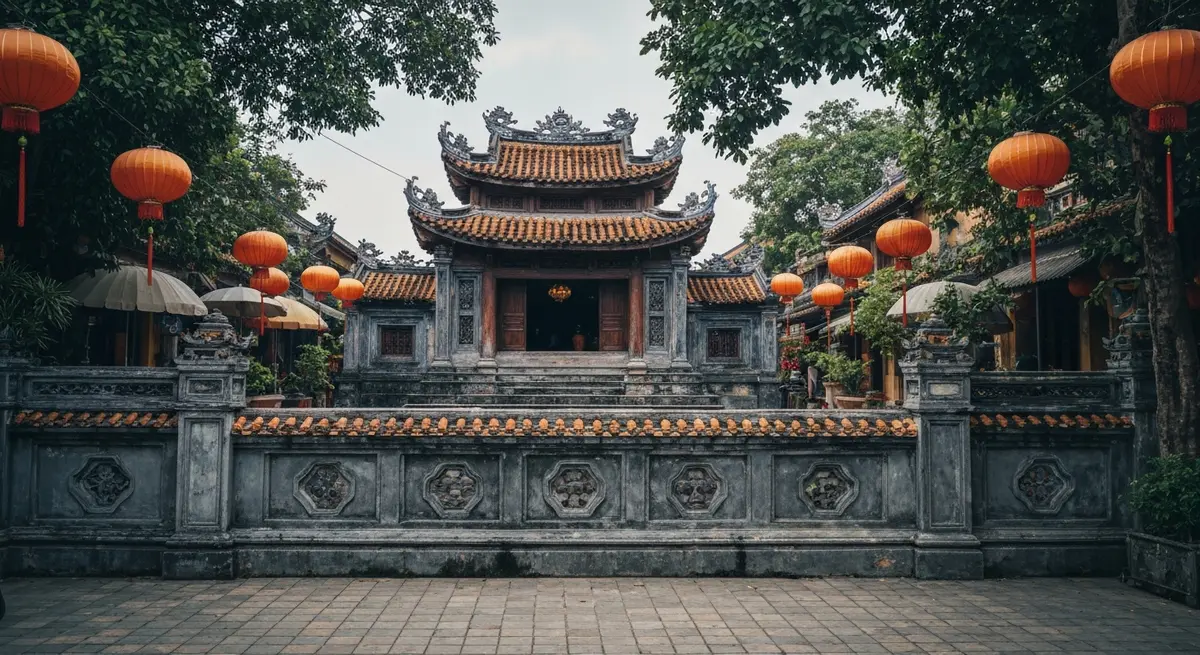
Estimated Costs for Checking In at Hue Quoc Hoc School
Detailed Cost Breakdown
| Item | Estimated Cost |
|---|---|
| School Entrance Fee | Free (sidewalk/outer gate area) |
| Ao Dai Rental for Photos | 80,000 – 240,000 VND (≈$9)/set |
| Da Nang – Hue Shuttle Bus (Faifo Express) | Contact for package quote |
| Breakfast (Beef Noodle Soup/Bread) | 35,000 – 70,000 VND (≈$3) |
| Drinks/Coffee | 20,000 – 60,000 VND (≈$2) |
| Intra-city Transport in Hue (Motorbike Taxi/Grab) | 20,000 – 60,000 VND (≈$2)/trip |
| Imperial City Visit (if combined) | 240,000 VND (≈$9)/adult |
| Professional Photography Service (if hiring) | 300,000 – 960,000 VND (≈$38)/hour |
[!NOTE] Checking in at Hue Quoc Hoc School itself is completely free—it’s an outdoor spot with no entrance fee. Costs primarily arise from transportation and related activities.
Practical Tips from Locals
Golden Hours for Check-ins and Photos
This is the most important “insider” information I want to share:
- 6:30 AM – 8:00 AM: The best light, fewest people, and morning mist create a magical effect. This is the absolute golden hour for check-in photos.
- 8:00 AM – 10:00 AM: Students start entering the school (for classes), the gate area might be more crowded—but this also creates very lively street scenes.
- 11:00 AM – 1:00 PM: Harsh sun, strong shadows—not ideal for photography.
- 3:30 PM – 5:30 PM: The late afternoon sun is warm and soft, making the red brick walls appear even more vibrant. This is when many professional photographers choose to shoot.
- After 6:00 PM: The school lights up (if there’s an event), creating a dazzling night scene—however, this is rarely available.opportunities except during festivals.
Notes on Etiquette
As this is a functioning school, please keep the following in mind:
- Do not enter the school premises without permission: The main check-in area is the sidewalk and the outer gate area.
- Do not photograph students without their consent: This is an important ethical and legal issue.
- Maintain silence during class hours: Avoid speaking loudly or playing loud music when near the school gate during class hours.
- Do not park vehicles in front of the school gate during peak hours: This will obstruct students and teachers.
Things to Keep in Mind
[!WARNING] In the area near Quoc Hoc School and along Le Loi street, there are some situations to be cautious of: (1) People renting bicycles at a “friendly” price but later charging hidden fees upon return — agree on the price clearly in writing or with photos before renting; (2) Street vendors approaching you for photos and then demanding money — politely refuse if you are not interested; (3) Unmetered motorbike taxis — always agree on the price beforehand or use the Grab app for a fixed fare.
Frequently Asked Questions
Frequently asked questions about Quoc Hoc Hue High School
What is the best way to use this guide to Quoc Hoc Hue High School: History & Architecture Guide?
Is Quoc Hoc Hue High School: History & Architecture Guide suitable for a first-time visitor?
Can I combine Quoc Hoc Hue High School: History & Architecture Guide with other nearby plans?
What should I confirm before making plans for Quoc Hoc Hue High School: History & Architecture Guide?
How can I avoid last-minute problems with Quoc Hoc Hue High School: History & Architecture Guide?
Tags
The Faifo Express
This article was written by the driver and travel consultant team at Faifo Express — over 5 years of experience in travel transport across Da Nang, Hoi An, and Hue. All information is based on real experience serving 5,000+ customers every month.
Related services
Airport Transfer
Hotel pickup, all-inclusive price
View DetailsDay Tour Car Rental
Ba Na Hills, Hoi An, My Son...
View DetailsShared Car
From just 100K VND/person
View DetailsTourist Car Rental
Explore the beauty of Central Vietnam with our private tourist car service.
View Details🛣️ Popular Routes



Follow Faifo Express
Get exclusive deals, real reviews and the latest Central Vietnam travel tips.
Faifo Express
Updates, customer reviews & real trip photos.
@trm.anh.travel
Real experience videos, Da Nang – Hoi An travel tips.
@xedichvudananghoianhue
Real videos of routes, fleet and transfer services.
@xedananghoianFE
Quick news, flash deals and direct interaction.
DM us on Facebook — response within 5 minutes