


Con Market: Where Da Nang Actually Eats
📋 Table of Contents
[!NOTE] Pricing Note for International Tourists The prices listed are inclusive of a 20% tax and service fee applied to foreign tourists. Estimated USD rates are based on current exchange rates and may slightly vary.
Con Market Da Nang: Where the Soul of Central Vietnamese Cuisine Resides
On some mornings in Da Nang, before the mist has fully lifted from the Han River, I often cycle past the Ong Ich Khiem street area just to inhale that distinctive aroma—the smell of charcoal-grilled banh mi mingling with the steam from bubbling Quang noodles, the scent of fresh fish straight from the sea, the aroma of golden-fried shallots sizzling in hot oil. That is the smell of Con Market Da Nang—the city’s largest traditional market, where Da Nang locals truly eat, truly live, and truly are themselves.
If you’re looking for a truly authentic Central Vietnamese culinary experience, not a watered-down “tourist version” made milder for easier consumption, not a restaurant with a glossy English menu—then Con Market is the place you need to be. And the best part? You can eat until you’re full for less than 60,000 VND (≈$2). This isn’t an advertisement. This is the truth that I—someone who has lived in Da Nang for over a decade—can vouch for with all my honor.
What is Con Market Da Nang? The History and Soul of a Century-Old Market
From Empty Land to Da Nang’s Commercial Heart
Con Market—officially named Con Market Da Nang, located at 290 Hung Vuong Street, Hai Chau 2 Ward, Hai Chau District—has a history intertwined with the development of Da Nang city since the French colonial period. The name “Con” originates from its topography: this area was once a sandbank rising from a swamp, and people gathered here to trade very early on.
Through numerous renovations and reconstructions, especially a major upgrade in the 1990s, Con Market today is a massive two-story market complex spanning over 16,000 m², capable of accommodating thousands of vendors simultaneously. It is the largest market in Da Nang and is considered one of the most bustling traditional markets in Central Vietnam.
But numbers and area don’t tell the most important story: Con Market is where Da Nang locals truly live. It’s not a tourist market, not a staged Instagram night market. This is where my grandmother bought fish every morning, where my mother learned to choose fabric when she first became a daughter-in-law, where children of the 8X and 9X generations like me were brought by our grandparents and had a steaming bowl of Quang noodles shoved into our hands after a market trip.
A Unique Characteristic Found Nowhere Else
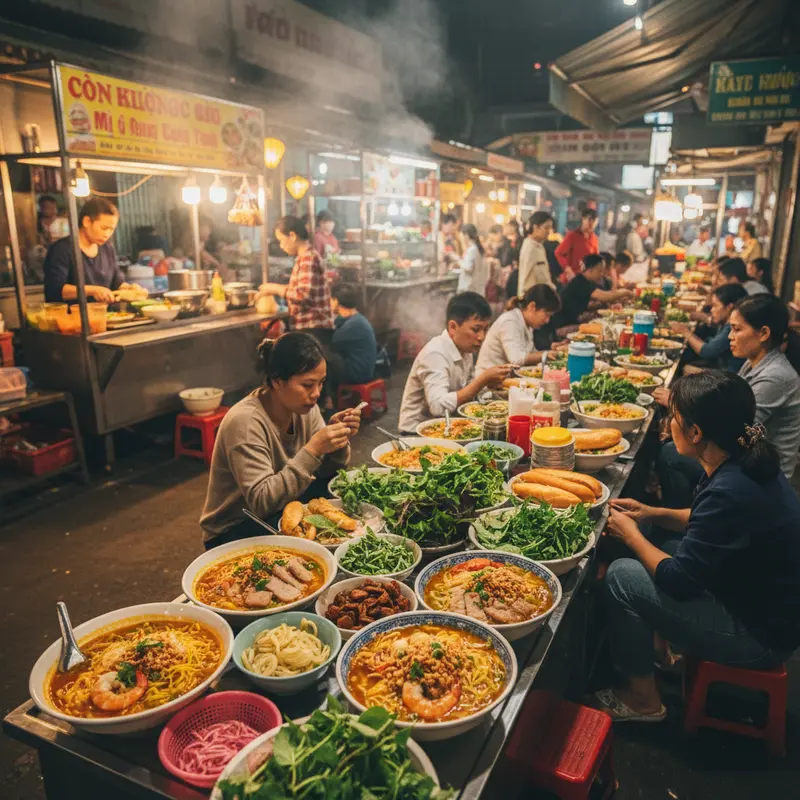
What sets Con Market apart from any other market in Da Nang—and even from many traditional markets in Central Vietnam—is its astonishingly dense concentration of food stalls and consistently high quality. The ground floor and surrounding areas house hundreds of eateries, from small carts selling banh mi to sit-down stalls that can serve dozens of customers at once.
The vendors here are largely families who have been associated with the market for generations. Cooking recipes are passed down from grandmother to mother, from mother to child. That’s why a bowl of Quang noodles at a small stall in the market can be tastier than many fancy restaurants outside—not because of more expensive ingredients, but because of secrets refined over decades.
How to Get to Con Market Da Nang
Location and Directions
Con Market is located in an extremely convenient spot, right in the heart of Hai Chau District—the center of Da Nang. The exact address is: 290 Hung Vuong, Hai Chau 2, Hai Chau, Da Nang.It’s only about a 15-20 minute drive from My Khe Beach, 10 minutes from Dragon Bridge, and 40-50 minutes from Ba Na Hills.
The main roads leading to the market include Hung Vuong, Ong Ich Khiem, and Ly Thuong Kiet. If you’re in the city center, most map applications can easily guide you here.
Why Choose a Shuttle Service Instead of Driving Yourself?
This is where I want to be direct, as I’ve seen too many tourists encounter unnecessary trouble.
If you’re visiting Da Nang for the first time, especially early in the morning when the market is busiest, trying to navigate yourself with a rented motorbike or a Grab can lead to several issues: localized traffic jams around the market area, Grab drivers sometimes unfamiliar with parking spots, and most importantly, you won’t know which entrance to get off at to reach the food court the fastest.
My honest advice: use the shuttle service from Faifo Express — a reputable tourism transport provider in Da Nang with a team of local drivers who know every street and alley of the city. What makes me trust Faifo Express isn’t just their transparent, all-inclusive pricing with no hidden fees, but also the fact that their drivers are truly Da Nang locals — they know where to park so you can walk into the market most conveniently, they know which areas have construction to avoid traffic, and they can even recommend delicious eateries within the market.
If you’re combining your visit to Con Market with a longer itinerary — for example, a trip to Hoi An in the afternoon — then Faifo Express’s shuttle service from Da Nang to Hoi An is the ideal choice for a fulfilling day without the exhaustion of arranging your own transport. Or, if you’ve just landed at the airport, their Da Nang airport transfer service can take you straight to Con Market to kick off your culinary journey as soon as you arrive in the city.
[!TIP] Book your Faifo Express shuttle at least 2-3 hours in advance to ensure availability at your desired time, especially during peak tourist seasons (June-August and Tet holidays). Website: Faifo Express or contact their hotline for itinerary consultation.
A Culinary Paradise: What to Eat at Con Market Da Nang?
This is the most important part. I won’t list it in a boring “top 10 dishes” format. I’ll tell you what to eat, where to eat it in the market, and why that dish is different here compared to anywhere else.
Mi Quang — The Soul of Da Nang in a Bowl
Mi Quang is not a dish you can understand through photos or descriptions. You have to sit down, pick up your chopsticks, and actually eat a properly cooked bowl of Mi Quang to understand why Central Vietnamese people cherish this dish so much.
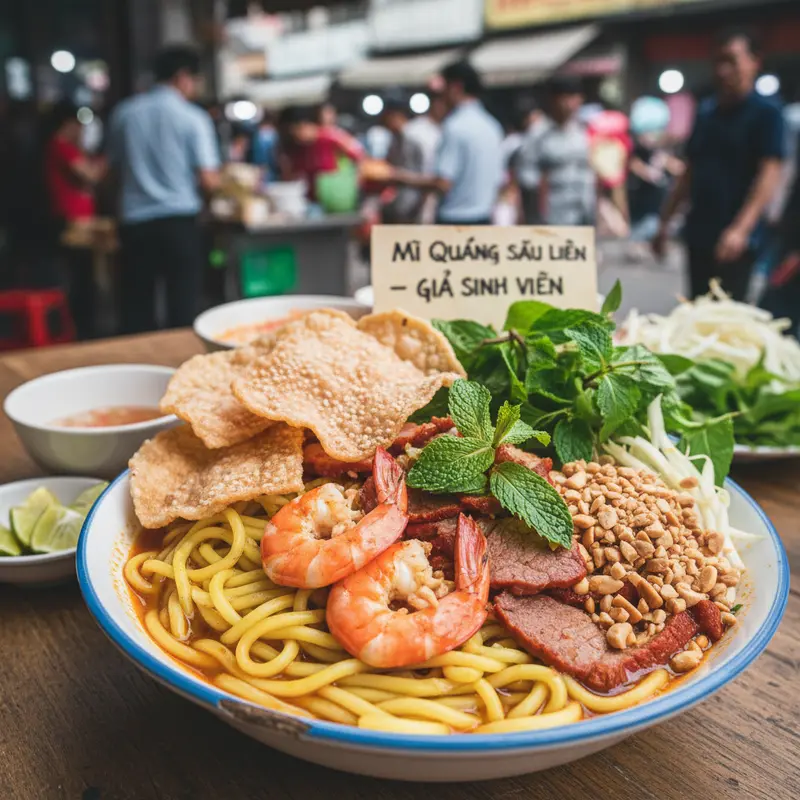
A standard bowl of Mi Quang at Con Market has fresh yellow noodles (not dried), with just enough broth to cover the ingredients — not swimming in broth like pho, nor dry like bun — with toppings that can be shrimp and pork, chicken, or snakehead fish, depending on the stall. On top, there’s crushed grilled rice paper, roasted peanuts, fried shallots, and a handful of fresh herbs including mustard greens, basil, and shredded banana blossom.
The secret to delicious Mi Quang broth lies in the color from annatto oil — it must be beautifully red, fragrant, and not burnt — and in simmering pork bones long enough to extract natural sweetness. Stalls in Con Market prepare this daily from 4-5 AM, so by the time you arrive at 7-8 AM, the broth has reached its peak deliciousness.
Recommended Stall: The food court on the ground floor, near the Ong Ich Khiem street entrance. Look for a stall with a line of people waiting — that’s always the best sign.
Price: 25,000 - 40,000 VND (≈$2)/bowl.
Da Nang Banh Mi — Not Saigon Banh Mi, Not Hoi An Banh Mi
People often debate about the “best banh mi in Vietnam” and often forget thatThe Da Nang banh mi has its own distinct style. The bread is thinner, crispier, with less filling compared to Saigon banh mi. The fillings are usually simpler but use fresher ingredients: homemade Vietnamese ham, charcoal-grilled pork, homemade pate, and especially the homemade chili sauce from each shop — this is what distinguishes a delicious banh mi from an ordinary one.
At Con Market, there are banh mi stalls that have been selling at the same corner for over 20 years. The vendors remember the preferences of their regular customers, knowing who likes more pate, who likes less chili, and who wants extra cucumber. This is something you won’t find in any modern banh mi chain.
Price: 15,000 - 30,000 VND (≈$1)/loaf.
Bun Cha Ca — The Dish Da Nang Locals Eat Every Morning
If Mi Quang is the soul, then Bun Cha Ca is the lifeblood of Da Nang cuisine. It’s the most popular breakfast dish for the city’s residents, yet it’s less known to tourists compared to Mi Quang or banh mi.
Da Nang Bun Cha Ca uses fish cakes made from finely ground mackerel or snakehead fish, mixed with spices and then fried golden. The broth is clear, with a sweet and light flavor from fish bones and tomatoes. It’s served with fresh rice noodles, raw bean sprouts, scallions, and a bit of shrimp paste — a condiment that Central Vietnamese people use like how Southerners use hoisin sauce.
[!NOTE] The shrimp paste in Da Nang Bun Cha Ca is different from Hue shrimp paste — it’s milder, less pungent, and often diluted with lime juice and chili. If you’re not used to the smell of shrimp paste, try a small amount first, then decide if you want to add more.
Price: 25,000 - 50,000 VND (≈$2)/bowl.
Central Vietnamese Banh Xeo — Small But Mighty
Don’t confuse Central Vietnamese banh xeo with Southern banh xeo. Da Nang banh xeo is smaller, crispier, and eaten in a completely different way: the entire pancake is wrapped in a green mustard leaf or turnip leaf, with herbs, then dipped into a sweet and sour fish sauce with chili and garlic.
At Con Market, small, charming banh xeo pans are continuously being refilled from morning till noon. The sizzling sound of rice batter hitting hot oil is one of the most characteristic sounds of this food area. The filling for banh xeo usually includes fresh shrimp, pork belly, and bean sprouts.
Price: 5,000 - 7,000 VND/piece (usually eaten 3-5 pieces at a time).
Che and Desserts
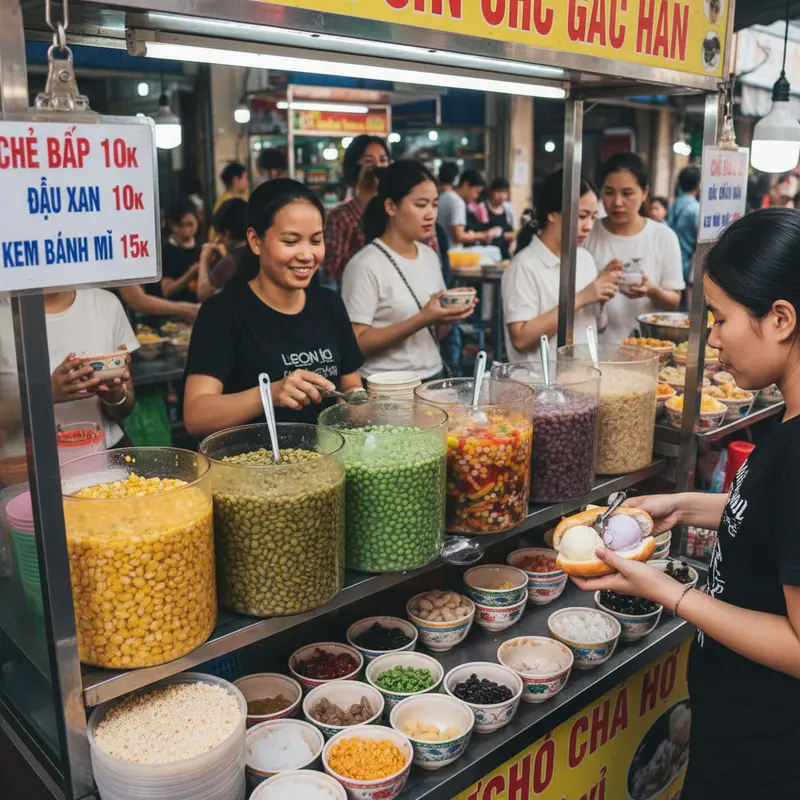
After a “heavy” culinary journey, you need something sweet and refreshing. Con Market has many Central Vietnamese-style dessert stalls: Hoi An corn che (subtly sweet, fragrant with pandan leaf), whipped mung bean che (smooth as cream), and lotus seed and longan che (elegant yet affordably priced).
Especially if you visit in the summer, don’t miss the banh mi ice cream — a unique creation by Da Nang locals: coconut ice cream or mung bean ice cream sandwiched between a small banh mi loaf. It sounds strange, but one taste will make you remember it forever.
Che Price: 10,000 - 20,000 VND (≈$1)/cup.
Exploring Beyond Food: What Else Does Con Market Offer?
The Upper Floor — A Wholesale Shopping Paradise
The second floor of Con Market is a shopping area with hundreds of stalls selling fabrics, ready-to-wear clothing, shoes, bags, household items, and Central Vietnamese specialties. This is where Da Nang locals truly shop — prices are 30-50% cheaper than shopping malls, with comparable quality.
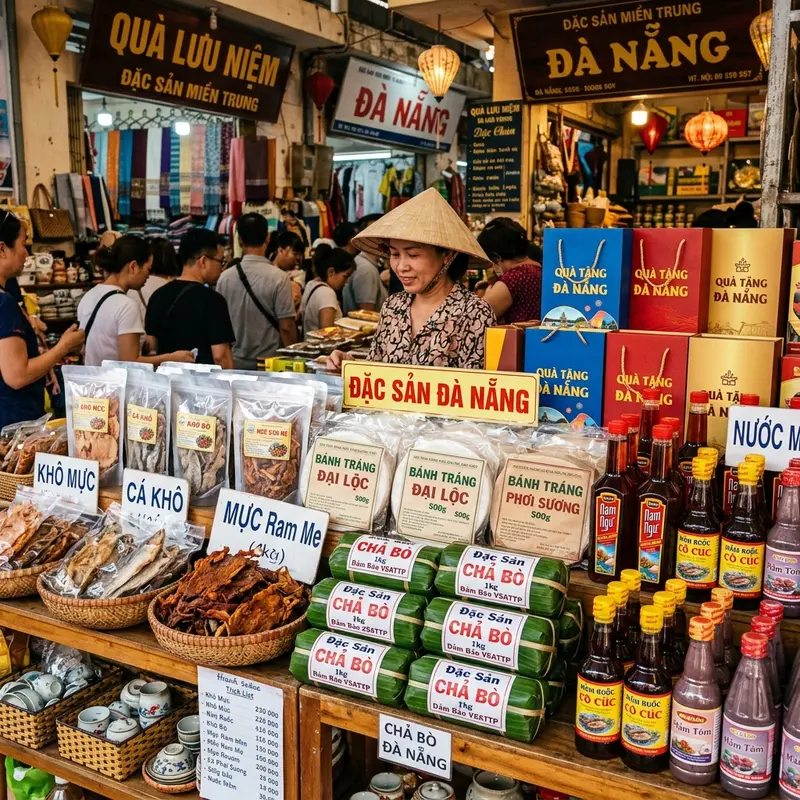
If you want to buy gifts for family and friends, the second floor of Con Market is an excellent choice:Hue sesame candy, banh in, canned nem nuoc cham, shrimp paste, dried seafood — all are available here at much better prices than outside tourist souvenir shops.
[!TIP] When buying souvenirs on the second floor, take a walk around and check prices at 3-4 stalls before making a purchase. Prices can vary by 20-30% between vendors. And don’t be afraid to bargain — this is traditional market culture, and vendors are completely open to it.
Beautiful Check-in And Photo Spots
Con Market isn’t a “selfie spot” in the conventional sense, but if you know how to look, it’s a place for the most authentic and beautiful photos of Central Vietnamese urban life.
Photo spots worth trying:
- The main gate on Hung Vuong Street in the early morning (6-7 AM): Golden light streams through the market roof, crowds pour in, carts are piled high with vegetables — a vibrant urban tableau.
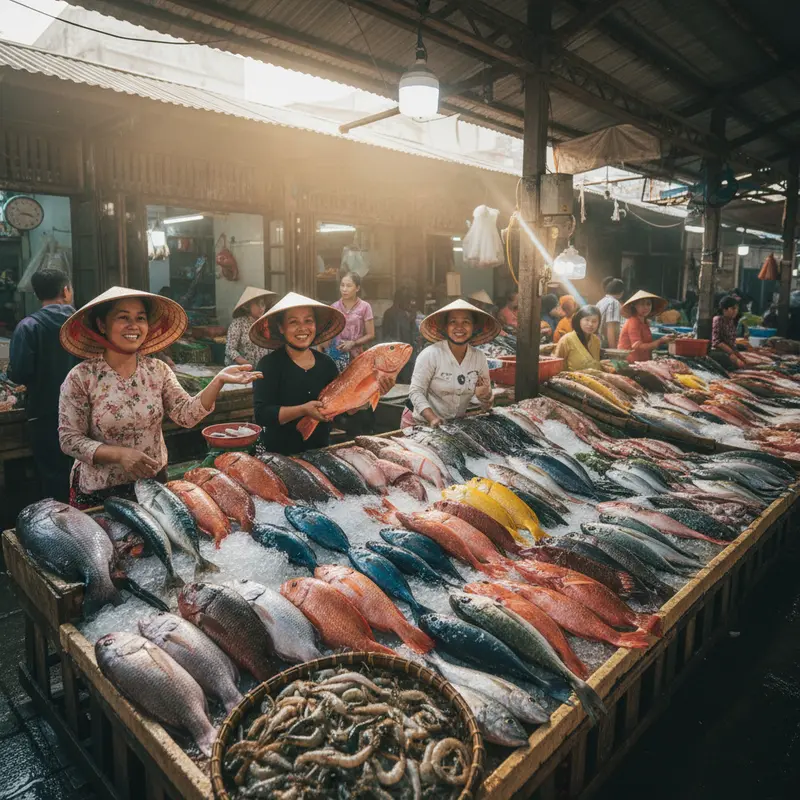
- The fresh seafood section: The colors of Central Vietnamese seafood — silver mackerel, red tuna, green lobster — create incredibly beautiful and colorful photos.
- The culinary area from 7-8 AM: Kitchen smoke, colorful bowls of noodles, vendors’ hands ladling broth — this is the kind of “street food photography” that even professional photographers would admire.
- The second-floor corridor with light filtering through the corrugated iron roof: Creates special light streaks, perfect for portraits or street photography.
[!WARNING] When photographing vendors, always ask for permission first. Da Nang people are friendly but also have high self-esteem — a smile and a polite question will be met with enthusiastic cooperation, and they might even “pose” for you to take a better photo.
Estimated Cost For A Day At Con Market
This is the part I want to be completely transparent about, because there’s nothing worse than reading a review and then being disappointed by the prices.
Reference Cost Table
| Item | Lowest Price | Average Price | Notes |
|---|---|---|---|
| Mi Quang bowl | 30,000 VND (≈$1) | 40,000 VND (≈$2) | Large bowl + 5,000 VND |
| Banh mi | 20,000 VND (≈$1) | 20,000 VND (≈$1) | Depends on filling |
| Bun cha ca | 30,000 VND (≈$1) | 40,000 VND (≈$2) | |
| Banh xeo (5 pieces) | 30,000 VND (≈$1) | 40,000 VND (≈$2) | |
| Che/dessert | 10,000 VND (≈$0) | 20,000 VND (≈$1) | |
| Drinks | 5,000 VND | 10,000 VND (≈$0) | Iced black coffee |
| Total for a filling breakfast | ~45,000 VND | ~65,000 VND |
As you can see, for about 50,000-70,000 dong, you can have an incredibly hearty breakfast at Con Market. This is exactly why Da Nang students love this market so much — and also why I call it the “student-friendly Central Vietnamese culinary paradise.”
[!NOTE] Prices at Con Market do not differentiate for tourists like some other tourist markets. Vendors here primarily serve local customers, so the listed prices are the actual prices. However, if you are buying dried goods or specialties, it’s still advisable to ask for the price before taking the items.
Practical Experience: When To Go, What To Wear, What To Avoid
Golden Hours To Experience Con Market
Con Market operates from around 5 AM to 6-7 PM, but it’s not the same at all times.
- 5 AM - 7 AM: The busiest time at the market. Vendors bring in goods, the freshest seafood of the day, the most intense traditional market atmosphere. However, it can be a bit chaotic and crowded.
- 7 AM - 9 AM: The ideal time for visitors. The market has settled down, food stalls are at their peak, it’s not too crowded, and the lighting is beautiful for photography.p image.
- 9 AM - 11 AM: Still good, but some breakfast dishes start to run out. This is a good time to shop on the second floor.
- 11 AM - 2 PM: The market is less crowded, many food stalls close or pack up. Not ideal for dining.
- 2 PM - 6 PM: Afternoon market, mainly for fresh produce. Fewer food stalls than in the morning.
**
Frequently Asked Questions
Frequently asked questions about Con Market Da Nang
What is the best way to use this guide to Con Market Da Nang: Central Vietnam's Food Paradise?
Is Con Market Da Nang: Central Vietnam's Food Paradise suitable for a first-time visitor?
Can I combine Con Market Da Nang: Central Vietnam's Food Paradise with other nearby plans?
What should I confirm before making plans for Con Market Da Nang: Central Vietnam's Food Paradise?
How can I avoid last-minute problems with Con Market Da Nang: Central Vietnam's Food Paradise?
Tags
The Faifo Express
This article was written by the driver and travel consultant team at Faifo Express — over 5 years of experience in travel transport across Da Nang, Hoi An, and Hue. All information is based on real experience serving 5,000+ customers every month.
Related services
Airport Transfer
Hotel pickup, all-inclusive price
View DetailsDay Tour Car Rental
Ba Na Hills, Hoi An, My Son...
View DetailsShared Car
From just 100K VND/person
View DetailsTourist Car Rental
Explore the beauty of Central Vietnam with our private tourist car service.
View Details🛣️ Popular Routes
Follow Faifo Express
Get exclusive deals, real reviews and the latest Central Vietnam travel tips.
Faifo Express
Updates, customer reviews & real trip photos.
@trm.anh.travel
Real experience videos, Da Nang – Hoi An travel tips.
@xedichvudananghoianhue
Real videos of routes, fleet and transfer services.
@xedananghoianFE
Quick news, flash deals and direct interaction.
DM us on Facebook — response within 5 minutes